Showing posts with label Greek. Show all posts

Wednesday, February 07, 2018

Druids and Dryades


IMG 6017

The origin of the word Druid is under dispute. Max Müller believes that, like the Irish word Drui, it means "the men of the oak trees." He further draws attention to the fact that the forest gods and tree deities of the Greeks were called Dryades.

The Druid Order

Some believe the word to be of Teutonic origin; others ascribe it to the Welsh. A few trace it to the Gaelic druidh, which means "a wise man" or "a sorcerer." In Sanskrit the word dru means "timber."
Excerpt from The Secret Teachings of All Ages by Manly Palmer Hall.

(WelshderwyddOld IrishdruíScottish Gaelicdraoidh)

Following the Roman invasion of Gaul, the druid orders were suppressed by the Roman government under the 1st century CE emperors Tiberius and Claudius, and had disappeared from the written record by the 2nd century.


Many years ago I lived in a street named Dryade Street.  I had no idea of the street name meaning at that time and I even went so far as to ponder what a funny name for a street. 

It is a genuine  satisfying feeling when you find out the origin of something, even if it is just a street name.  Dryades and Druids ... who would have known.

There is much more to know of these Dryades.
DRYADES (Dryads) and OREIADES (Oreads) were the nymphs of trees, groves, woodlands and mountain forests. They were the spirits of the oaks and pines, poplar and ash, apple and laurel. For those known as Hamadryades, a tree was born with her birth to which her life was tied. While the tree flourished, so did its resident nymph, but when it died she passed away. There were several types of Dryades associated with particular trees: 
(1) The Meliai (Meliae) were nymphs of the ash-trees. They were born when Gaia (Gaea, the Earth) was impregnated by the blood of the castrated Ouranos (Uranus, the Sky). They were wed by the men of the Silver Age--in the time before the first woman was created--and from them mankind was descended. 
(2) The Oreiades (Oreads) were nymphs of the mountain conifers. The eldest of these were daughters of the five Daktyloi (Dactyls) and five Hekaterides (Hecaterides). Subsequent generations were descended from these elder Oreiades and their brother Satyroi (Satyrs). 
(3) The Hamadryades (Hamadryads) were the nymphs of oak and poplar trees. They were usually connected with river-side trees and sacred groves. 
(4) The Maliades, Meliades or Epimelides were nymphs of apple and other fruit trees and the protectors of sheep. The Greek word melas--from which their name derives--means both apple and sheep. 
(5) The Daphnaie were nymphs of the laurel trees, one of a class of rarer tree-specific Dryad. Others included the Nymphai Aigeiroi (of black poplars), Ampeloi (of grape vines), Balanis (of the ilex), Karyai (of the hazel-nut), Kraneiai (of cherry-trees), Moreai (of the mulberry), Pteleai (of elm trees), and Sykei (of fig trees).
Oreiades were nymphs of the mountains, Alseides of the sacred groves, Aulonides of glens, Napaiai of vales.  Click HERE to find out more on this most interesting subject.  
Images @ Eminpee Fotography

Thursday, August 27, 2015

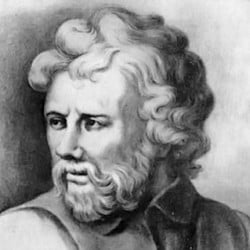
Epictetus... Greek Philosopher.

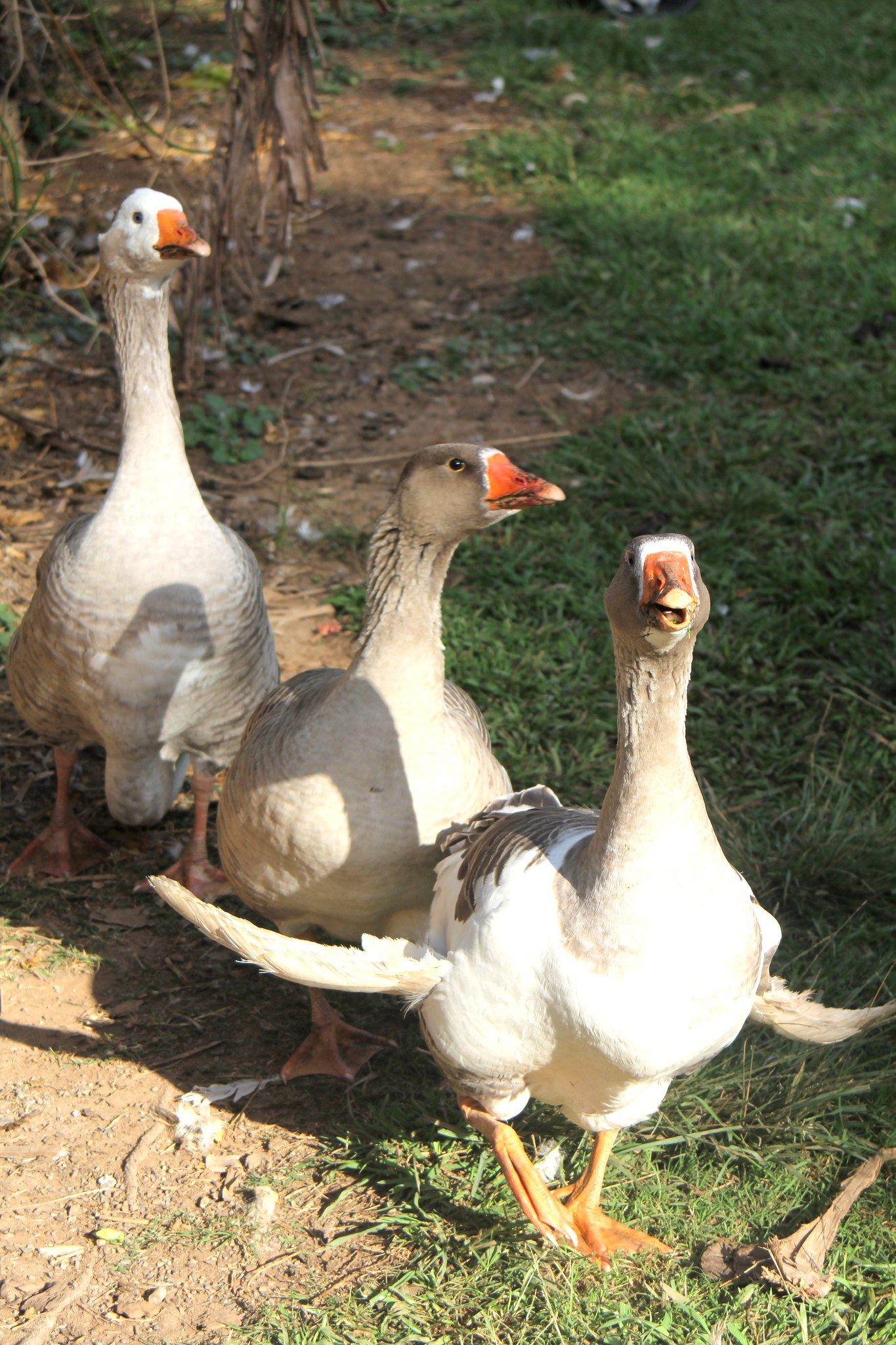
IMG 8870 The Duck Family


Epictetus was a Greek speaking Stoic philosopher. He was born a slave at Hierapolis, Phrygia, and lived in Rome until his banishment, when he went to Nicopolis in north-western Greece for the rest of his life. Wikipedia
Born in 55 AD, Hierapolis, Turkey and died in 135 AD, Nicopolis, Greece
Influenced:
Marcus Aurelius, Arrian, Han Ryner, Albert Ellis, James Stockdale, Junius Rusticus
Epictetus was born a slave and he obtained his freedom some time after the death of Nero in 68 A.D.  While he was a slave he was permitted to study philosophy and gained kudos in the community for his excellent scholarly achievements.

Epictetus now free, taught philosophy in Rome. Approximately 93 A.D. Emperor Domitian banished all of the philosophers from the city of Rome and so this caused Epictetus to flee the tyranny and return to the safety of Greece.  When established in Greece, he set up a philosophical school of his own in  Nicopolis in Epirus.

No writings are available the of work of Epictetus himself.  However thanks to his beloved pupil Arrian, Epictetus's discourses were transcribed and compiled.  The Discourses  are four of the preserved books left of the original eight books.  Arrian compiled a digest as well - the Enchiridion, or Handbook. 

In a preface to the Discourses, addressed to Lucius Gellius, Arrian states clearly he is referring to his teacher Epictetus:
"Whatever I heard him say I used to write down, word for word, as best I could, endeavoring to preserve it as a memorial, for my own future use, of his way of thinking and the frankness of his speech."
Epictetus was of a breed called Stoic Philosophers.  I would say I hold very similar beliefs to the Stoic ideology.  Read More HERE on Stoic Philosophy

Saturday, January 03, 2015

TETRARCH ... A Ruler of a quarter.

English: Hellenic Flag of Anthimos Gazis used ...
English: Hellenic Flag of Anthimos Gazis used during the Greek War of Independence (Thessalia 1821) Greek: Σχεδίασμα σημαίας που ύψωσε ο Άνθιμος Γαζής στη Θετταλομαγνησία το 1821. (Photo credit: Wikipedia)
Tetrarch 

In Greco-Roman antiquity, the ruler of a principality, originally the ruler of one-quarter of a region or province was known as a tetrach.

The first tetrarchs ruled the four tetrarchies of Thessaly under Philip II of Macedonia.

Ancient Thessaly or Thessalia 
(Greek: Αρχαία Θεσσαλία, Thessalian: Πετθαλία, Petthalia) 

It was one of the traditional regions of Ancient Greece

During the Mycenaean period, Thessaly was known as Aeolia, a name that continued to be used for one of the major tribes of Greece, the Aeolians, and their dialect of Greek, Aeolic.

Etymologies
Middle English tetrarche, a Roman tetrarch, from Old French, from Late Latin tetrarcha, from Latin tetrarchēs, from Greek tetrarkhēs : tetra-, tetra- + -arkhēs, -arch.

Monday, December 29, 2014

"Agamemnon"


English: Bronze sculpture of Daedalus (Dedal) ...
English: Bronze sculpture of Daedalus (Dedal) from 3rd century found on Plaoshnik, R.Macedonia (Photo credit: Wikipedia)
Of the works of Daedalus there are these two in Boeotia, a Heracles in Thebes and the Trophonius at Lebadeia. There are also two wooden images in Crete, a Britomartis at Olus and an Athena at Cnossus, at which latter place is also Ariadne's Dance, mentioned by Homer in the Iliad, carved in relief on white marble.
Statue of Sleeping Ariadne in the Vatican Museums.
Statue of Sleeping Ariadne in the Vatican Museums. (Photo credit: Wikipedia)
At Delos, too, there is a small wooden image of Aphrodite, its right hand defaced by time, and with a square base instead of feet.

I am of opinion that Ariadne got this image from Daedalus, and when she followed Theseus, took it with her from home.

Bereft of Ariadne, say the Delians, Theseus dedicated the wooden image of the goddess to the Delian Apollo, lest by taking it home he should be dragged into remembering Ariadne, and so find the grief for his love ever renewed. I know of no other works of Daedalus still in existence.

For the images dedicated by the Argives in the Heraeum and those brought from Omphace to Gela in Sicily have disappeared in course of time.

Next to Lebadeia comes Chaeroneia. Its name of old was Arne, said to have been a daughter of Aeolus, who gave her name also to a city in Thessaly.

The present name of Chaeroneia, they say, is derived from Chaeron, reputed to be a son of Apollo by Thero, a daughter of Phylas.

This is confirmed also by the writer of the epic poem, the Great Eoeae:—“Phylas wedded a daughter of famous Iolais, Leipephilene, like in form to the Olympian goddesses; She bore him in the halls a son Hippotes, And lovely Thero, like to the moonbeams. Thero, falling into the embrace of Apollo, Bore mighty Chaeron, tamer of horses.

The Great Eoeae, unknown location. Homer, I think, though he knew that Chaeroneia and Lebadeia were already so called, yet uses their ancient names, just as he speaks of the river Aegyptus, not the Nile.

In the territory of Chaeroneia are two trophies, which the Romans under Sulla set up to commemorate their victory over the army of Mithridates under Taxilus. But Philip, son of Amyntas, set up no trophy, neither here nor for any other success, whether won over Greeks or non-Greeks, as the Macedonians were not accustomed to raise trophies.

The Macedonians say that Caranus, king of Macedonia, overcame in battle Cisseus, a chieftain in a bordering country. For his victory Caranus set up a trophy after the Argive fashion, but it is said to have been upset by a lion from Olympus, which then vanished.

Caranus, they assert, realized that it was a mistaken policy to incur the undying hatred of the non-Greeks dwelling around, and so, they say, the rule was adopted that no king of Macedonia, neither Caranus himself nor any of his successors, should set up trophies, if they were ever to gain the good-will of their neighbors. This story is confirmed by the fact that Alexander set up no trophies, neither for his victory over Dareius nor for those he won in India.
 From "Homers Odyssey  9.1", "Denarius"
As you approach the city you see a common grave of the Thebans who were killed in the struggle against Philip. It has no inscription, but is surmounted by a lion, probably a reference to the spirit of the men. That there is no inscription is, in my opinion, because their courage was not favoured by appropriate good fortune.

Of the gods, the people of Chaeroneia honor most the scepter which Homer says Hephaestus made for Zeus, Hermes received from Zeus and gave to Pelops, Pelops left to Atreus, Atreus to Thyestes, and Agamemnon had from Thyestes. This scepter, then, they worship, calling it Spear. That there is something peculiarly divine about this scepter is most clearly shown by the fame it brings to the Chaeroneans.

They say that it was discovered on the border of their own country and of Panopeus in Phocis, that with it the Phocians discovered gold, and that they were glad themselves to get the scepter instead of the gold. I am of opinion that it was brought to Phocis by Agamemnon's daughter Electra. It has no public temple made for it, but its priest keeps the scepter for one year in a house. Sacrifices are offered to it every day, and by its side stands a table full of meats and cakes of all sorts.  From Wikipedia

Images @ Eminpee Fotography

Friday, December 26, 2014

Metropolis

More religious terminology is found here with the word METROPOLIS.  These are words we use in everyday life that we may or may not know pertains to church politics. 

It is interesting fact that our current Prime Minister who is a devout Catholic wrote for the Catholic Bulletin and crossed over to politics.  I see this as proof the church is still very much alive and wielding power from the shadows.  It appears if this is the case that no much changes over many centuries when it concerns the church or its derivatives who have all learned very well.


The word we see a lot when hearing Roman Catholic Terminology is the word "See" or "Holy See".  This word is derived from Diocese.[sees]

I spend a lot of time reading history and in particular lately the histories attached to the Duchy's and to the Roman Empire and the Holy Mother Church as it was affectionately known by those who loved the church for what it offered.

Metropolis (or metropolia or metropolitanate): an ancient diocese (especially in Byzantine areas) or set of dioceses with a metropolitan as the ruling bishop or primate. A metropolis may have constituent dioceses.

A metropolis is a see or city whose bishop is the metropolitan of a province. Metropolises, historically, have been important cities in their provinces.

IMG 7161 Tamworth Church
Church
In the Eastern Orthodox churches, a metropolis is a type of diocese, along with eparchies, exarchates, and archdioceses.  A similar system exists in the Roman Catholic Church.

[Reference to Archdioceses] 
A diocese, from the Greek term διοίκησις, meaning "administration", is the district under the supervision of a bishop. It is also known as a bishopric.

A diocese is divided into parishes (in the Church of England into benefices and parishes). This structure of church governance is known as episcopal polity.
Wikipedia

Images @ Eminpee Fotography

Wednesday, December 24, 2014

The Argead dynasty


Coat of arms of Macedon
Coat of arms of Macedon (Photo credit: Wikipedia)
The Argead dynasty  was an ancient Greek royal house that ruled  Macedonia circa 700 to 310 BCE.

Their culture, as found in ancient Greek history traces  their origin to Argos.  Argos is in southern Greece.  The name Argeads or Argives is evidence of this origin.
"In the early 5th century the royal house of Macedonia, the Temenidae was recognised as Greek by the Presidents of the Olympic Games. Their verdict considered themselves to be of Greek descent from Heracles son of Zeus." Hammond 1986, p. 516:

"In historical times the royal house traced its descent from the mythical Temenus, king of Argos, who was one of the Heracleidae, and more immediately from Perdiccas I, who left Argos for Illyria, probably in the mid-seventh century BC, and from there captured the Macedonian plain and occupied the fortress of Aegae (Vergina), setting himself up as king of the Macedonians. Thus the kings were of largely Dorian Greek stock (see PHILIP (1)); they presumably spoke a form of Dorian Greek and their cultural tradition had Greek features." Howatson & Harvey 1989, p. 339:
During the time of Philip II the Argeads had expanded to bring all the Upper Macedonian states under their rule.

Notable Argeads were Philip II of Macedonia and Alexander the Great  The mythical founder of the Argead dynasty is King Caranus.

Alexander the Great under whose leadership, the kingdom of Macedonia gradually gained predominance throughout Greece, defeated the Achaemenid Empire and expanded as far as Egypt and India.   [Click links for more information]

Standard of Cyrus the Great, founder of the Ac...
 (Photo credit: Wikipedia)
Standard of Cyrus the Great, founder of the Achaemenid Empire.

It is known as the: Derafsh-e Shahbaz-e-Talayi or the 'Golden Falcon'. The standard is described by Xenophon in Cyropaedia (Book VII, C.1) as: "...and the word went down the lines, "Eyes on the standard and steady marching!". The standard was a golden eagle, with outspread wings, borne aloft on a long spear-shaft, and to this day such is the standard of the Persian king." (however here he is describing Artaxerxes II's standard at Cunaxa). Wiki

A current politicians name in Australia is Nicholas "Nick" Xenophon (born Xenophou; 29 January 1959) and he is an independent Senator for South Australia. 

IMG 2800
All is calm on the waters for the moment.

Images @ Eminpee Fotography - Urunga
Tuesday, December 23, 2014

Patriarch Irineos Greek Orthodox

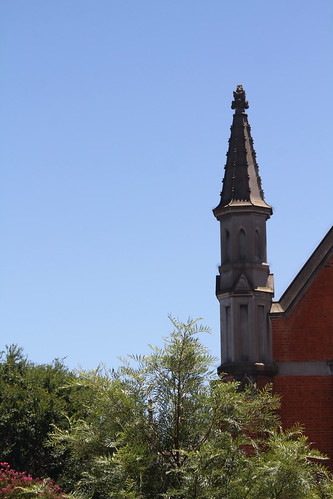
steeples
Reaching to God things
Patriarch Irineos dumped as the prelate of Jerusalem.  This is a story of intrigue that pricks my senses.  The part where it feels like its a scam.  I often read of world events and tend to see things in a completely different light to what is expected I would see with the information forthcoming on such events that concern world events and the people of the planet.

Read about Patriach Irineos HERE

There is of course some long term plan afoot.  Why the hell would there not be?  That is perhaps a more apt question?  Why not?  Because it has always been the case throughout history.  They just got better and better and utilizing the people for their own needs.  In effect my friend calls this 'farming' the people. 

English: Saint Cyril of Jerusalem, fresco at a...
English: Saint Cyril of Jerusalem, fresco at a greek orthodox church (Photo credit: Wikipedia)
The tax system of today is a veritable scam to continue to fill these coffers for these hidden power mongers who wield the powers behind governments.  They wield the power and we think it is the politician who does this.  It is highly likely it isn't but it is also highly likely the pay off for this privledge is well compensated and hidden so well that not even a  red dime is recognizable to the unwitting.

Some call this ruling with smoke and mirrors.  I tend to agree.  It is meant to look like something it isn't.  This is done to create an illusion and hide where the true battle belongs.  All the time, keeping in mind, this is a game.  The players stay well hidden so there is a continence to this game of cat and political mouse. 

This is part of the sick illusory game and it is to gain and end and to 'time waste' and thus keep the people fully occupied by believing this is where it's at to find a solution.   All the time the other hand is performing something completely different while the peoples backs are turned watching a scripted game play out.  


Images @ Eminpee Fotography

Tuesday, July 01, 2014

Hermes is the son of Zeus and Maia

Maia is the daughter of Atalas and is one of the Pleiades.

IMG 5050
Hermes, the herald of the Olympian gods, is the son of Zeus and the nymph Maia, daughter of Atlas and one of the Pleiades.
Hermes is the god of shepherds, land travel, merchants, weights and measures, oratory, literature, athletics and thieves, and known for his cunning and shrewdness. Most importantly, he is the messenger of the gods. Besides that he was also a minor patron of poetry. He was worshiped throughout Greece - especially in Arcadia - and festivals in his honor were called Hermoea.

According to legend, Hermes was born in a cave on Mount Cyllene in Arcadia. Zeus had impregnated Maia at the dead of night while all other gods slept. When dawn broke amazingly he was born. Maia wrapped him in swaddling bands, then resting herself, fell fast asleep. Hermes, however, squirmed free and ran off to Thessaly. This is where Apollo, his brother, grazed his cattle.

Hermes stole a number of the herd and drove them back to Greece. He hid them in a small grotto near to the city of Pylos and covered their tracks. Before returning to the cave he caught a tortoise, killed it and removed its entrails.
Using the intestines from a cow stolen from Apollo and the hollow tortoise shell, he made the first lyre.
When he reached the cave he wrapped himself back into the swaddling bands. When Apollo realized he had been robbed he protested to Maia that it had been Hermes who had taken his cattle. Maia looked to Hermes and said it could not be, as he is still wrapped in swaddling bands.
Zeus the all powerful intervened saying he had been watching and Hermes should return the cattle to Apollo. As the argument went on, Hermes began to play his lyre. The sweet music enchanted Apollo, and he offered Hermes to keep the cattle in exchange for the lyre. Apollo later became the grand master of the instrument, and it also became one of his symbols. Later while Hermes watched over his herd he invented the pipes known as a syrinx (pan-pipes), which he made from reeds.
Hermes was also credited with inventing the flute. Apollo, also desired this instrument, so Hermes bartered with Apollo and received his golden wand which Hermes later used as his heralds staff. (In other versions Zeus gave Hermes his heralds staff).
Hermes Trismegistus
Hermes Trismegistus (Photo credit: Wikipedia)
Being the herald (messenger of the gods), it was his duty to guide the souls of the dead down to the underworld, which is known as a psychopomp. He was also closely connected with bringing dreams to mortals.
Hermes is usually depicted with a broad-brimmed hat or a winged cap, winged sandals and the heralds staff (Kerykeion in Greek, or Caduceus in Latin). It was often shown as a shaft with two white ribbons, although later they were represented by serpents intertwined in a figure of eight shape, and the shaft often had wings attached. The clothes he donned were usually that of a traveler, or that of a workman or shepherd. Other symbols of Hermes are the cock, tortoise and purse or pouch.

Originally Hermes was a phallic god, being attached to fertility and good fortune, and also a patron of roads and boundaries. His name coming from herma, the plural being hermaiherm was a square or rectangular pillar in either stone or bronze, with the head of Hermes (usually with a beard), which adorned the top of the pillar, and male genitals near to the base of the pillar. These were used for road and boundary markers. Also in Athens they stood outside houses to help fend off evil. In Athens of 415 BCE, shortly before the Athenian fleet set sail against Syracuse (during the Peloponnesian War), all the herms throughout Athens were defaced. This was attributed to people who were against the war. Their intentions were to cast bad omens on the expedition, by seeking to offend the god of travel. (This has never been proved as the true reason for the mutilation of the herms.)

The offspring of Hermes are believed to be Pan, Abderus and Hermaphroditus. Hermes as with the other gods had numerous affairs with goddesses, nymphs and mortals. In some legends even sheep and goats. Pan, the half man half goat, is believed to be the son of Hermes and Dryope, the daughter of king Dryops.
Pan terrified his mother when he was born, so much so that she fled in horror at the sight of her new born son. Hermes took Pan to Mount Olympus were the gods reveled in his laughter and his appearance and became the patron of fields, woods, shepherds and flocks.
Abderus, a companion of the hero Heracles, is also thought to be a son of Hermes, he was devoured by the Mares of Diomedes, after Heracles had left him in charge of the ferocious beasts. Hermaphroditus (also known as Aphroditus) was conceived after the union of Hermes and Aphrodite. He was born on Mount Ida but he was raised by the Naiads (nymphs of freshwater). He was a androgynous (having the characteristics of both sexes) deity, depicted as either a handsome young man but with female breasts, or as Aphrodite with male genitals.

It was Hermes who liberated Io, the lover of Zeus, from the hundred-eyed giant Argus, who had been ordered by Hera, the jealous wife of Zeus, to watch over her. Hermes charmed the giant with his flute, and while Argos slept Hermes cut off his head and released Io. Hera, as a gesture of thanks to her loyal servant, scattered the hundred eyes of Argos over the tail of a peacock (Heras’ sacred bird).
Hermes also used his ingenuity and abilities to persuade the nymph Calypso to release Odysseus, the wandering hero, from her charms. She had kept Odysseus captive, after he was shipwrecked on her island Ogygia, promising him immortality if he married her, but Zeus sent Hermes to release Odysseus. Legend says that Calypso died of grief when Odysseus sailed away.
Hermes also saved Odysseus and his men from being transformed into pigs by the goddess and sorceress Circe. He gave them a herb which resisted the spell.
Hermes also guided Eurydice back down to the underworld after she had been allowed to stay for one day on earth with her husband Orpheus.

Known for his swiftness and athleticism, Hermes was given credit for inventing foot-racing and boxing. At Olympia a statue of him stood at the entrance to the stadium and his statues where in every gymnasium throughout Greece. Apart from herms, Hermes was a popular subject for artists. Both painted pottery and statuary show him in various forms, but the most fashionable depicted him as a good-looking young man, with an athletic body, and winged sandals and his heralds staff.
His Roman counterpart Mercury inherited his attributes, and there are many Roman copies of Greek artistic creations of Hermes.
The Greek post office has Hermes as its symbol.
Source:
Author: Ron Leadbetter
Website: Encyclopedia Mythica

Images @ Eminpee Fotography

Sunday, June 29, 2014

Pythagoras and his Triangle

IMG 0564 Morpeth Church
Ancient churches used the same architectural principals - Church Morpeth NSW
The ancient Egyptian mathematicians had a deep respect and these scholars were venerated for the well known "3,4,5" configuration of Pythagoras's right-angled triangle.  Some people believe that those Egyptians were aware of these facts long before Pythagoras's time.  This is evident in all of their ancient calculations and the evidence of the Pyramid inch and its precise measurements.
English: Generalization of Pythagoras' theorem...
English: Generalization of Pythagoras' theorem due to Tâbit ibn Qorra (Photo credit: Wikipedia)
"3" is a symbolic for joy, contentment, and the pleasure of being alive;
"4" is order and steady progress;
"5" is adventure and the best use of freedom. 
It has also been argued that "3" represents the triangle; "4" the square; and "5" the pentagon.  From this"3,4,5" connection the Egyptian adepts of  sacred geometry would have constructed the great pyramids and other temples from this precept .

Images @ Eminpee Fotography

Thursday, May 29, 2014

Demeter the mother of Persephone

IMG 5277
Grain growing in NSW
This is a fertility myth that centers around the love of a mother for her child and the sacrifices that mothers make for  their children where rogue fathers are concerned.  I am a mother and I gave birth three times and because of this I am  invisibly connected to my children for eternity whether they like it or not. 

Monday, May 26, 2014

National Sorry Day in Redfern

National Sorry Day is an annual day of commemoration and remembrance of all of the families who have been destroyed through thoughtless genocidal government polices which have resulted in inter-generational trauma from what is widely known as the Stolen Generation.

IMG 8812 Sorry Day Action 

Because throughout the 1900's there was a government plan to breed out aboriginality of the original peoples of this beautiful land called Australia much intergenerational trauma is still being lived through today.  Tyndale had a scale that resembled breeding animals and that is just horrendous memories to be held in the cellular memories of all of the people effected.

Today the figures for FACS (DoCs) Family and Community Services are up by 89% and there are up to a 1000 children being taken and never seen again.  The new policy that if a child under 2 years old is in foster care for longer than 6 months it is instant adoption.

This is an horrendous policy.  To be amongst the mothers and grandmothers effected by these brutal genocidal policies was heart breaking knowing what it feels like to not see your children and to be lied about because of being a government child and being considered inferior.


 Images @ Eminpee Fotography

Friday, May 09, 2014

Aesculapius

Aesculapius:
A red cross with a snake, like rod of Aesculapius
A red cross with a snake, like rod of Aesculapius (Photo credit: Wikipedia)

The ancient Roman god of medicine, whose staff with a snake curled around it is commonly used as a symbol of medicine. According to mythology, Aesculapius's children included Hygeia, the goddess of health, and Panaceia, the goddess of healing.

English: Panacea Helping the Sick. The Verones...
English: Panacea Helping the Sick. The Veronese physician J. Gazola created this picture as part of a larger woodcut in 1716. It was for his book, The World is Deceived by False Doctors, in which he wrote of the four elements of the panacea (the cure-all). He cited Ecclesiastes 7:17b, “Do not be a fool — why die before your time?” as a reason to use his recipe (incidentally, the verse is taken out of context). (Photo credit: Wikipedia)

Hygiene Latin hugieinē technē, meaning "(art) of health"

The words Hygiene and  Cure come to mind here and I want to explore those words above, the names of the goddesses of health and healing.

Medicine is one of the oldest occupations on the planet too.   Those physicians and attendants who served this god were known as the Therapeutae of Asclepius.


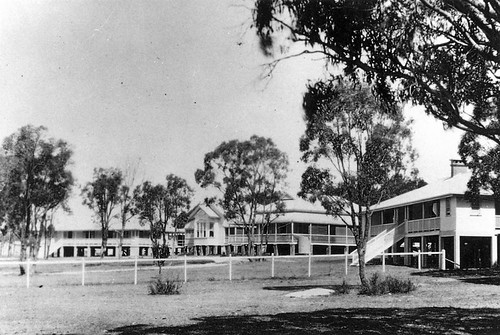
Early Stanthorpe 1928
Stanthorpe Hospital build in 1923

Images @ Eminpee Fotography

Monday, March 24, 2014

A final good bye to Uncle Tom Kelly

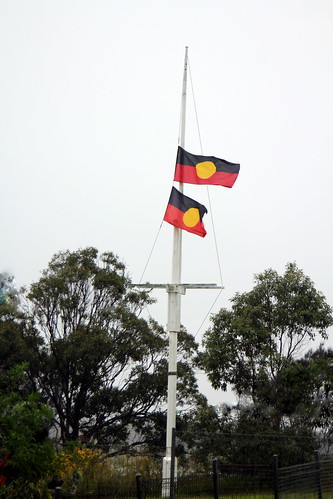
IMG 8147 The Koori Flag at half Mast

It was one helluva sorry day here in Urunga today, Uncle Tom was so well known by everyone.  I was so saddened by his passing, I never got an piece of paper to remember him with either and that was upsetting for me.

There services were lovely and there were no room for anymore people in the church with many many people standing on the outside of the church as the grounds of the Urunga Catholic Church swelled with people saying their good byes to Uncle Tom,

This is a photo that Montana [my daughter] took at the cemetery on Hungry Head Road

In the afternoon this arvo there was a massive storm to make him leaving just as there was when he died.  I love you Uncle Tom, you are sorely missed already by us mob in this house.

Images @ Eminpee Fotography

Saturday, February 08, 2014

The magic of 3, 6 and 9.

"If you only knew the magnificence of the 3, 6 and 9, then you would have a key to the universe."
— Nikola Tesla


IMG 5425.1 Dorrigo Folk & Blues Festival

Gen·e·sis / n. / Creation; That which creates.  The word Beget means to generate and also is related to creation through procreation

The book of Genesis is a Gnostic book written by Gnostics.   The whole book hides the mystery of Daath, the Hebrew word for knowledge, which in Greek is Gnosis.

"In the beginning, God created"
"And God said, 'Let there be light"

Throughout Genesis, each time God creates he is speaking.  When one speaks, what mechanism is producing sound?  Vibrational energy is created by vibrations or sounds.

God Speaks in these Genesis verses.

Gen. 1:3 - And God said, "Let there be light," and there was light.
Gen. 1:6 - And God said, "Let there be a firmament in the midst of the waters, and let it divide the waters from the waters."
 
Gen. 1:9 - And God said, "Let the waters under the heavens be gathered together unto one place, and let the dry land appear," and it was so.
 Can you detect the patterns?
 ( 3, 6, 9 )

These are the Solfeggio Frequencies where there is 111Hz between each resonant sound.


174 Hz
285 Hz
396 Hz
417 Hz
528 Hz
639 Hz
741 Hz
852 Hz
963 Hz
 
 Solfeggio Numerology
1+7+4 = 1+2 = 3 -
2+8+5 = 1+5 = 6 -
3+9+6 = 1+8 = 9 *
4+1+7 = 1+2 = 3 -
5+2+8 = 1+5 = 6 -
6+3+9 = 1+8 = 9 *
7+4+1 = 1+2 = 3 -
8+5+2 = 1+5 = 6 -
9+6+3 = 1+8 = 9 *


Solfeggio Audio Track
http://f.cl.ly/items/3p1a3t2j380V2j2i061m/Solfeggio%20Music.mp3

More information on Genesis
http://gnosticteachings.org/courses/kabbalah-4-seven-days-of-genesis/173-the-first-day-of-genesis.html

VORTEX MATH 

 http://rense.com/rodinaerodynamics.htm

Intro to VORTEX MATH (Fingerprint of God)
http://www.youtube.com/watch?v=Fbyc9JW3vtk


Images @ Eminpee Fotography
Enhanced by Zemanta

Women had a difficult time

IMG 2684 
Some 2000 years ago...

GREEKS gave woman the PUNCH / a woman was regarded as a second class citizen.
 MEN KNOCKED TEETH out of woman with rocks to shut them up.
 But GREEK PRIESTESSES had power and control and were listened too. 
 ROME / aphrodite became VENUS... Zeuss became Jupiter 6 PRIESTESSES known as the VESTULE VIRGINS / prime specimens of woman ... Key CONDITION was to remain VIRGINS .... every day of their service they were to wear a wedding dress and became the BRIDES of ROME... 
No one owned them ... 
 DEITY = VESTA ... deity of the HEARTH and the FIRE../ keeping the sacred fire alive.. VIRGINITY represented perfection ... purity = purity of the flame etc.... 
No DISTRACTIONS... No SEX because SEX was a distraction. 
 The capacity to create life but hold it back showed POWER... they lived on a knife edge... if the fire went out the Ponitifix Maximus would strip and beat them.
>>> 114BC in 3 vestules were accused of losing their virginity which is the crime of INCESTUM .. they were Markia / Amelia and Lukinia.. 
2010 to ordain a woman was a crime in the VATICAN CHRISTIANITY was a splinter group of JUDAISM 
PAUL says the WORLD is going to END / end of days! 
Acts of Paul and THEKLA 2nd century .. not suitable for the bible 1st century 
MOD TURKEY .... eavesdropping 13 years old THECKLA 
Phamoris was to marry her.. She was going to leave home and follow PAUL 
Catholic PRIESTS believed that woman were not created in GODS IMAGE and in fact they destroyed GODS IMAGE 
 Augustine developed the concept of ORIGINAL SIN / thanks to the act of SEX we are already creatures infused with SIN to the very core of our being... 
WOMAN come out badly ... 
 EVE encouraged ADAM to sin... she is the ARCHETYPE of woman who lead men astray! 
Sex was the WORK of the DEVIL and woman his AGENTS History was re written... 
Augustine is so influential .... 
 The CHURCH is called a SHE 
Council of NICEA woman were in trouble then 
The new church made decisions that WOMAN should be considered LEITY and not to be ordained .. Women pushed to the wilderness 
394 Theodocius the FIRST / no more PAGAN WORSHIP ... 
Flames of the VESTA were put out 
Woman had walked hand in hand with the divine.. 
But now no more and the priestess was over 
The divine woman story was not over 
WOMAN FIGHT BACK 
 Queen of Heaven

Monday, January 20, 2014

Special Womans Place near Woolgoolga - Mary's Waterhole

IMG 7000

I get a lot of messages but this sort of message is the kind I love to get in my inbox, I only hope I can assist.

I received this message from a lovely lady in Woolgoolga whose name is Emma.  This is what she wrote me :

Hello Mary-Ellen, You don't know me but I have been searching around the internet trying to get some help. I contacted a lady called Adele who directed me to you.

I am not Aboriginal but I do have a great love and respect for the people of this land. My elderly neighbour (83) took us to a place just behind our house in Woolgoolga and told us of this beautiful ceremony that he remembered as a boy.

It is a place the white locals dubbed Mary's Waterhole. Mary. the last in a very long line of women, used to take the soon-to-be mothers to this spring on the very top of the highest hill and bathe and sing to them and the child to give them an easy birth.

What a beautiful process. About 50 years ago some complete moron put a stick of dynamite into the spring in the hope of bringing up more water.

Of course it had the opposite effect and the pool in now reduced to a muddy puddle. But the spirit still remains in this place and I fear that no one lives to remember this any more.

I don't want it to disappear from peoples minds so I am trying to find an indigenous women's group who will "adopt" this site or... well I am not sure what. I simply don't want this history to be lost.

Anyway I hope you can help and if not I am sorry for bothering you.

Warm regards
Emma
Of course this isn't a bother.  It is an honor for me to be able to pass this information on to the right people.   I will look for the right person to contact and we will action this as soon as possible.

I agree with Emma, I do not want any of these places to disappear forever.  Although in the spirit world they are all still there and this cannot ever be taken by anyone other than the great creator.

Mary's Waterhole sounds like such a lovely name too.  I cannot wait to find out more history about this from where ever I can gather this from. 

Images @ Eminpee Fotography
Wednesday, January 15, 2014

What is the Vesica Piscis?


12th century frescos in San Fedele basilica, C...
12th century frescos in San Fedele basilica, Como (Italy). Italiano: Maria in una mandorla e un angelo: affresco del sec. XII nella Basilica di San Fedele a Como. (Photo credit: Wikipedia)

THE Vesica Piscis SYMBOL AND ITS MANY MEANINGS OVER THE AGES...

There is an old symbol, older than Christianity, beyond Rome, Greece and Mesopotamia.


It is known as the Vesica Piscis symbol.

Latin translation calls it the fish bladder. But don't be detoured by this name. Looking like two circles overlapping one another, it has been called the symbol of the 'fish' (because it is shaped like one where the circles overlap) or 'the eye of God,' because it looks like the shape of an eye, as well. Eye of Horus, along with many other myths and legends the world over.


The Vesica Piscis is easily one of the most profound geometrical images of ancient and modern times. It is, for example, considered to be an integral part of the Ark of the Covenant, as described and shown figuratively by ka-gold's version of the Vesica Piscis.

Christ in majesty within a mandorla-shaped aur...
Christ in majesty within a mandorla-shaped aureola, surrounded by emblems of the evangelists (13th century) (Photo credit: Wikipedia)
When the Vesica Piscis is viewed horizontally, however, the mandorla becomes a different sort of passage: the birth passage. 
The pointed oval is a universal symbol of the Divine Feminine, and in this context the Vesica Piscis is the vulva of the Goddess, surrounded by the crescents of the waxing and waning moon. 
The mandorla as birth passage can easily be seen on the sheila-na-gig figures found on Irish churches, and in the squatting figures of the Hindu goddess Kali. 

English: Cover of the Chalice Well, Glastonbur...
English: Cover of the Chalice Well, Glastonbury, Sommerset. The design depicts the Vescia Piscis. (Photo credit: Wikipedia)
Almonds are a primeval fertility symbol, and as such are associated with the Phrygian goddess Cybele and her transgendered consort, Attis, and the Greek nymph Phyllis, who was metamorphosed into an almond tree. Fish, too, play a significant part in the lives of goddesses from many cultures. 

"Delphos" translates from Greek as both "womb" and "dolphin." The Chinese Great Mother Kwan -Yin often appears as a fish goddess, as does Aphrodite. Kali, as the swallower of Shiva's penis, becomes Minaksi, the fish-eyed one; Isis becomes Abtu, the Great Fish of the Abyss, when she swallows the penis of Osiris.

A medieval hymn calls Jesus "the little fish in the Virgin's fountain." The Christ child is often shown inside a mandorla, superimposed over Mary's womb. 


Mary herself can be equated with the goddess Aphrodite Marina, who brought forth all the fish in the oceans; Marina's blue robe and pearl necklace, like the Christian Mary's, are classic symbols of the sea. 

On Cyprus, Mary to this day is worshiped as "Panaghia Aphroditessa." 

The connections are many: the Vesica Piscis illumines the common heritage of Christianity and the Goddess traditions it absorbed, traditions it would later vilify and all but destroy.


Image Hosted by ImageShack.us

Essentially the intersection of two, overlapping spheres, the Vesica Piscis (including the interior portion of it, and/or the more common two dimensional version) represents, among other things:

  • The joining of God and Goddess to create an offspring.
  • A symbol for Jesus Christ.

  • In art a pointed oval used as an aureole in medieval sculpture and painting.

  • The uterus of the female goddess (or Mother Mary's womb).

  • The basic motif in the Flower of Life.

  • An overlay of the Tree of Life.

  • The formative power of polygons in mathematics.

  • A geometrical description of square roots and harmonic proportions.

  • A source of immense power and energy.

The Pythagoreans used this symbol as a secret ...
The Pythagoreans used this symbol as a secret sign to recognize each other. It represents the number five, and life, power and invulnerability. (Photo credit: Wikipedia)
As such, it is also a doorway or portal between worlds, and symbolizes the intersection between the heaven and the material plane. The shape of arches in gothic architecture is based on the vesica.

English: Four is the first number formed by th...
English: Four is the first number formed by the addition and multiplication of equals. To the Pythagoreans this symbol and number represented justice as it is the first number that is divisible every way into equal parts. (Photo credit: Wikipedia)
The shape of the Vesica Piscis is derived from the intersection of two circles, the Pythagorean "measure of the fish" that was a mystical symbol of the intersection of the world of the divine with the world of matter and the beginning of creation.

To the Pythagoreans, the whole of creation was based on number, and by studying the properties of number, they believed one could achieve spiritual liberation. 


Enclosing the greater area with the smallest p...
Enclosing the greater area with the smallest perimeterm, the triangle, derived from the vesica piscis, the Triad was considered by the Pythagoreans most beautiful number, as it is the only number to equal the sum of all the terms below it, and the only number whose sum with those below equals their product. (Photo credit: Wikipedia)

The Vesica Piscis was the symbol of the first manifestation, the dyad that gives birth to the entire manifest universe. Within the Vesica can be found the triangle, the tetrad, the square, the pentacle, and many more polygons, making the Vesica a true symbolic womb.

The shape of the Vesica Piscis is derived from the intersection of two circles, the Pythagorean "measure of the fish" that was a mystical symbol of the intersection of the world of the divine with the world of matter and the beginning of creation. The Vesica Piscis is used in a wide range of symbolism.

ttttttttttttt

The Latin term Vesica Piscis, meaning "Vessel of the Fish" is the most basic and important construction in Sacred Geometry.
ttttttttttttt

A Vesica is formed when the circumference of two identical circles each pass through the center of the other.

When a Vesica Piscis is viewed horizontally, it looks like a vagina or a womb which is why the Christ child was often pictured inside of one.

When the Vesica Piscis is viewed vertically it looks like the shape of a fish.

Amazingly, the above two Vesica Piscis each have a horizontal axis equal in length to the gematria value of the Greek word for "fishes."

The Vesica Piscis is an ancient symbol used in Pagan culture, Christian symbolism and sacred geometry, as well as various other belief systems. This enduring symbol is so old that I would suggest it was 'born' during the age of Lemuria, the first world upon Earth, eons ago.

ttttttttttttt

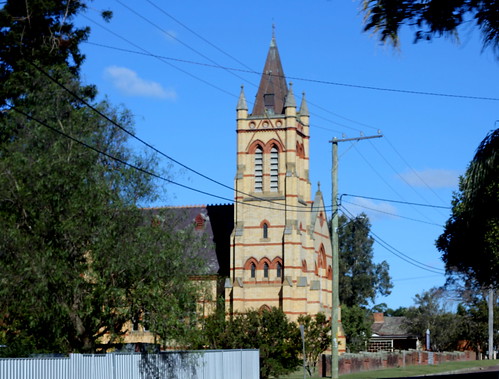
 IMG 4933 Dungowan Church

JEWS are intellectual wise men from anywhere in the world, they are not a culture on country

The renaissance flowered because of the HERMETICA.

Divine providence has caused books to fall into my hands.  This was said 500 years ago.

Images @ Eminpee Fotography
Enhanced by Zemanta