Showing posts with label Gomeroi. Show all posts

Sunday, November 02, 2014

The many windows of the Dark past of the Holocaust of this land - Australia.


I suspect old Lang hasn't had a peaceful afterlife....

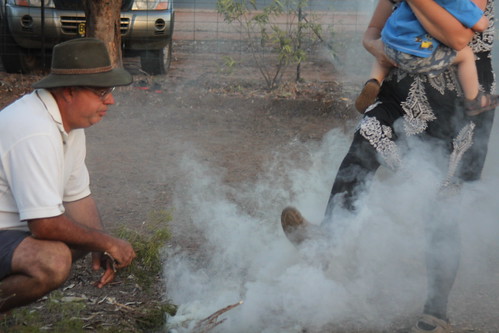
IMG 7272 Yuurri Corroboree Pilliga
No more being pushed...
Gomeroi women are standing up now with babies in arms and standing strong against the absolute overbearing weight of being downtrodden in their own country for so long now.

Images @ Eminpee Fotography

Saturday, February 01, 2014

Yurri Corroboree at Pilliga

 A hot day of discussion and learning with speakers who know what they are talking about when it comes to saving culture in Australia.  The precedents have been set and now all people have to do is walk it out and do it and fight it in the courts.


IMG 7246 Cheryl and Medina and Aunty Mim 

Helping out in the kitchen and taking notes and taking photographs and helping welcome people to the event took up my time the entire day.  I was honoured to work beside these good ladies and help them feed the mob

IMG 7238 Michael Anderson

Michael Anderson spoke about how to save culture and explained it wonderfully.

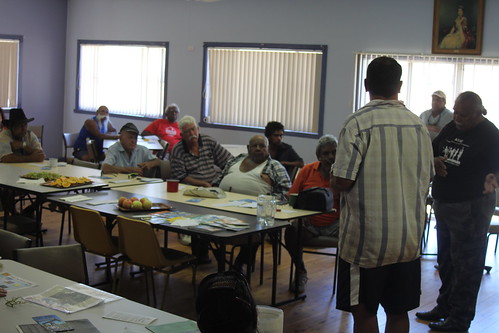
IMG 7232 Meeting of Culture for change 

The meeting was dotted with interested persons who want to save the Pilliga Forest from destruction from mining.  There are many reasons people put forward for this and it was evident from the opinions in the room this is the case.

IMG 7273.1  Paul Spearims Sister opened the Ceremony\

The day ended with awesome food and the best dances from all over the North West of NSW.

Images @ Eminpee Fotography

Saturday, January 25, 2014

Leard Blockade River Red Gum arrestee Susie Russell statement of events...

IMG 5008


Suzie Russell and Margo McLean find themselves in a situation they didn't expect. 

The girls headed off from camp to check on some trees they heard about and when they arrived they were dumbfounded to find that a 'Eucalyptus Camaldulensis' River Red Gum that was approximately 500 year old Scarred tree was being severely damaged by machinery trying to push it out of the ground.

Suzie Russell ran towards the tree and slid down the trench the digger had dug around the trees roots and even as a surprise to herself she was handed a D-Lock Lock-on implement and she locked onto the tree root in an attempt to save the tree.


Her lock on experience was terrifying as she endured much taunting from officers regarding a black snake that was seen in the area and the fact they could chuck this in on Suzie who was locked on in the hole.

After a couple of hours a key was produced and the lock was undone and Suzie was freed and the tree was pushed over.

The sad fact of this is the cultural significance not even noted and the age of this ancient being! 

This sort of treatment of our trees that are so culturally significant should not be destroyed by mining companies.  I feel so sad for the Gomeroi people who held this tree with great respect.  I always say this will cause much sickness amongst the perpetrators of this criminality and death of culture

Images @ Eminpee Fotography
Enhanced by Zemanta

Sunday, December 22, 2013

Aparteid in Australia

 
 Picture from Aboriginal Embassy

In Australia, apartheid is alive and kicking.
 

The richest land on Earth writes Aboriginal people out of history and pushes them to the margins. Like South Africa 30 years ago

John Pilger, The Guardian, November 5, 2013
 

The corridors of the Australian parliament are so white you squint. The sound is hushed; the smell is floor polish. The wooden floors shine so virtuously they reflect the cartoon portraits of prime ministers and rows of Aboriginal paintings, suspended on white walls, their blood and tears invisible.

The parliament stands in Barton, a suburb of Canberra named after the first prime minister of Australia, Edmund Barton, who drew up the White Australia Policy in 1901. “The doctrine of the equality of man,” said Barton, “was never intended to apply” to those not British and white-skinned.

Barton’s concern was the Chinese, known as the yellow peril; he made no mention of the oldest, most enduring human presence on Earth: the first Australians. They did not exist. Their sophisticated care of a harsh land was of no interest. Their epic resistance did not happen. Of those who fought the British invaders of Australia, the Sydney Monitor reported in 1838: “It was resolved to exterminate the whole race of blacks in that quarter.” Today, the survivors are a shaming national secret.

The town of Wilcannia, in New South Wales, is twice distinguished. It is a winner of a national Tidy Town award, and its Indigenous people have one of the lowest recorded life expectancies. They are usually dead by the age of 35. The Cuban government runs a literacy programme for them, as it does among the poorest of Africa. According to the Credit Suisse Global Wealth report, Australia is the richest place on Earth.

Politicians in Canberra are among the wealthiest citizens. Their self-endowment is legendary. Last year the then minister for Indigenous affairs, Jenny Macklin, refurbished her office at a cost to the taxpayer of $331,144. Macklin recently claimed that in government she had made a “huge difference”. This is true. During her tenure, the number of Aboriginal people living in slums increased by almost a third, and more than half the money spent on Indigenous housing was pocketed by white contractors and a bureaucracy for which she was largely responsible. A typical, dilapidated house in an outback Indigenous community must accommodate as many as 25 people. Families, the elderly and disabled people wait years for sanitation that works.

In 2009 Professor James Anaya, the respected UN rapporteur on the rights of indigenous people, described as racist a “state of emergency” that stripped Indigenous communities of their tenuous rights and services on the pretext that paedophile gangs were present in “unthinkable” numbers – a claim dismissed as false by police and the Australian Crime Commission. The then opposition spokesman on Indigenous affairs, Tony Abbott, told Anaya to “get a life” and not “just listen to the old victim brigade”. Abbott is now the prime minister of Australia.

I drove into the red heart of central Australia and asked Dr Janelle Trees about the “old victim brigade”. A GP whose Indigenous patients live within a few miles of $1,000-a-night resorts serving Uluru (Ayers Rock), she said: “There is asbestos in Aboriginal homes, and when somebody gets a fibre of asbestos in their lungs and develops mesothelioma, [the government] doesn’t care. When the kids have chronic infections and end up adding to these incredible statistics of Indigenous people dying of renal disease, and vulnerable to world record rates of rheumatic heart disease, nothing is done. I ask myself: why not?

“Malnutrition is common. I wanted to give a patient an anti-inflammatory for an infection that would have been preventable if living conditions were better, but I couldn’t treat her because she didn’t have enough food to eat and couldn’t ingest the tablets. I feel sometimes … as if I’m dealing with similar conditions as the English working class at the beginning of the industrial revolution.”

In Canberra, in ministerial offices displaying yet more first-nation art, I was told repeatedly how “proud” politicians were of what “we have done for Indigenous Australians”. When I asked Warren Snowdon – the minister for Indigenous health in the Labor government recently replaced by Abbott’s conservative Coalition – why after almost a quarter of a century representing the poorest, sickest Australians, he had not come up with a solution, he said: “What a stupid question. What a puerile question.”

At the end of Anzac Parade in Canberra rises the Australian National War Memorial, which the historian Henry Reynolds calls “the sacred centre of white nationalism”. I was refused permission to film in this great public place. I had made the mistake of expressing an interest in the frontier wars in which black Australians fought the British invasion without guns but with ingenuity and courage – the epitome of the “Anzac tradition”.

Yet, in a country littered with cenotaphs, not one officially commemorates those who fell resisting “one of the greatest appropriations of land in world history”, wrote Reynolds in his landmark book Forgotten War. More first Australians were killed than Native Americans on the American frontier and Maoris in New Zealand. The state of Queensland was a slaughterhouse. An entire people became prisoners of war in their own country, with settlers calling for their extinction. The cattle industry prospered using Indigenous men virtually as slave labour. The mining industry today makes profits of a billion dollars a week on Indigenous land.

Suppressing these truths, while venerating Australia’s servile role in the colonial wars of Britain and the US, has almost cult status in Canberra today. Reynolds and the few who question it have been smeared and abused. Australia’s unique first people are its Untermenschen. As you enter the National War Memorial, Indigenous faces are depicted as stone gargoyles alongside kangaroos, reptiles, birds and other “native wildlife”.

When I began filming this secret Australia 30 years ago, a global campaign was under way to end apartheid in South Africa. Having reported from South Africa, I was struck by the similarity of white supremacy and the compliance and defensiveness of liberals. Yet no international opprobrium, no boycotts, disturbed the surface of “lucky” Australia. Watch security guards expel Aboriginal people from shopping malls in Alice Springs; drive the short distance from the suburban barbies of Cromwell Terrace to Whitegate camp, where the tin shacks have no reliable power and water. This is apartheid, or what Reynolds calls “the whispering in our hearts”.

• John Pilger’s film Utopia, about Australia, is to be released in British cinemas on 15 November and in Australia in January

http://www.theguardian.com/commentisfree/2013/nov/05/australia-apartheid-alive-aboriginal-history

Source: http://warriorpublications.wordpress.com/2013/11/05/in-australia-apartheid-is-alive-and-kicking/

Picture: Gomerio Warrior faces off police after the 26th of January 2012 incident at the Aboriginal Tent Embassy with country's political leaders.