Showing posts with label Language. Show all posts

Saturday, August 31, 2019

Forest .... The word!


IMG 7008
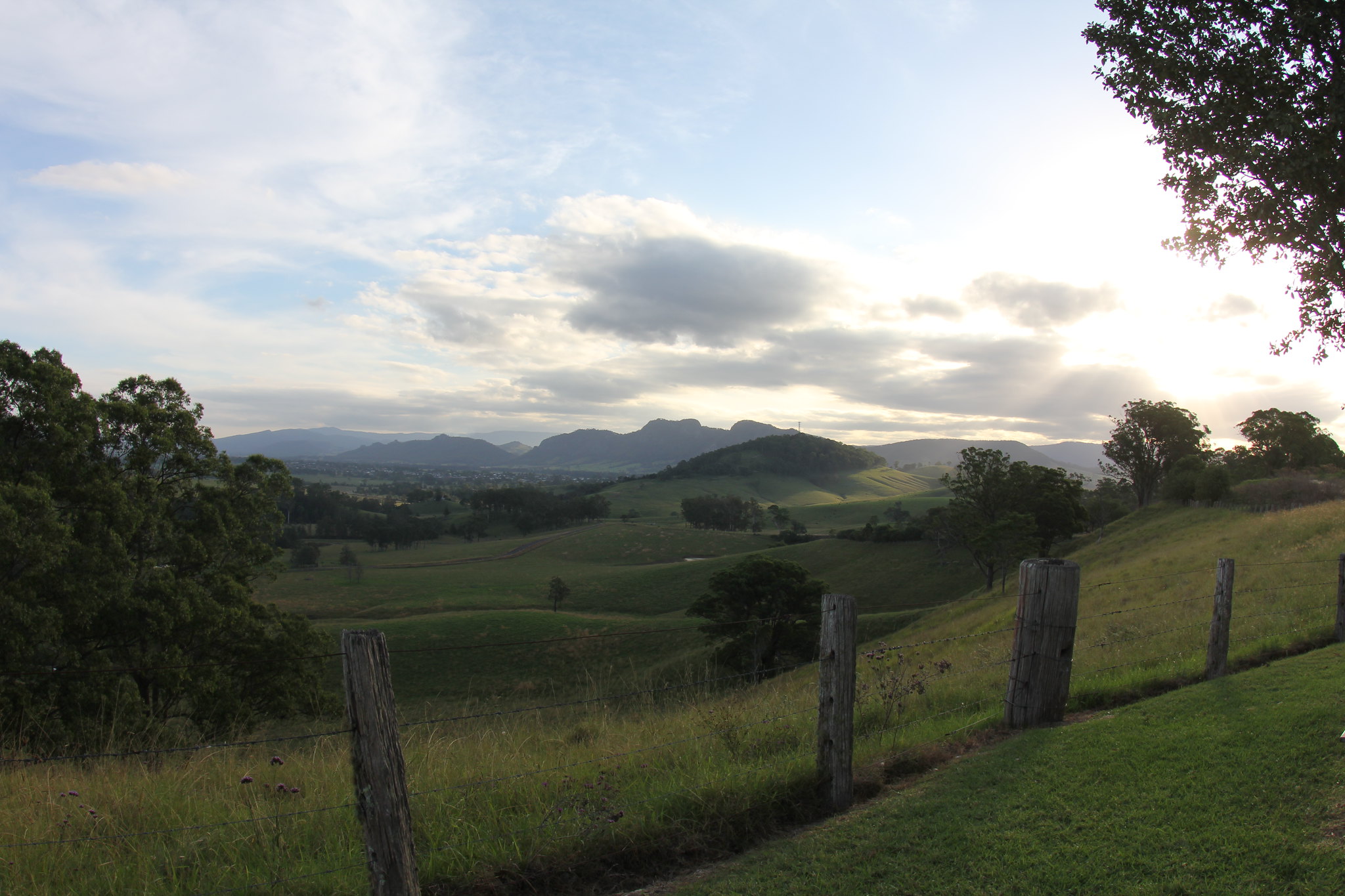
East Coast Forest Woodland (Shatterwood)

So many words in our English language are pulled from a myriad of other languages / cultures.  English presents itself as a complete stew of words and it is often very misleading.

The word Forest stems from the french Language as do so many other English words we use daily.  Edward Rutherfurd explains this true meaning of the word for us.
"Forest: a french term. It did not mean woodland, although huge woods lay within it's borders, but rather, an area set apart - a reservation - for the king's hunting." 
Edward Rutherfurd, (The New Forest)

Images @ Eminpee Fotography 

Wednesday, March 22, 2017

How Dungog got its name.

My personal introduction to Dungog was in 1981.   I had friends who moved to this area from Newcastle.  We would travel up through the Hunter Valley and visit them often.  The joke was to say you were off to the town of "Dead Dog".  Dungog was affectionately known as  this by many people.

Dungog is a Dairy and Timber town in the Upper Hunter Valley on the Williams River, which is one of ten tributaries which flow into the Hunter River.

Observing the town from my perspective back in 1981, I could see that Dungog had become a quiet place and it appeared a shadow of its former self.  This was evident in the buildings of the main street still there for all to see when I visited for the first time.  I am seriously not sure what it looks like now after the fatal 2015 weather event.


My friends lived in a tin house.  The entire house was corrugated iron.  Apparently this was a very cheap way to clad a house in the early part of the 20th Century.  The house would have been erected   around the 1920's circa.  It was a funny old house with a grape vine with the sweetest grapes I have ever tasted growing from the grape trellis build on the southern side of the house.   This area was an oasis to sit down under during the heat in the endless summers of the Upper Hunter Valley area. 

From Wikipedia, the free encyclopedia

Gringai

The Gringai people, a group of indigenous people of Australia, are those Australian Aborigines that were united by a common language, strong ties of kinship and survived as skilled hunter–fisher–gatherers in family groups as a clan of the Worimi people, whose traditional land is now known as the Port Stephens of New South Wales, Australia.
Gringai lands are mostly in the Williams River and the Manning Valley, and include what is now known as Dungog, Paterson, Gresford, Brookfield, Tocal, to the headwaters of the Williams and Chichester rivers.

Gringai land also includes the southern valleys of the Barrington Tops.

Two people of the Gringai are known by that name as a result of their arrest and subsequent trials. Wong-ko-bi-kan and Charley were both arrested within a year or so of each other in the 1830s.
Wong-ko-bi-kan was sentenced to be transported to Tasmania for manslaughter after spearing a John Flynn, where he died soon after. Charley was the only man to be hanged in the town of Dungog on the Williams River, as a demonstration to his fellow Gringai.

Another was Jack Cook Maloogat (born 1830, Cobark Station NSW, died 1925), Captain Thunderbolt's horse boy. Maloogat was also one the last of his tribe to have gone through the last known Keepara - Kiapara ceremony or Boombit (from boy to man) where he got his name (Maloogat-son of thunder).
One of the Bora rings, initiation grounds of the local tribe, was in the Bulliac-Tugrabakh area, 4 miles (6 km) from Gloucester. Another two Bora rings where they used to camp and hold their corroborees are located where the Gloucester Public School now stands; one ring was used by the women and the other used by the men.
IMG 9844 Gloucester area
Looking across the valley overlooking Gloucester

Captain Thunderbolt - Fred Ward a close friend of my great grand father Edward Butler.  They often met in the bush for smoko.  This is a well known story in my family told to me by grandmother and her sisters.
On the 21st April, 2015 a devastating weather event occurred in the Dungog area.  This resulted in houses washed away and the human and material cost was gigantic.

NSW wild weather: Dungog like 'war zone' after flash flooding

Updated  

"Despite their best efforts, three elderly people died when their homes were literally swept away after 300 millimetres of rain hit the area in less than 24 hours."
It became known as Dungog's stormageddon!

Link ABC:  Dungog like 'war zone' after flash flooding

Images @ Eminpee Fotography

Tuesday, August 16, 2016

Palya Aunty, Yuwa Mirri

 ‘Palya’    ‘Yuwa’

‘Palya’ is a Pintupi language word meaning ‘good’.

IMG 2341 My friend Vince Forrester from NT.
My friend Vince from the Northern Territory ... a Luritja Man from the Peterman Ranges area.   Palya Vince

The word ‘Palya’ is also a way of greeting. For instance, seeing someone again one would say “Palya?”  an answer might be “Yuwa” – meaning yes – ‘Palya’.

Images @ Eminpee Fotography

Wednesday, February 25, 2015

Dazed over the Day's

IMG 8877
Sunday
So where do we get all the names of the days from that we have today, and why do we consider Sunday the first day of the week?  Why is church held for Christians on a Sunday and other religions celebrate on other days.   Rome had an awful lot to do with all of this as you will see if you read on.

The names of the days of the week have been taken from Teutonic and Roman deities. During the first Century CE after Jesus was crucified and martyred some 500 years later,  Rome decided that Saturday would be dedicated as the first day.  This experienced changes over time.  Sunday venerated the Sun, so this day became the allotted first day of the week due to its contemporary importance.  Sun worship was rife at that same time which is still evidenced today  in many church cathedrals in with the etching and statues and windows clearly depicting an astrological flavour.

Sunday

 dies solis (Latin)  meaning "sun's day":  A well venerated "Pagan Roman" church holiday.  It is also known as Dominica (Latin) which means the Day of God.  The three languages of French, Spanish, and Italian which all came about because of  Latin.  Noticeably the Latin root meanings can be seen in those languages.  English is derived from both Old Germanic and Latin and a smattering of others.
French: dimanche; Italian: domenica; Spanish: domingo
German: Sonntag; Dutch: zondag.

Monday
 Anglo-Saxon monandaeg, "the moon's day".  Day two was sacred to the goddess of the moon.
French: lundi; Italian: lunedi. Spanish: lunes. from Luna, "Moon"
German: Montag; Dutch: maandag.

Tuesday

The Norse god Tyr.   Rome  venerated their War-God Mars  (dies Martis)
French: mardi; Italian: martedi; Spanish: martes.
The Germans call Dienstag (meaning "Assembly Day"), in The Netherlands it is known as dinsdag, in Danmark as tirsdag and in Sweden tisdag.

Wednesday

To honor Wodan (Odin).
Rome venerated the God Mercury dies Mercurii,
French: mercredi; Italian: mercoledi; Spanish: miércoles.
German: Mittwoch; Dutch: woensdag.

Thursday

The Norse God Thor is responsible for Thursday like Thorsday. The Norse language refers to this day as Torsdag.  Rome named this day after Jupiter their most venerated god who was also known as Jove. dies Jovis ("Jove's Day")
French: jeudi; Italian: giovedi; Spanish: jueves.
German: Donnerstag; Dutch: donderdag.

Friday

The day in honor of the Norse goddess Frigg.
Old High German - frigedag.
Rome committed Friday to the most sacred goddess Venus. (dies veneris).
French: vendredi; Italian: venerdi; Spanish: viernes.
German: Freitag ; Dutch: vrijdag.

Saturday

This day was "Saturn's Day" - (dies Saturni, Saturnalia) This is the day Rome honored Saturn.
Anglo-Saxon: sater daeg.
French: samedi; Italian: sabato; Spanish: sábádo.
German: Samstag; Dutch: zaterdag.
Swedish: Lördag; and in Danish and Norse: Lørdag ("washing day").

Source : http://en.wikipedia.org/wiki/Names_of_the_days_of_the_week

Images @ Eminpee Fotography

Monday, January 12, 2015

The Hebrew Alphabet per Character

A Sefer Torah, the traditional form of the Heb...
A Sefer Torah, the traditional form of the Hebrew Bible, is a scroll of parchment. (Photo credit: Wikipedia)

The Ten Commandments, In SVG
The Ten Commandments, In SVG (Photo credit: Wikipedia)
א   Aleph   1 (Post Biblical Numerical Value)
The root אלף ('alap) means to learn or teach, not in a very good way (Proverbs 22:25, Job 15:5, 33:33, 35:11).The identical word אלף ('alep) means to produce thousands (Psalm 144:13 only).  Derivation אלף means oxen (the connection lies perhaps in guidance or to team up). Some say this looks like the head of an ox.
ב Beth  2
The word בית (bayit) means house in the sense of a building, but also household; wife and children. This word also serves to mean House Of The Lord, or Temple. As preposition the letter means 'in'. As such it is the first letter of the Bible. The first word of the Bible comes from the name of the 20th letter: rosh.
  ג  Gimmel  3
The verb גמל (gamal) means to deal, or recompense in the sense of benefitting from. Derivation גמל (gamal) means camel. It is said that the letter reminds of a camel's neck.
ד  Daleth  4
From root דלה (dala), draw (water). The word דלת (delet) specifically denotes a swinging door of a building. Since doors most commonly opened inward, this 'thing-you-draw' is named after a going out of a house, or letting someone else in.
Other derivations are: דל (dal), door; דלה (dala), door; דלי (dali), bucket; דליות (daliyot), branch, bough.
Because a door in Bible times hinged in the upper corner, it is said that the letter daleth reminds of that.
ה    He  5
The spelling and thus the meaning of this word is uncertain. Klein spells הא (he), meaning lo! behold! Fuerst holds to הי, and thinks it's a part of the name for heth; letter 8.  As prefix this letter serves as the definite particle, the, which is used far less than our word the, and specifically when an emphasis or reference to a previous statement is made.
ו      Waw  6
The word וו (waw) means hook or peg, and is strictly reserved for the hooks/ pegs that kept the curtains of the tabernacle in place. It is said that the shape of the letter waw reminds of a hook or peg.
ז        Zayin  7
Meaning debated. The word זין does not occur in Scriptures. Klein suggests that the form of the zayin represents a hand weapon, and explains that zyn means arm, ornament, to arm, to adorn (no references to Scriptures). Fuerst goes after the assumed root זוז (zwz) of the verb זיז (ziz), moving things (like animals) and מזוזה (mezuza), doorpost. The identical root זוז (zwz) yields זיז (ziz), meaning abundance, fullness.
Another word of interest is זון (zun), to feed.
ח      Heth   8
Meaning again unknown. According to Fuerst it means fence in, destroy. Fuerst also thinks it has to do with a fence, but it could equally possible be the symbol of stacking stones.
ט       Teth   9
Klein derives from טות (twh), spin, and renders teth to knot, knot together, to twist into each other, to interweave. The letter teth indeed looks like a little vortex or spiral.
י        Yod   10
One of two regular words for hand (the other being the 11th letter). יד (yad) denotes the hand, typically not as outstretched, but rather as holding something or being a fist. The word is synonymous with power or might; to fall in one's hands. It's typical that the alphabet's smallest letter came to mean power, but perhaps it's shape reminded of a little fist.
 ךכ   Kaph  20, 500
One of two regular words for hand (the other being the 10th letter). כף (kap) denotes the hand as outstretched, asking and weak. The word basically encompasses anything that is hollow or outstretched in order to receive something: dish, plate,etc.
The letter kap is written ך when it occurs at the end of a word, and כ when it occurs at the beginning or half-way a word.
ל       Lamed  30,
The verb למד (lamad) means learn or teach. Derivative תלמיד (talmid) means scholar (hence Talmud), and derivative מלמד means ox goad. The letter lamed is said to look like such a device, and when Jesus says to Saul, "it is hard for you to kick against the goads" (Acts 26:14) He may hint at Saul's learning rather than coercion.
ם מ   Mem 40, 600
מים (mayim) means waters in the sense of a larger body (sea, ocean). It is suggested that the letter mem looks like a wave.
The letter mem is written ם when it occurs at the end of a word, and מ when it occurs at the beginning or half-way a word.
V11p133004 Torah
V11p133004 Torah (Photo credit: Wikipedia)
ןנ       Nun  50, 700

The verb נון means propagate, increase. Derivative נין means offspring, posterity. The letter is often said to mean and resemble a fish, but the word nun is not used as such in the Bible. In stead, the word for fish comes from another verb which means multiply, increase: דגה (daga).
The letter nun is written ן when it occurs at the end of a word, and נ when it occurs at the beginning or half-way a word.
ס      Samech  60
The verb סמך (samak) means lean upon, support, uphold. It is the verb that is used in the phrase "laying on of hands."
ע      Ayin  70
The word עין (ayin) means eye in all regular senses, but also as means of expression (knowledge, character, etc). The word עין (ayin) means spring or fountain. The eye is one of four bodily "fountains," the other three being mouth, skin and urethra (and only the mouth is not supposed to produce water outwardly). Transpiration releases the body of excessive heat; urine evaluates toxins, and the eye produces water commonly when grief or pain is processed. All have to do with cleansing or purification.
פף     Pe  80 ,800
The word פה (peh) means mouth, but is often synonymous with speech. With a little good will one may recognize a face with a mouth in the shape of this letter. The letter peh is written ף when it occurs at the end of a word, and ף when it occurs at the beginning or half-way a word.
ץצ  Tsadhe Tsadiq  90 , 900
Klein derives from the verb צוד (sud), to hunt, and states that צדי means fish hook (no Biblical occurrence). Another name for this letter is צדיק (saddiq), just, righteous. The letter tsadhe is written ץ when it occurs at the end of a word, and צ when it occurs at the beginning or half-way a word.
ק     Qoph  - 100
This word occurs in Scriptures only as תקופה (tequpa), meaning a coming around, or circuit of space or time. Klein reports that the root verb קוף (qwp) covers a circular motion and that it also serves to denote the ear of an axe or needle, or the back of the head. BDB relates it to נקף (naqap), go around, compass. An amusing other use of this name is as קוף (qop), meaning ape (1 Kings 10:22); probably a loan word.
ר     Resh  - 200
The very common word ראשׁ (rosh) basically means head, but is used to indicate whatever leads or comes first: captain, summit, cap stone. Preceded by the particle beth and in the form ראשׁית (reshit), first, beginning, best, it is the first word of the Bible: בראשׁית Breshit, meaning In the beginning.
The word ראשׁ is also used to indicate a certain plant (called head) that yields poison: (rosh), gall, venom. HAW and BDB note that this usage is always figurative: Deuteronomy 32:32, Psalm 69:21.
A third usage of this word is ראשׁ (resh), poverty, from the root רושׁ (rush), be poor.
שׂ  Sin  שׁ  Shin - 300
As derivation from the verb שׁנן (shanan), sharpen, the word שׁן (shen) means tooth or ivory. Both the verb and the noun are used primarily in a literal sense: sharpening of swords and arrows, but sometimes figuratively: the sharpening of one's tongue (saying sharp, mean words) or the sharpening of one's mind (Deuteronomy 6:7). The noun is famous for its part in the lex talionis, the law of retaliation; a soul or a soul, an eye for an eye (16th letter), a tooth for a tooth (21st letter), a hand for a hand (10th letter), a foot for a foot, a branding for a branding, a stripe for a stripe (Exodus 21:24). The letter thanks its name perhaps to its looking like a row of teeth.
ת Taw  - 400
תו (taw) means mark, and its verb תוה (tawa), scribble, limit, is probably derived from the noun. HAW suggests that the more ancient form of this letter looked like an X, a shape which lends itself easily as a general mark. The word תאוה (ta'awa) means boundary (that which is marked). The verb תוה (tawa) is used only once in the meaning of pain or wound (Psalm 78:41).
More information :
http://www.abarim-publications.co/Hebrew_Alphabet_Meaning.html#.VLGE4ntCfb5

Friday, December 26, 2014

Metropolis

More religious terminology is found here with the word METROPOLIS.  These are words we use in everyday life that we may or may not know pertains to church politics. 

It is interesting fact that our current Prime Minister who is a devout Catholic wrote for the Catholic Bulletin and crossed over to politics.  I see this as proof the church is still very much alive and wielding power from the shadows.  It appears if this is the case that no much changes over many centuries when it concerns the church or its derivatives who have all learned very well.


The word we see a lot when hearing Roman Catholic Terminology is the word "See" or "Holy See".  This word is derived from Diocese.[sees]

I spend a lot of time reading history and in particular lately the histories attached to the Duchy's and to the Roman Empire and the Holy Mother Church as it was affectionately known by those who loved the church for what it offered.

Metropolis (or metropolia or metropolitanate): an ancient diocese (especially in Byzantine areas) or set of dioceses with a metropolitan as the ruling bishop or primate. A metropolis may have constituent dioceses.

A metropolis is a see or city whose bishop is the metropolitan of a province. Metropolises, historically, have been important cities in their provinces.

IMG 7161 Tamworth Church
Church
In the Eastern Orthodox churches, a metropolis is a type of diocese, along with eparchies, exarchates, and archdioceses.  A similar system exists in the Roman Catholic Church.

[Reference to Archdioceses] 
A diocese, from the Greek term διοίκησις, meaning "administration", is the district under the supervision of a bishop. It is also known as a bishopric.

A diocese is divided into parishes (in the Church of England into benefices and parishes). This structure of church governance is known as episcopal polity.
Wikipedia

Images @ Eminpee Fotography

Monday, August 25, 2014

Languages of the Worimi - Kattang

I spend a lot of time trying to find out as much truth as possible before this government does an burning like in Alexandria and gets rid of the evidence of the past crimes against the people of this land. 

IMG 9900 AGL
The mountains around Gloucester


This land was stolen and it was done in the face of the entire world and the entire world did nothing to right this wrong and yet we are called to right the wrongs of other lands then on behalf of those that stole this land and have not sorted that deal out yet.  I feel we should down tools and go no further on this track until this is reconciled properly,  this has been way over due.

This is some stuff my friend sent me regarding the Worimi people who are the people of the area where AGL are planning to drill for CSG at Gloucester and in the surrounding areas of the Avon River Flood plain. 

I am hoping to meet up with some one who can help me to empower any elders to stand up and be counted and to show their ancestors they have not forgotten their true identity.


Images @ Eminpee Fotography

Monday, June 16, 2014

ABRACADABRA is The Bull, the only Bull.

IMG 2706 Clearwater Beasts
Photo: Did you know... 
 For ABRACADABRA is The Bull, the only Bull. Concerning abracadabra Samson Arnold Mackey (Mythological Astronomy of the Ancients Demonstrated) states:
"But the slow progressive disappearance of the Bull is most happily commemorated in the vanishing series of letters so emphatically expressive of the great astronomical fact.
For ABRACADABRA is The Bull, the only Bull. The ancient sentence split into its component parts stands thus:
Ab'r-achad-ab'ra, i. e., Ab'r,
the Bull; achad, the only, - Achad is one of the names of the Sun,
given him in consequence of his Shining ALONE, - he is the ONLY Star to be seen when he is seen -
the remaining ab'ra, makes the whole to be,

The Bull, the only Bull; while the repetition of the name omitting a letter, till all is gone, is the most simple, yet the most satisfactory method that could have been devised to preserve the memory of the fact; and the name of Sorapis, or Serapis, given to the Bull at the above ceremony puts it beyond all doubt.

This word (Abracadabra) disappears in eleven decreasing stages; as in the figure. And what is very remarkable, a body with three heads is folded up by a Serpent with eleven Coils, and placed by Sorapis: and the eleven Volves of the Serpent form a triangle similar to that formed by the ELEVEN diminishing lines of the abracadabra."

SATOR-AREPO-TENET-OPERA-ROTAS.JPG

"SATOR-AREPO-TENET-OPERA-ROTAS" by self-work - Own work. Licensed under Public domain via Wikimedia Commons.


* VOLVES =  to turn or roll over
.
Images @ Eminpee Fotography - Beasts

Thursday, May 01, 2014

Proto-Indo-European language

IMG 8775.1
Albert Namatjira
The Proto-Indo-European language (PIE) is the linguistic reconstruction of a common ancestor of the Indo-European languages spoken by the Proto-Indo-Europeans.  Biologists have been able to  utilize tools that have been developed for creating evolutionary family trees to solve a long term problem with archeology, the origin of the Indo-European family of languages. 


This interests me because I keep seeing Latin root words close to many original languages from this country which number around 620 language groups.  Is this a coincidence I asked myself?

The linguists say there is a connection in language. The existence of PIE was first postulated in the 18th century by Sir William Jones, who observed the similarities between Sanskrit, Ancient Greek, and Latin.

So I propose there is many commonalities to Latin with Aboriginal languages here in this country as well.  There has been some studies done where DNA is concerned and there is a common gene with the Australian Aboriginal, the Chinese, The Indian and the Gaelic peoples.  This seems very feasible hypothesis in so many ways.

It is nice to know it was the Irish who mostly loved the indigenous people of this land when they experienced any freedom from the tyranical English colonizers.

The people doing this study will be met with a lot of flack regarding the origins but I commend them for trying to find the truth.  Applying filters to the computer program that highlight when the Romans did what they did and how this effected the languages of the world as well is so clever.

A quote by David Anthony of Hartwick College from the New York Times (read more) 
A key piece of their evidence is that proto-Indo-European had a vocabulary for chariots and wagons that included words for “wheel,” “axle,” “harness-pole” and “to go or convey in a vehicle.” These words have numerous descendants in the Indo-European daughter languages. So Indo-European itself cannot have fragmented into those daughter languages, historical linguists argue, before the invention of chariots and wagons, the earliest known examples of which date to 3500 B.C. This would rule out any connection between Indo-European and the spread of agriculture from Anatolia, which occurred much earlier.
“I see the wheeled-vehicle evidence as a trump card over any evolutionary tree,” said David Anthony, an archaeologist at Hartwick College who studies Indo-European origins.


Thursday, January 09, 2014

Some Bundjalung Lingo to start with!

The Bundjalung language was spoken in an area that included the north-east corner of New South Wales and the south-eastern corner of Queensland. This area stretches from Grafton on the Clarence River in the south, to the Logan River in the north and inland as far as the Great Dividing Range at Tenterfield and Warwick.


 IMG 7057

It includes the regional centres of Lismore, Casino, Kyogle, Woodenbong, Byron Bay, Ballina, Coolangatta-Tweed Heads, Murwillumbah, the Gold Coast, Beaudesert and Warwick.

IMG 7067

IMG 6946
Lewis Walker is doing everything he can to rejuvenate Bundjalung Culture at Tabulam NSW

IMG 7071


Images taken from PDF Document / An All-Dialect Dictionary of Banjalang,
An Australian Language No Longer in General Use:
Lexicography and project report by Margaret C. Sharpe

IMG 7070

GOD - TUNKY
WIND - BORRIGAM
HEAT - WOON
IMG 7064

FLY - TOONBURRA
 CARPET SNAKE - YUMBA
BLACK SNAKE - KOONGAI

IMG 7063

YES - YOE
LITTLE - BIDUNG
HUNGRY - GOBBERRIE

IMG 7061

DULUBI  - GUN, FIREARM
DUNM-A - SPLIT, OPEN UP

IMG 7069

Dictionaries in Progress

IMG 7060

DU:NIM-A - FLOAT

IMG 7059
 
References:
REFERENCES

Allen, John and John Lane. 1913. "Grammar, vocabulary, and notes of the Wangerriburra Tribe." Appendix to Report of the Protector ojAboriginals. Brisbane.

Calley, Malcom. n.d. Manuscript with word lists and phrases. Canberra: Australian Institute of Aboriginal and Torres Strait Islander Studies.

Crowley, Terry. 1978. The Middle Clarence Dialects of Bandjalang. Canberra: Australian Institute of Aboriginal Studies.

Cunningham, M.C. 1969. A Description of the Yugumbir Dialect bj Bandjalang. University of Queensland Arts Series. Vol. 1,no. 8:69-122.

. 1976. Notes on the Bandjalang spoken at Lismore from Bill Turbull, MS.

Curr, E.M. 1886-7. The Australian Race, Volumes 1-4. Melbourne: Australian Governnlcnu Printer.

Geytenbeek, Brian and Helen Geytenbeek. 1971. Gidabal Grammar and Dictionary.
Canberra: Australian Institute of Aboriginal Studies.

. n.d. Word list from Ken Gordon in the Baryulgil dialect.

Hanlon, W.E. 1934. Vocabulary, Historical Society of Queensland.

Hargrave, E. 1903. "Aboriginal Dialects, Tabulm, Wauthum, Thaubin." Science, February 2 1, 1903:7-8.

. 1903. "Aboriginal Dialects, Tadeddno." Science, February 21, 1903:8.

. 1903. "Aboriginal Dialects, Copmanhurst." Science, February 21, 1903:8-9.

. 1903. "Aboriginal Dialects, Woodenbury." Science, February 21, 1903:6-7.

Holmer, Nils. 1971. Notes on the Bandjalang Dialect Spoken at Coraki and Bungawalhiiz Creek, New South Wales. Canberra: Australian Institute of Aboriginal Studies.

.1983. "Manandjali in Linguistic Survey of South-Eastern Queensland." Pacific tinpristic:~

D. Vol. 54:410-437. Canberra: Australian National University.  Livingstone, Rev. 1982. "A short grammar and vocabulary of the dialect spoken by the Minyug people, on the north-east coast of New South Wales." Appendix to An Ausrralirrtl  Language. Pp. 3-27. Edited by John Fraser. Sydney: Australian Government Printc.1.

 Images @ Eminpee Fotography 
Enhanced by Zemanta

Saturday, September 15, 2012

This MUMMU is the creative word, the life of the universe.

This MUMMU is the creative word,
the life of the universe. 


IMG 9936 Uluru Dreaming 2012

Mummu vizier of primeval gods Apsu, the fresh water, and Tiamat, the salt water. An ancient Sumero-Babylonian craftsman-god, and personification of technical skill. Mummu is also referred to as "the deep" several times in Mythological Texts.
In ancient Sumerian, the word mummu translates to "the one who has awoken".
Deity ruler of "The Ancients", Mesopotamian purveyors of technical knowledge, mathematics and abstract concepts.
Mummu is a Mesopotamian deity present in the Babylonian creation myth. Sometimes referred to as 'the son of Apsu and Tiamat', Mummu is the third god in the primordial cosmogenous divine trinity. As the third of the first gods Mummu symbolizes the mental world, or logos. Mummu appears also the Sumerian Myth of Zu where Imdugud, whose name is translated as 'flashing wind', steals the Tablets of Destiny but in turn is defeated by Ningirsu. In their battle an arrow in midair is ordered to return to its 'mummu', which in this case meant the shaft's return to the living reed from which it was cut, the guts return to the animal's rump and finally the feathers to the bird's wings. Therefore in a larger magnitude, mummu is detransformation, the return to chaos, demanifacturing. Through the Second law of thermodynamics, the dissipation of energy from matter and its 'return' to its simplest common denominator, mummu can be understood as Entropy. Towards the middle of the Babylonian creation myth, Ea (a more powerful deity) locks Mummu and Apsu away, reversing the process of degeneration and thus creating the physical world.
Mummu is also one of the names, given to Marduk (34-th name in Enuma Elish)

Images @ Melonpopzdropz Flickr
Enhanced by Zemanta