Showing posts with label Sexual Abuse. Show all posts

Tuesday, November 15, 2016

Nothing to see here? The abuse and neglect of children in care is a century-old story in Australia

Katherine McFarlane, Charles Sturt University
 
Last night’s Four Corners program presented evidence of widespread abuse and neglect suffered by children in the out-of-home care system. Sadly, it was an all too familiar story. The Australian care system has been subject to criticism for over a century.
Children described bullying, harassment and sexual abuse inflicted by other children who share their homes. Children also described adult men preying on and sexually exploiting girls in “resi” or residential care.
There were allegations of 12-year-olds being left without adequate clothing, stable accommodation or sufficient food, abandoned by the agencies that were supposed to care for them. Private, for-profit agencies were accused of financial mismanagement and rorting of taxpayer funds.
Some of the most horrific allegations didn’t make it to air, but were reserved for the digital broadcast available online immediately after the program. This included recent revelations of an alleged rape in New South Wales by UnitingCare staffers who had been entrusted with the care of 13-year-old “Girl X”, who died from a drug overdose just weeks before she was due to give evidence against her alleged attackers.
The digital broadcast also included the sexual predation by adults of children in Victorian state care, revealed in a “searing condemnation” by Victorian Children’s Commissioner Bernie Geary. This is an issue that the South Australian Child Protection Systems Royal Commission has also exposed.

A familiar story

Depressingly, the Four Corners program did not reveal much that was new. My own research has identified equally devastating statistics of abuse and neglect of children in care. Almost a quarter of the children in my study had been abused while in care, in what were meant to be safe placements.
The abuse, which was confirmed by state authorities, took the form of physical beatings, violence and sexual assault. The younger the child, the more likely they were to have been hurt while in care. A third of children under 13 years of age had been abused and a quarter had attempted suicide.
It would be naive to assume that the child welfare system is always benevolent and focused on providing nurture, protection and support. It cannot be guaranteed that the type of placement or the level of care provided is always based on a child’s needs. But across Australia, outcomes for children in care are generally regarded as highly unsatisfactory.
The United Nations (UN) has called attention to the “widespread reports of inadequacies and abuse” in Australian care systems. The UN has complained of the inadequate screening, training, support and assessment of carers. It has also complained of the inappropriate placements of children, and the mental health issues that are “exacerbated by (or caused in) care”.
Children in care have worse life outcomes than their peers. Whether we’re measuring health, education, employment, stability, well-being, social inclusion, financial and emotional security or involvement in the criminal justice system, children in care perform badly, even when compared to children of roughly comparable backgrounds and problems.

A century-old problem

In the 1870s, a scathing assessment of the Australian care system by British child welfare reformers the Hill Sisters led to a royal commission into charities.
On average, there has been a major inquiry into aspects of the child welfare system every three years since then.
The abuse suffered by children in care is exposed regularly. Every time, it’s met with the same excuses and promises. The children are presented as damaged, rather than the systems that are failing them. Agencies hide behind their professed best intentions and talk about “difficult” children.
Governments spruik their support for “salt of the earth carers” and the “saints” of child welfare. These governments are afraid that if they probe too deeply into the failings of the system and agencies, they will be left holding the baby. The focus shifts from the care agencies’ failure to protect vulnerable children, to airing agencies’ calls for additional funding and even earlier intervention.
The UK House of Commons has said that:
many of the things we wish would happen in the care system would follow naturally if the system and those who work within it were minded, and enabled, to act more like parents.

The failure of government

Government interventions to enforce this have proved spectacularly unsuccessful. The mountain of memorandums of understanding, guidelines, compacts, heads of agreement, committees, regulations, legislation, independent inquiries and reports established over the past 20 years in New South Wales alone have failed to improve things for children in care. Measures designed to protect children have not overcome the system’s inadequacies nor even begun to address the often questionable motivation and practices of the various players in the child welfare sector.
Government failure to hold the bureaucracy and its non-government sector partners accountable for poor decisions, inadequate oversight and accountability and the inefficient use of resources that erode the effective operations of the out of home care system is an indictment on us all.
These failures have allowed the problem of abuse and neglect in care to seem insurmountable, regardless of the devastation caused to the children concerned. There have been repeated professions of political goodwill and the commitment of countless millions of dollars across child welfare, juvenile justice, homelessness, education and health services. Despite this, we have failed to stop kids being abused by the very people we have trusted to care for them.
That the matters reported last night on Four Corners are occurring at the very time we have a Royal Commission watching the system shows the practitioners and agencies responsible for the neglect and abuse of children in their care have little to fear.
The Conversation

Katherine McFarlane, Senior Lecturer in Justice Studies, Charles Sturt University
This article was originally published on The Conversation.

Read the original article.

Tuesday, July 15, 2014

The Royal Commission - Abuse in Church based Care

I traveled to Sydney alone, to the city to share my story to the commission.  I was so pleased to be able to tell someone who actually seemed like they really cared about this.  From childhood I was used to being left out of the processes of life.  Other peoples issues although they always seemingly paled in significance to what I was experiencing seemed to always take precedence so I was used to feeling like no one cared anymore.   My children made fun of my abuse and my ex-husband encouraged their behavior by not standing up to the rubbish they proffered and making a proper difference.

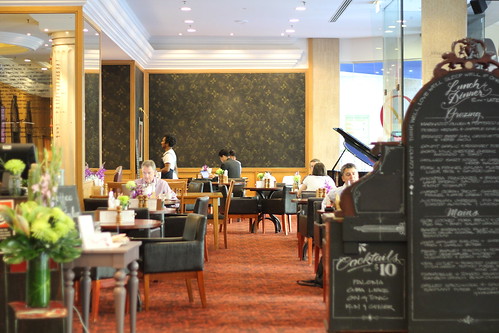
Whilst I was in Sydney giving evidence at the Royal Commission I stayed at the Menzies Hotel opposite Wynyard Station and I have to say this hotel was wonderful.  The service was magnificent and the staff were very friendly and helpful and the beds were very comfortable and large.

IMG 5650 Breakfast at the Menzies
Breakfast at the Menzies was delicious... pity it was such an unsavory reason to stay.

 From the website:
*** SHARE YOUR STORY NOW ***

 If you were sexually abused as a child in an Australian institution, like a school, church or sports club, you can tell your story to the Royal Commission. If you're ready to share your story, they are ready to listen.

Gather Information

You will need your contact details, the name and location of the institution and when the events occurred.

Contact Us

Make contact with the Royal Commission. You can call, write or email.

Get Support

Talk to a family member or friend or contact a support service.

Sunday, November 11, 2012

The Downfall of the True Occult - Catholism in Australia..


IMG 3003 St Mary's Catholic Church Bellingen NSWThe sexual, physical and emotional abuse of children by the priests and clergy of the Catholic Church have long been known to occur.  I have known people from my own childhood in the care of the government of Queensland.  There were many many horror stories. 

Now the O'Farrell Government of New South Wales has called for an investigation into the church and they are calling for the terms of reference to be widened to take in the entire Catholic Church of Australia.  Instead the Government have bowed down to the church once again and have now switched tac's and are now trying to ask for an inquiry into the Police who were investigating the allegations of abuse.

This is outrageous and together with the mining issues the government has this will bring about a complete uprising in the peoples hearts.  You cannot do this to abused people like they are those sheep sent to slaughter in Pakistan recently.  These are people with thoughts and feelings and by negating every single one of these by switching from the investigation of the Church to the investigation of the Police is reprehensible to say the least. 

St Mel's Catholic Church, Narrandera, New Sout...
St Mel's Catholic Church, Narrandera, New South Wales, Australia (Photo credit: ausgenjourneys)

From the AM Program

NSW Govt criticised over abuse inquiry

Emily Bourke reported this story on Saturday, November 10, 2012 08:08:00
ELIZABETH JACKSON: The New South Wales Government's decision to establish a special commission of inquiry into the police, rather than the Catholic Church, in relation to allegations of sexual abuse by priests, has been labelled a decoy.

The announcement of the inquiry by the New South Wales Premier came in response to explosive allegations by a senior detective who claimed the church actively and systematically hampered police investigations into pedophilia in the New South Wales Hunter region.

This morning there are renewed calls for the resignation of Catholic Cardinal George Pell and a nationwide Royal Commission to investigate decades of sexual abuse of children and alleged cover ups by the Catholic church.

Emily Bourke reports.

EMILY BOURKE: The New South Wales inquiry will look at how police handled claims of sexual abuse by priests in the Hunter region after a senior detective detailed allegations of a cover-up by the Catholic Church.

Nationals MP Troy Grant welcomes the special commission of inquiry but he says it's not enough by itself.

TROY GRANT: This inquiry is not the golden panacea to address the broader issues about the Church's response to paedophilia, or their lack of response, and inappropriate response, and their actions to thwart investigations or to interfere. That is most definitely the domain of a national Royal Commission in my view.

EMILY BOURKE: As a police officer in the 1990s, Troy Grant led an investigation in the Newcastle area that uncovered the abuse of 35 people.

He says the leadership of the Catholic Church remains unaccountable.

TROY GRANT: The behaviour of the Church has been consistent back in the 70s right through to the mid-2000s, which is why I've called for the leader of the Catholic Church, Cardinal Pell, to fall on his sword.

He should've and could've done more and done better. I think he's lost the moral right to decide whether the Church's response is now appropriate.

That should be left to a Royal Commission.

EMILY BOURKE: But Troy Grant says a state-based Royal Commission would be half-hearted.

TROY GRANT: The country owns this problem.

These offenders have been moved. There's been a systematic process of them being moved from parish to parish, from state to state, from country to country.

The states do not have the capacity to properly investigate that to get to the bottom of this problem, it has to be at a national level.

EMILY BOURKE: But Frank Brennan, a leading human rights lawyer and Professor of Law at the Australian Catholic University, disagrees.

FRANK BRENNAN: I think a Royal Commission has become something of a platitude.

I think to have a specific inquiry at this stage in relation to the events at Newcastle is helpful in that it helps to focus on an area under diocese where there's obviously been considerable trouble. And to try and get clarity about an appropriate way forward there might then give lessons for other places and for the future.

My concern still about a Royal Commission as such, particularly at a national level, would be that it would be such an open-ended process that whether or not you'd get the same learnings, I just don't know.

EMILY BOURKE: During her trip to Bali this week, the Prime Minister was asked whether it was time for a proper inquiry.

She expressed her concern about the issue but said she'd review the latest revelations when she returns to Australia.

JUDY COURTIN: A Royal Commission is a bit of a no-brainer and should be non-negotiable.

EMILY BOURKE: Judy Courtin is a Melbourne-based lawyer who is researching abuse within the Catholic Church and its response.

JUDY COURTIN: The reasons for a Royal Commission have existed for decades.

What's different now is that there is, after many decades of hundreds and hundreds of people trying to do something about these crimes, finally these victims are being heard, they're being listened to.

I think there is an extraordinary amount of momentum growing for a Royal Commission, and I don't see that there's any other way out.

ELIZABETH JACKSON: Judy Courtin, a Melbourne-based lawyer, ending that report from AM's Emily Bourke.

And we have attempted to contact George Pell this morning and invited him to appear on Saturday AM, but so far our calls haven't been returned. 

 Images @ Melonpopzdropz Flickr


Enhanced by Zemanta