~Author Unknown~
Our hair is the physical extension of our thoughts, it gives us direction throughout our lives; each of our hair represents ourselves, they're strong connection points both of our body and of our spirit according to indigenous peoples.
Men and women of wisdom have long hair; on the other hand, in places where tyranny has been presented in any of its forms, short hair has been obligatory and this, together with other factors, has culminated in the spiritual and physical defeat of the peoples.
Hair has its own language and character, and the way it is styled is extremely important to whoever wears it:
The line in the middle represents the alignment of thought.
The braid, the unity of thought with the heart.
Loose hair means security.
Hair up, conviction.
Currently people comb their hair without knowing the meaning of their actions and the style in which it is used, hair is important because leaving vanity or practicality aside, the way you wear your hair will directly affect our mood.
Going into the thinking of indigenous peoples we will find that the way of wearing hair combed was of utmost importance because this way their participation in various events was described and announced: marriage or war, joy or mourning.
Through the hair and headdresses he wore, you could know the maturity of people, their status in society or the times of peace and war.
Hairstyles were like the seasons; They changed on public, private, and ceremonial occasions.
The hair represented the individual's thoughts and spiritual state; showing the bonds and spiritual unity of his family and defining the cultural harmony and spiritual alignment of his community.
The hair represented the states of nature, flowed in a straight line like waterfalls, or rippled like river water.
Indigenous children were taught to wash and rinse their hair.
In the teachings of many indigenous tribes, cutting hair represented a process of mourning or proximity to death.
Hair was a mystical element in all of them.
They did not allow anyone to touch their hair without their permission.
On the importance of long hair:
For a long time, peoples of different cultures have not cut their hair, because it is a part of who they are.
When the hair is allowed to reach its maximum length, then phosphorus, calcium, and vitamin D are produced, and enter the lymphatic fluid and finally the cerebrospinal fluid through two ducts in the upper part of the brain.
This ionic change makes memory more efficient and leads to increased physical energy, increased endurance, and stoicism.
If you decide to cut your hair, not only will this extra energy and nutrients be lost, but your body will need to provide a large amount of vital energy and nutrients to regrow lost hair.
Also, the hairs are the antennas that collect and channel the energy of the sun or (prana) to the frontal lobes, the part of the brain that is used for meditation and visualization.
These antennas act as conduits to achieve a greater amount of subtle energy, cosmic energy.
It takes approximately three years from the last time the hair was cut to form new antennae at the tips of the hair.
Wet hair:
When you pick up wet hair, it will tend to shrink and pinch a little, and even break as it dries.
A better idea is to take the time to sit in the sun once in a while and allow your clean, damp hair to dry naturally and absorb extra vitamin D.
Yogis recommend washing your hair every 72 hours (or more frequently if your scalp sweats a lot). It may also be beneficial to wash your hair after being upset or angry, to help process emotions.
Haircut:
Often when people were conquered or enslaved, their hair was cut as a sign of slavery, helplessness, and humiliation.
The bones of the forehead are porous and their function is to transmit light to the pineal gland, which affects brain activity, as well as the thyroid and sex hormones.
Just as tribes and entire societies were conquered, the haircut became so prevalent that the importance of hair was lost after a few generations, and hairstyles and fashion became the focus.
Closing cycles:
Our hair, like every cell in our body, has a memory, which is why it is common that when we close a chapter of our life, our being asks us for a haircut, unconsciously due to the need for renewal, as when trees loosen their bark, until to regain its vitality.
Wooden comb:
Yogis also recommend using a wooden comb or brush to comb your hair, as it offers a great deal of circulation and stimulation to the scalp, and the wood does not generate static electricity, causing a loss of energy. from the hair to the brain.
You will notice that if you comb from front to back, back to front, and then several times to the right and to the left, it will refresh you, no matter how long your hair is.
All the weariness of the day will be gone.
For women, using this technique to comb hair twice a day is said to help maintain youth, a healthy menstrual cycle, and good eyesight.
If you have balding problems, the lack of energy in your hair can be counteracted with more meditation.
If you are finding some strands of silver (gray hair) in your hair, be aware that silver or white color increases the flow of energy and vitamins to compensate for aging.
For brain health, as you age, try to keep your hair as healthy and natural as possible.
It is said that when you allow the hair to grow to its full length and wind it around the crown of the head, the energy of the Sun, the prana, the vital energy, goes down the spine.
To counter that downward trend, the Kundalini life energy rises to create balance.
."~Unknown~
Showing posts with label Culture. Show all posts
Friday, May 21, 2021
Sunday, August 27, 2017
Johnny Cakes
Jonny Cakes
I had to re-blog this post. I am making my outside fire able to accommodate Johnny Cakes and a griddle today. Not making an entire kilo of flour though as there is only two of us.
Enjoy Johnny Cakes..
Aunty Viv a Bunjalung elder ... we had Johnny cakes together.
Before invasion of this land the women gathered and soaked and dried and ground to make flour to make johnny cakes in the coals. Flours were made from plants that had to be processed to leech out any toxins first.
Helen said... "DON'T KNEAD the Johnny Cakes" .. I made a batch and didn't knead them and these were 100% better.
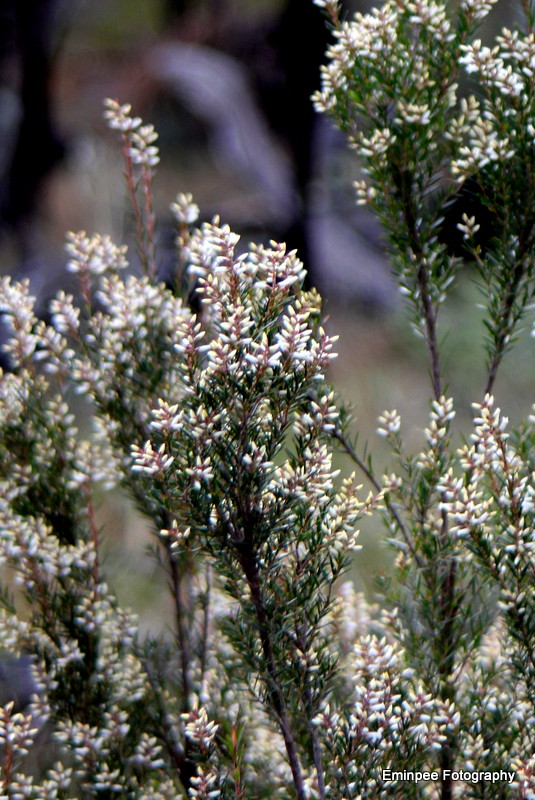
Images @ Eminpee Fotography
I had to re-blog this post. I am making my outside fire able to accommodate Johnny Cakes and a griddle today. Not making an entire kilo of flour though as there is only two of us.
Enjoy Johnny Cakes..
Aunty Viv a Bunjalung elder ... we had Johnny cakes together.
Before invasion of this land the women gathered and soaked and dried and ground to make flour to make johnny cakes in the coals. Flours were made from plants that had to be processed to leech out any toxins first.
Helen said... "DON'T KNEAD the Johnny Cakes" .. I made a batch and didn't knead them and these were 100% better.
Images @ Eminpee Fotography
Labels:
Bush Tucker,
Culture,
Food
URUNGA NSW
Deepwater NSW 2371, Australia
Tuesday, October 04, 2016
Carnival .... now where did this word originate?
![]() |
| Image Source: Mauricio Santana |
Nimrod who was known also as Baal brought in a demented idea of human sacrifice and cannibalism to the ritual practices.
“The priests of Nimrod or Baal were necessarily required to eat of the human sacrifices; and thus it has come to pass that ‘Cahna-Bal’ (cahna meaning priest & Bal referring to Baal) is the established word (cannibal) in our own tongue for a devourer of human flesh.” - Alexander HislopHence this innocent sounding word 'Carnival' also relates to the same dastardly history. Cannibalism derives from Caníbales, the Spanish name for the Caribs, a West Indies tribe that formerly practiced cannibalism.
The Korowai tribe located in the south-eastern area of Indonesian West Papua is reported to be one of the last known tribes of the world who take part in ritual cannibalism. A local cannibal cult killed and ate victims as late as 2012.
So after reading the histories of several cultures who engaged in this practice - it is clear to me that the Japanese who ate prisoners during the war was a terribly low point in humanity.
So is Carnival and Cannibal distantly related? Probably, because festivals were originally times of offerings to the Gods for good favor for the year ahead or for giving thanks. Today's festivals both secular and religious all stem from these original practices.
![]() |
| Saltwater - Freshwater Festival, Coffs Harbour NSW |
URUNGA NSW
Deepwater NSW 2371, Australia
Saturday, September 17, 2016
Sumer (Su-Mare) .. in ancient Mesopotamia.. aka Chaldea
![]() |
The world’s deepest secrets all can be traced back to Sumer in Mesopotamia, the first known great civilization which was located between the Tigris and Euphrates Rivers at the headwaters of the Persian Gulf. In biblical times, it was called Chaldea or Shinar. Today, it is known as Iraq.
The Sumerian culture seemed to appear from nowhere more than 6,000 years ago and before it strangely vanished, it had greatly influenced life as far east as the Indus River, which flows from the Himalayas through Pakistan to the Arabian Sea, and the Nile of the later Egyptian kingdoms.
Virtually nothing was known about the Sumerians until about 150 years ago when archeologists, spurred on by the writings of Italian traveler Pietro della Valle in the early 1600s, began to dig into the strange mounds which dotted the countryside in southern Iraq.
Beginning with the discovery of Sargon II’s palace near modern-day Khorsabad by the Frenchman Paul Emile Botta in 1843, archeologists found buried cities, broken palaces, artifacts and thousands of clay tablets detailing every facet of Sumerian life.
By the late 1800s, Sumerian had been recognized as an original language and was being translated. Despite today’s knowledge, the general public still has been taught little about this first great human civilization which suddenly materialized in Mesopotamia.
Ancient Sumerians loved beer and invented beer and are known as the worlds most ancient brewers.
Shinnar .. Hebrew name for Sumer
Mush-ta-ba ... Arkaddian for Gemini
URUNGA NSW
Deepwater NSW 2371, Australia
Wednesday, August 24, 2016
Muslims vs Vikings
Muslims vs Vikings
“And were it not for Allāh’s
repelling some men with others, the earth would certainly be in a state
of disorder; but Allāh is Gracious to the creatures”[1]
The Ummah of the best of the Messengers, the imam of the messengers,
most beloved of the Messengers, Muhammad (sallAllāhu ‘alayhi wasallam)
is one which is raised in distinction by Allāh as the greatest Ummah.
Such an honour is granted upon this Ummah for many reasons but one is
certainly the honour, courage and valour shown by its adherents.
Arguably, there is not a group of any significance whom you can think of
from history but that you will find that the Muslims had challenged
them or had been challenged by them and that the Muslims were
victorious. More than a millennium ago fleets of Viking raiders were
striking fear into the hearts of coast and river-dwellers throughout
Europe. Many such foes have come and gone be it the Romans, the
Persians, the Crusaders, the Mongols and so on. So too you will find
that the Muslims also encountered the much feared Vikings.
These two worlds were of course very different. One was a red-headed
pagan tribe that wore horned helmets and pillaged for a living; the
other a cosmopolitan, sophisticated civilisation that spanned continents
and, at whose table, the rest of Europe picked up the crumbs. The
Vikings were at the height of their power and influence between the late
8th and early 11th centuries known as the ‘Viking Age’. During this
period, Islām was entering its golden age, with a renaissance of
unprecedented intellectual and economic heights that would eventually
reach from China to what is now modern-day Spain.
Who were the Vikings?
The Vikings’ homeland was Scandinavia: modern-day Norway, Sweden and
Denmark. From here they travelled great distances, mainly by sea and
river – as far as North America to the west, Russia to the east, Lapland
to the north and North Africa and Iraq to the south. They were skilled
craftsmen and boat-builders, adventurous explorers and wide-ranging
traders.
The Clash
When most people think of the history of Spain, rarely are
discussions of the Vikings evoked. Yet when the two cultures first met,
it was in battle in Al-Andalus, modern-day Spain.
What is interesting is that whilst the Muslims in the Middle East
referred to the Vikings as ‘Rüs’, which was the term they were also know
by to the Byzantine Romans, the Muslims in Europe in al-Andalus
referred to them as ‘Mâjus’, ‘Fire Worshippers’ – a pejorative reference
to their paganism and a label which Muslims also used for the fire
worshipping Persians.
Fresh from their conquests round that basin of the Mediterranean, the
Vikings sought to measure their strength against the military might of
the Muslims. In 844 (230AH), a letter arrived in the capital, Qurtuba
(Cordoba) from the governor of Lisbon, Burtùqaāl (Portugal, which finds
its root in the Arabic word for orange), Wahballah ibn Hazm to the emir
of the Umayyad Emirate of al-Andalus, ‘Abd ar-Rahman ibn al-Hakam II,
warning him that approximately 70-100 Viking ships had been sighted
around the coast of his province. In other accounts, the ships were seen
as so numerous that they were described as filling the sea with dark
red birds, whilst filling the hearts of men with fear and trembling.
After landing in Lisbon with their iron horned helmets, chain mail,
wooden shields, spears, bows, axes and swords, they caused havoc
terrorising the inhabitants. They then did the same in Cadiz and Sidona,
before striking the large city of Ishbiliyya (Seville) which they
besieged and took by storm and laid fire to the largest Mosque there.
They remained there for 7 days and, in other accounts, for 14 days.
It is said that the Vikings were uncommonly brave and therefore ‘Abd
ar-Rahman wanted to ensure all the reinforcements had arrived before
mounting a challenge. When all the soldiers from the borders had arrived
and gathered under one banner, the Muslims hastened and took their
position under the cover of night at a high point on the south east of
Seville at a place called Moron to lie in wait for the enemy. They used a
large tower of a Church in the town as a watch tower to observe the
movement of the Vikings. Just after the time of Fajr (the
prayer at dawn) had passed, the guard on the watch tower sent a signal
that the Mâjus Vikings were on the move numbering around 16,000. The
Muslims let them pass and then set upon them in ambush cutting them off
from the city of Seville where they were encamped and set about cutting
them down. This attack was carried out with great success.
Having decimated the Vikings in this attack, the Muslims advanced on
to Seville – when the Mâjus army there saw the advancement of the
Muslims and heard about the disaster that had befallen their detachment
army in Moron at the hands of the Muslims, they began to retreat back to
their ships and started sailing away. The Muslims pursued them and
captured and burned four of their ships having already unloaded them of
all their cargo.[2]
The Muslim historian, Ibn Adhari narrates the event of the victory as follows:
“God gave them to our swords and destroyed them, numerous as they were. Their general was killed. When they had been annihilated, the Government made this event known throughout the provinces to celebrate this event”.[3]
Terms following the battle and the intrigue of al-Gazzál
It was characteristic of the Vikings that trading often followed the
raiding and the sword. After the battle, the envoys of the king of the
Vikings came to ‘Abd ar-Rahman to ask for peace. ‘Abd ar-Rahman decided
to reply accepting this request and an exchange of envoys took
place. The man who was commissioned with this task from the Muslims
was Yahya ibn-Hakam, better known as al-Ghazál (not to be mistaken for
the Muslim sage, al-Ghazzali) who was the leading diplomat in al-Andalus
and who possessed keenness of mind, quickness of wit, skill in
repartee, courage and perseverance, and knew his way in and out of every
door. He, together with a companion of his made the perilous voyage to
the kingdom of the Vikings in the Atlantic North.[4]
Two days after arriving to a great island in the ocean, the king of
the Vikings summoned al-Ghazál to his presence. Al-Ghazál stipulated
that he would not be made to kneel to him and that he and his companions
would not be required to do anything contrary to their faith. The King
agreed to this, however, when they went to him, he sat before them in
magnificent guise, and ordered an entrance, through which he must be
approached, to be made so low that one could only enter kneeling.
Al-Ghazál being the wise man that he was, sat on the ground, stretched
forth his two legs, and dragged himself through on his rear. And when he
had passed through the doorway, he stood erect.
The king had prepared
himself for him, with many arms and great pomp. But al-Ghazál was not
overawed by this, nor did it frighten him. He stood erect before him,
and said: “Assalam Alaikum, Peace be with you, O king, and with those whom your assembly hall contains, and respectful greetings to you!“.
Al-Ghazál sensed that the King wished for him to be impressed by the
splendour of his palace and power which he perceived he held and as
such, al- Ghazál took this opportunity in also reminding the King what
his true reality by reciting a verse from the Glorious Qur’an carefully,
selected from Surah al-Qasas, the chapter which recounts the story of
Musa (ʿalayhi al-Salām) and Pharoah:
“And call not with Allāh any other god; there is no god but He, everything is perishable but He; His is the judgment, and to Him you shall be brought back. [5]
The King then said: “this is one of the wise men of his nation, we
wished to humiliate him but he outwitted me by showing me the soles of
his feet first sitting on the ground as he entered (rather than bowing
to me)”. Al- Ghazál read out ‘Abd ar-Rahman’s letter to the King and
presented the gifts which he had given him which pleased him much. From
the various chronicles where this story is found, it states that the
Queen took a real interest in Al- Ghazál and that he spent some time
with her speaking to her about Islām and the Muslim world. Pausing here
for a moment, it should be noted that earlier this year in March 2015, a
ring adorned with a violet-coloured piece of glass was found at an
excavation site at a Viking trading centre in Sweden. An inscription on
the glass has been found to read either “for Allāh” or “to Allāh”
in an ancient Arabic Kufic script. The ring was found in a grave north
of Borg on the Björkö Island. Clothes and jewellery around the
decomposed skeleton showed it to be a female burial dating back to 850
AD, which interestingly places it in the same period as al- Ghazál and
the Viking queen.[6] Either way, the ring constitutes evidence for direct interactions between the Vikings and the Islamic world.
Al- Ghazál returned to al-Andalus more than 20 months after his
departure. Although the Vikings would return once again to al-Andalus in
or around 859-860 during the reign of Emir Muhammad, this time they
were dealt with far more swiftly and set to flight immediately as the
previous attack some 29 years earlier had caused ‘Abd ar-Rahman to
militarise more aggressively which included him building an arsenal in
Seville, ordering many ships to be built and developing the navy who
guarded the frontiers of the country and thus, fulfilling the task which
the Messenger of Allāh (sallAllāhu ‘alayhi wasallam) described as
follows:
“Guarding the frontier for a day in the path of Allāh is better than fasting and prayer of a month.” [7]
Further Encounter
The most important eye witness account of the Vikings that the world has to learn from today is from the works of a Muslim faqih,
an expert in Islamic jurisprudence and faith, in the court of the
Abbasid Caliph, Al-Muqtadir, Ahmad ibn Fadlanas – it was his account
that inspired author Michael Crichton’s 1976 novel ‘Eaters’ and the film
called the ‘13th Warrior’ starring Antonio Banderas.
Ibn Fadlan was sent from Baghdad in 921 to serve as the secretary to
an ambassador from the Abbasid Caliph al-Muqtadir to the iltäbär
(vassal-king under the Khazars) of the Volga Bulgaria, Almış. Primarily,
the purpose of their mission was to explain Islamic law to the recently
converted Bulgar peoples living on the eastern bank of the Volga River
in what is now Russia
Whilst on his mission, he came across and encountered the Vikings
whom he also spent some time with and whom he described as follows:
“I have seen the Rus as they came on their merchant journeys and encamped by the Vulgar River. I have never seen more perfect physical specimens, tall as date palms, blond and ruddy…Each man has an axe, a sword, and a knife, and keeps each by him at all times”.
He further commented on their hygiene customs when he recounted that: “They are the filthiest of God’s creatures,” and although he acknowledged that they washed their hands, faces and heads every day, he was appalled that they did so “in the dirtiest and filthiest fashion possible”
in a communal basin of water, an ancient Germanic custom that caused
understandable revulsion in a Muslim who typically performed ablutions
only in poured or running water.[8]
This was a period which saw the Vikings making regular journeys all
the way to Baghdad for trading. Hundreds of Viking Age graves and buried
hoards, it turns out, contain caches of still-gleaming Arab dirhams,
“the coin that helped fuel the Viking Age,” according to Thomas S.
Noonan of the University of Minnesota. Noonan is one of the world’s
leading experts on medieval Scandinavian ties with the Muslim world, and
a specialist in Viking numismatic history.
Points to note:
When researchers consider the history of the Vikings today, they are
heavily reliant on Muslim chroniclers because, unlike Europeans, the
Arab Muslims reports are considered to be far more objective and, in the
eyes of many scholars today, more credible. Most experts acknowledge
that the Vikings were, in general, victims of a medieval “bad press” by
many European nations because of the defeats the Vikings exacted on
them.
It is also easy to forget in today’s times when Muslims have become
comparatively weak, that it was not always like this. It shows us that
there was once a time when there was a flourishing field of Islamic
geography, a response to the thirst for knowledge about the vast Islamic
world and the regions beyond it. We also learn how Muslims conducted
themselves, being proud of their faith and not being overawed by a
dominant surrounding as we saw with the example of Al-Ghazál.
It is important for us to reconnect with our history and heritage to
learn about our rich tradition of innovation, culture, honour and
courage, planning and foresight and read about when the Ummah was great
so that the Ummah may become great once more inshaAllāh.
Source: www.islam21c.com
Notes:
For references on the battle, please see: Al-Kutia, translated by David James, “Early Islamic Spain”; And,
Ibn-Adhari, translated in Stefansson, Jon, “The Vikings in Spain. From Arabic (Moorish) and Spanish Sources”. In Saga-Book of the Viking Club: Vol. VI Proceedings. University of London King’s College, 1909, pp. 35-36.
For references on al-Ghazál, please see: “The Poet and the Spae-Wife, An Attempt to Reconstruct Al-Ghazal’s Embassy to the Vikings”, By W.E.D Allen.
[1] Al-Qur’ān 2:254
[2] Al-Kutia, translated by David James, “Early Islamic Spain”.
[3] Ibn-Adhari, translated in Stefansson, Jon, “The Vikings in Spain. From Arabic (Moorish) and Spanish Sources”. In Saga-Book of the Viking Club: Vol. VI Proceedings. University of London King’s College, 1909, pp. 35-36.
[4] “The Poet and the Spae-Wife, An Attempt to Reconstruct Al-Ghazal’s Embassy to the Vikings”, By W.E.D Allen.
[5] Al-Qur’ān, 28:88
[6] http://www.independent.co.uk/news/science/archaeology/engraved-ring-found-in-sweden-suggests-contact-between-viking-age-scandinavians-and-islamic-civilisation-10118283.html
[7] Muslim
[8] “Among the Norse Tribes, The Remarkable Account of Ibn Fadlan”, By Judith Gabriel
[7] Muslim
[8] “Among the Norse Tribes, The Remarkable Account of Ibn Fadlan”, By Judith Gabriel
DISCLAIMER: All material found on Islam21c.com is for free and is for information purposes only. All material may be freely copied & shared on condition that it is clearly attributed to Islam21c.com [hyperlinked] as the original source. The views expressed on this site or on any linked sites do not necessarily represent those of Islam21c.com
URUNGA NSW
Deepwater NSW 2371, Australia
Friday, April 15, 2016
MOB PRINCIPAL of LORE (Magnetic principal of people)
The life principle in each mob comes from keeping the Lore. This is the purpose. It establishes right and wrong. To lose temper, to think bad, to engage in anything that is not for the common good of all damages the Lore.
To damage one is to damage all because together they make up the one. Each mob is connected with song lines and stories.
Images @ Eminpee Fotography
Labels:
Aboriginality,
Culture,
Mobs
URUNGA NSW
Deepwater NSW 2371, Australia
Monday, November 02, 2015
Pyes Creek Aboriginal Massacre
![]() |
| Murder Site of Women and Children |
Read More Here
http://monumentaustralia.org.au/themes/conflict/indigenous/display/23416-bluff-rock-massacre
Labels:
Ancestors,
Bolivia Station,
Culture,
Sacred Site
URUNGA NSW
Deepwater NSW 2371, Australia
Monday, September 28, 2015
How does one say “Goodbye” to a Magnificent Woman Elder?
I am writing to let you know that my darling Yipi (Mum,...
Posted by Kapululangu Aboriginal Women's Association on Monday, 21 September 2015
Labels:
Ceremony,
Culture,
Death,
Indigenous Australians,
Respect
URUNGA NSW
Deepwater NSW 2371, Australia
Monday, September 21, 2015
BUWADJARR and the Creation Story PART 1
An insight into the traditional belief systems of the GAMILARAAY nation. This continent is home to hundreds of autonomous nation states with unique cultures, languages and traditions.
By Paul Spearim, GAMILARAAY
The story begins with BUWADJARR travelling throughout and within creation. BUWADJARR came from a place that was called GAMILU-BIDI WII (before the big light or the centre of the universe).
BUWADJARR had also passed on to us that traditionally in Gamilaraay we are not allowed to mention him by name (BAAYAMI). So we have to call him BUWADJARR which means creator, supreme father or fathers’ fathers’ father. The only time that you are allowed to mention his name is when you have been fully initiated.
Gamilaraay was created in a time when there was nothing, it was completely empty. Then BUWADJARR created our nation and now we have GAMILARAAY. If we break it down, we have GAMIL which means no/not and ARAAY which means having. Because now we have something and that is Gamilaraay.
He also passed onto us that storytelling, or more importantly BINANGGAL GAAYAA WANA-GI, listening too law and throwing words from the almighty father BUWADJARR, is how we as descendants of OLD GAMIL have always maintained a spiritual connection to our creation. OLD GAMIL is a word used along with BURRUGUU to describe when creation happened.
The first thing he did after travelling through the universe was that he created BIRRAYBIRRAAY (Orion’s Belt). This was a resting place within the centre of it for the lost spirits of any young boys and men.
BUWADJARR’s five wives also travelled with him and they were also very powerful. His five wives came from BARIYAN NGAMA, the Pleiades Constellation. Of BUWADJARR’s five wives, BIRRANGULU was the oldest and the carrier of all women’s knowledge. GANHANBILI, who was a few years younger, was the carrier of all women’s business and law. They were the older and wiser of the wives, and they had all the power and control.
The three younger wives were NGALIIR who was the holder of all umbilical cords, MUBALYAAL who was the carrier of all births, and finally the youngest of his wives NGAMU who was the carrier of all breast milk, nourishment and food. They all listened and learnt about creation from BIRRANGULU, GANHANBILI and more importantly from BUWADJARR.
These five wives also created a resting place called MIYAYMIYAAY, which was in the centre of the Pleiades Constellation. This was also a resting place that the young girls and women’s spirits could go.
After BUWADJARR had found a place that was suitable, he began creating us, the animals, plants, rivers, mountains and everything else that is found within Gamilaraay. This allows all living things in Gamilaraay to live as sentient organisms in OLD GAMIL.
Source: Brisbane Blacks
Then BUWADJAAR placed all of the Gamilaraay people into two main blood groups, the first being GUWAYMADHAN, the dark blood group, created from the ground low down and high up. Then we have GUWAYGALIYARR which is the light blood group that had among other things, the YARUDHAGAA, the matrilineal line of descent which all of Gamilaraay have to follow. YARUDHAGAA was created by BUWADJARR’s five wives.
http://brisbaneblacks.com/2014/02/18/first-nations-culture-demystified-2/
Labels:
BUWADJARR,
Culture,
Gamilaraay,
GAMILU-BIDI WII
URUNGA NSW
Deepwater NSW 2371, Australia
Monday, September 14, 2015
Scientica Islamica: (780 - 840 C.E.) Abu Abdullah Mohammad Bin Musa Al...
Scientica Islamica: (780 - 840 C.E.) Abu Abdullah Mohammad Bin Musa Al...: Abu Abdullah Mohammad Bin Musa Al Khawarizmi (780 - 840 C.E.) Abu Abdullah ...
URUNGA NSW
Deepwater NSW 2371, Australia
Saturday, August 29, 2015
Aboriginal legends reveal ancient secrets to science
Scientists are beginning to tap into a wellspring of knowledge buried in the ancient stories of Australia’s Aboriginal peoples. But the loss of indigenous languages could mean it is too late to learn from them.
The Luritja people, native to the remote deserts of central Australia, once told stories about a fire devil coming down from the Sun, crashing into Earth and killing everything in the vicinity.
Meteor-Map-Australia The Luritja lands include areas to the west and south of Alice Springs, extending around the edge of Arrernte country.
The local people feared if they strayed too close to this land they might reignite some otherworldly creature.
The legend describes the landing of a meteor in Australia’s Central Desert about 4,700 years ago, says University of New South Wales (UNSW) astrophysicist Duane Hamacher.
It would have been a dramatic and fiery event, with the meteor blazing across the sky. As it broke apart, large fragments of metal-rich rock would have crashed to Earth with explosive force, creating a dozen giant craters.
The Northern Territory site, which was discovered in the 1930s by white prospectors with the help of Luritja guides, is today known as the Henbury Meteorites Conservation Reserve.
Gigantic Wave
Mr Hamacher, who runs an Indigenous astronomy program at UNSW, says evidence is mounting that Aboriginal stories hold clues about events from Australia’s ancient past.
Last year, he travelled to Victoria with tsunami expert James Goff, also from UNSW, to visit members of the Gunditjmara people.
“They describe this gigantic wave coming very far inland and killing everybody except those who were up on the mountaintops, and they actually name all the different locations where people survived,” says Mr Hamacher.
He and Mr Goff took core samples from locations between 500m and 1km (0.6 miles) inland, and at each spot, they found a layer of ocean sediment, about 2m down, indicating that a tsunami likely washed over the area hundreds, or possibly thousands, of years ago.
The samples need further analysis but Mr Hamacher says it is a “very exciting” result that suggests the legend could be true.
Earlier this year, another team of researchers presented a paper arguing that stories from Australia’s coastal Aboriginal communities might “represent genuine and unique observations” of sea level rises that occurred between 7,000 and 11,000 years ago.
The crash landing of a meteor in the Central Desert would have been a fiery affair. Thousands of iron-based meteorite fragments have been found in the vicinity, validating its classification as an impact crater.
Nick Reid, a linguistics expert from the University of New England in Australia, co-authored the paper with marine geographer Patrick Nunn from the University of the Sunshine Coast.
Fact Checking
The stories they analysed, which had been documented in colonial times, referred to water levels rising over coastal areas that were once dry.
By looking at historical records of sea level rise following the last glacial period, about 20,000 years ago, they were able to match the stories to coinciding dates.
Mr Reid says the relative isolation of Australia’s indigenous people – living for 50,000 years more or less free from cultural disruptions – and the conservative nature of their culture could help explain why there is so much detail in their stories.
Secret Knowledge
“Aboriginal people have very particular beliefs about the importance of telling stories properly, and about stories being told by the right people,” he says.
They also employ a rigid kin-based, cross-generational system of fact-checking stories, involving grandchildren, parents, and elders, which Mr Reid says doesn’t seem to be used by other cultures.
This extreme conservatism and adherence to accuracy can also be seen in rock paintings, drawings and engravings, which were often used to support oral legends, says Les Bursill, an anthropologist and member of Sydney’s Dharawal people.
But there is a problem – Indigenous languages are dying off at an alarming rate, making it increasingly difficult for scientists and other experts to benefit from such knowledge.
More than 100 languages have already become extinct since white settlement. About 145 Indigenous languages are still spoken in Australia by at least one person but a 2014 report by the Australian Institute of Aboriginal and Torres Strait Islander Studies found that 75% of these were considered “critically endangered”.
Read Full Article Here - See more at: http://ancientexplorers.com/blog/aboriginal-legends-reveal-ancient-secrets-to-science/#sthash.hQBXluDZ.dpuf
The Luritja people, native to the remote deserts of central Australia, once told stories about a fire devil coming down from the Sun, crashing into Earth and killing everything in the vicinity.
Meteor-Map-Australia The Luritja lands include areas to the west and south of Alice Springs, extending around the edge of Arrernte country.
The local people feared if they strayed too close to this land they might reignite some otherworldly creature.
The legend describes the landing of a meteor in Australia’s Central Desert about 4,700 years ago, says University of New South Wales (UNSW) astrophysicist Duane Hamacher.
It would have been a dramatic and fiery event, with the meteor blazing across the sky. As it broke apart, large fragments of metal-rich rock would have crashed to Earth with explosive force, creating a dozen giant craters.
The Northern Territory site, which was discovered in the 1930s by white prospectors with the help of Luritja guides, is today known as the Henbury Meteorites Conservation Reserve.
Gigantic Wave
Mr Hamacher, who runs an Indigenous astronomy program at UNSW, says evidence is mounting that Aboriginal stories hold clues about events from Australia’s ancient past.
Last year, he travelled to Victoria with tsunami expert James Goff, also from UNSW, to visit members of the Gunditjmara people.
“They describe this gigantic wave coming very far inland and killing everybody except those who were up on the mountaintops, and they actually name all the different locations where people survived,” says Mr Hamacher.
| Australia-Coastlines-Aboriginal-Tsunami |
He and Mr Goff took core samples from locations between 500m and 1km (0.6 miles) inland, and at each spot, they found a layer of ocean sediment, about 2m down, indicating that a tsunami likely washed over the area hundreds, or possibly thousands, of years ago.
The samples need further analysis but Mr Hamacher says it is a “very exciting” result that suggests the legend could be true.
Earlier this year, another team of researchers presented a paper arguing that stories from Australia’s coastal Aboriginal communities might “represent genuine and unique observations” of sea level rises that occurred between 7,000 and 11,000 years ago.
The crash landing of a meteor in the Central Desert would have been a fiery affair. Thousands of iron-based meteorite fragments have been found in the vicinity, validating its classification as an impact crater.
| Henbury-Meteorite-Rock |
Nick Reid, a linguistics expert from the University of New England in Australia, co-authored the paper with marine geographer Patrick Nunn from the University of the Sunshine Coast.
Fact Checking
The stories they analysed, which had been documented in colonial times, referred to water levels rising over coastal areas that were once dry.
By looking at historical records of sea level rise following the last glacial period, about 20,000 years ago, they were able to match the stories to coinciding dates.
Mr Reid says the relative isolation of Australia’s indigenous people – living for 50,000 years more or less free from cultural disruptions – and the conservative nature of their culture could help explain why there is so much detail in their stories.
Secret Knowledge
“Aboriginal people have very particular beliefs about the importance of telling stories properly, and about stories being told by the right people,” he says.
They also employ a rigid kin-based, cross-generational system of fact-checking stories, involving grandchildren, parents, and elders, which Mr Reid says doesn’t seem to be used by other cultures.
This extreme conservatism and adherence to accuracy can also be seen in rock paintings, drawings and engravings, which were often used to support oral legends, says Les Bursill, an anthropologist and member of Sydney’s Dharawal people.
But there is a problem – Indigenous languages are dying off at an alarming rate, making it increasingly difficult for scientists and other experts to benefit from such knowledge.
More than 100 languages have already become extinct since white settlement. About 145 Indigenous languages are still spoken in Australia by at least one person but a 2014 report by the Australian Institute of Aboriginal and Torres Strait Islander Studies found that 75% of these were considered “critically endangered”.
Read Full Article Here - See more at: http://ancientexplorers.com/blog/aboriginal-legends-reveal-ancient-secrets-to-science/#sthash.hQBXluDZ.dpuf
Labels:
Culture,
Cycles,
Indigenous Australians,
Seas Rising
URUNGA NSW
Deepwater NSW 2371, Australia
Monday, August 24, 2015
Palm Trees in the Centre of Australia.
I always wondered how those palms got into the most remote places of the centre of Australia. I was very interested to read an article depicting the history of these palms. The Livistona palms, L Mariae... and the L Rigida palm species back up aboriginal lore and stories that say people brought the seeds here from the North.
This disproves the rubbish that tour guides tell people that these palms are left over remnants of the ancient Gondwanna Forest that covered this land at one time.
I am starting to lose count of situations where science spends a stack of money on research programs and the end result is exactly as is told in the stories that are passed on through thousands of years of tradition of oral teaching and story telling.
Read more at this website for Sovereign peoples
This disproves the rubbish that tour guides tell people that these palms are left over remnants of the ancient Gondwanna Forest that covered this land at one time.
More: http://nationalunitygovernment.org/content/research-findings-back-aboriginal-legend-origin-central-australian-palm-treesA striking example of how traditional ecological knowledge can inform and enhance scientific research. Professor David Bowman, University of Tasmania
| (ABC/Wikipedia) |
Read more at this website for Sovereign peoples
Asserting Australia's First Nations Sovereignty into Governance
Now its a matter of protecting these precious places from the Mining companies that are literally slaughtering this land to pieces.
Labels:
Central Australia,
Culture,
Flora,
Indigenous,
Palms
URUNGA NSW
Deepwater NSW 2371, Australia
Sunday, August 23, 2015
Talgambuun - Deepwater
Deepwater was established on the land of the Ngarabal people. (Said Gurrabul) These amazingly strong people had occupied and carefully cultivated the country around this area for thousands upon thousands of years as was done right across the country.
The Ngarabal name for Deepwater is Talgambuun. This means "Place of dry country with many dead trees".
The land around here holds a lot of sadness and pain. There was great resistance to the white man taking over the traditional lands of the Ngarabal people and it is recorded that many of the people were murdered.
Those murders should be prosecuted and those Ngarabal people who were murdered should be recognized as having been slaughtered illegally for trying to protect their land. A land that was being invaded illegally.
Today if some one comes to your door and forces their way inside and the law says you can't do anything or you will be prosecuted yourself seems like a ludicrous request, and by today's standards we should be able to easily see how the penny should fall here and how literally wrong it was what has happened.
For those that say get over it. Those that say this are without heart and without soul for this land in terms of the law. The land will embrace all of those that keep her laws and walk proud knowing the magic.
I look forward to the day this will be finally sorted and my brothers and sisters of this land can determine what happens on this land of Australia.
The Glen Innes Local Aboriginal Land Council manages approximately 3000 hectares of land near Strathbogie, NSW including The Willows, and the adjoining property Boorabee, which is owned by Boorabee Aboriginal Corporation, of which all members are Ngarabal people.
I look forward to having a yarn with people around here now I am living back up high where the big boulders lie and the trees have a story to tell.
Images @ Eminpee Fotography
The Ngarabal name for Deepwater is Talgambuun. This means "Place of dry country with many dead trees".
The land around here holds a lot of sadness and pain. There was great resistance to the white man taking over the traditional lands of the Ngarabal people and it is recorded that many of the people were murdered.
Those murders should be prosecuted and those Ngarabal people who were murdered should be recognized as having been slaughtered illegally for trying to protect their land. A land that was being invaded illegally.
Today if some one comes to your door and forces their way inside and the law says you can't do anything or you will be prosecuted yourself seems like a ludicrous request, and by today's standards we should be able to easily see how the penny should fall here and how literally wrong it was what has happened.
For those that say get over it. Those that say this are without heart and without soul for this land in terms of the law. The land will embrace all of those that keep her laws and walk proud knowing the magic.
There should be recognition of the past atrocities under an illegal government, and this government needs to be stood down from office because they are acting illegally.
I look forward to the day this will be finally sorted and my brothers and sisters of this land can determine what happens on this land of Australia.
The Glen Innes Local Aboriginal Land Council manages approximately 3000 hectares of land near Strathbogie, NSW including The Willows, and the adjoining property Boorabee, which is owned by Boorabee Aboriginal Corporation, of which all members are Ngarabal people.
I look forward to having a yarn with people around here now I am living back up high where the big boulders lie and the trees have a story to tell.
Images @ Eminpee Fotography
Labels:
Culture,
Deepwater,
Ngarabal,
Talgambuun
URUNGA NSW
Deepwater NSW 2371, Australia
Thursday, March 26, 2015
Why are they killing the oldest culture that has continued on Earth?
Right now in this country of Australia, we are experiencing an absolute nightmare with trying to protect what there is left of culture. The absolute magic of the real stories which this Abbott Federal Government is ransacking
There is truth to be read in Duane Hamacher's article about Meteorites and the incidence of these events still found in the dreaming culture today.These stories tell of these past cataclysmic events and these spiritually explained stories are still being told today. How can this continue to be passed on while a culture is under the trauma and attack its under by being forced from their land once again by corrupt greedy governments.
The denying of funding to the states for simple necessary things they made us all depend on them for. The cultural people of this land do not need all of this stuff but they are cut off from their traditional lands and water holes to care-take by mining. So much actual wealth has been dug out of the ground of these people being dispossessed it is obscene. There quibbling about money seems so absolute nonsense in the end looking at things realistically speaking. If the WA government are not taxing the Miners enough to be able to take care of the people they stealing the very wealth from then its grim.
Then they argue about the document and where it originated from in Federal Government as is the case with the framework set down for the ridiculous closures.
Indigenous Community Document Flawed
Meanwhile the miners are just mining away and people are largely watching out for the indigenous as they should but mark my words because those miners would be loving the squabble because they love to see what their power can achieve and this is very visible in all communities throughout Australia as townships rallied in support of the #WA150 and the closing of communities and the forcing of people to live in non traditional areas again and in places where there is already trouble identified. It does not seem like rocket science that this is doomed to fail. How many lives will be ruined into the bargain. They clearly do not care.
Images @ Eminpee Fotography
Labels:
Culture,
Indigenous Australians,
Meteorite,
The Dreaming,
WA150
URUNGA NSW
Urunga NSW 2455, Australia
Monday, March 23, 2015
ADANI Telling Custodians they dont have a say!
Now I am guessing people will be able to see why a number of us said to do business with Adani from India is a nightmare waiting to just happen.
I hope the United Nations steps in and has the actual balls to uphold its own law and make Australia's present government responsible for not standing by these people where the mining of cultural land goes because the brakes were already put on this in the past and all the "I'M SORRY'S" and the "CLOSE THE GAP" rubbish and inclusion in the constitution is all corrupt lies, trickery at large.
After all who would think a government would be capable of such audacity? That is what they are banking on here. Stealth.
Read Full Story at the ABC Here
Indigenous challenge to Carmichael megamine in Galilee Basin
The Guardian ran a story on the Indian firm Adani has appealed to the native title tribunal to bypass the traditional owners’ rejection of the Queensland mine
"Aboriginal group fights to stop $16bn Carmichael coalmine, Australia’s largest!"
ADANI has said that those of the tribunal holding up the ADANI MINE plans are not authorized to speak on behalf of Wangan & Jagalingou people!!Since when does INDIA tell the ORIGINAL PEOPLE of this land they have no jurisdiction to speak on their own land
Images @ Eminpee Fotography
Labels:
Adani,
Coal Mining,
Culture,
Mining
URUNGA NSW
Urunga NSW 2455, Australia
Wednesday, March 11, 2015
Abbott's highly offensive comments on culture - another serious gaff!
"Mr Abbott has sought to portray the ancient cultural practices of Aboriginal Australians as nothing more than a sea change move, the equivalent of painting landscapes on one's veranda".
West Australian Labor frontbencher - and Indigenous MP - Ben Wyatt
![]() |
| Image Source: Blackfulla Revolution |
![]() |
| Image Source: Wayne Williams |
I have lost count how much stupidity flows from the mouth of this man who is supposed to be the leader, the Prime Minister. There is nothing prime about him other than he is prime to be cut!
![]() |
| Arabuna totems |
Images @ Eminpee Fotography - totems
Labels:
Culture,
Indigenous Australians,
Tony Abbott
URUNGA NSW
Australia
Friday, February 27, 2015
Heritage Photography of the Aboriginal people.
![]() |
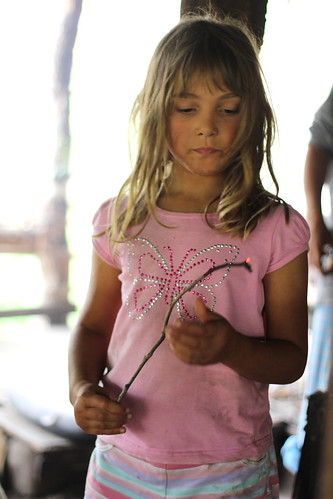
| My photography Gomeroi daughter playing with fire |
I would love to peruse the entire book as the images I did saw here were extremely interesting and showed the depth these people had and still have to this very day.
http://50years.aiatsis.gov.au/transcripts/calling-shots-aboriginal-photographies
Images @ Eminpee Fotography
Labels:
Culture,
Heritage,
History,
Indigenous,
Photography
URUNGA NSW
Australia
Subscribe to:
Posts (Atom)