Showing posts with label Ancient Rome. Show all posts

Tuesday, June 09, 2015

Baucis and Philemon .. If you do it for the least of them you have done it unto me.

IMG 6554.1

 taken from Ovid's (Metamorphoses VIII:621-96)
Zeus and Hermes came disguised as ordinary peasants, and began asking the people of the town for a place to sleep that night. They were rejected by all before they came to Baucis and Philemon's simple rustic cottage. Though the couple were poor, their generosity far surpassed that of their rich neighbours, at whose homes the gods found "all the doors bolted and no word of kindness given, so wicked were the people of that land."

After serving the two guests food and wine (which Ovid depicts with pleasure in the details), Baucis noticed that, although she had refilled her guest's beechwood cups many times, the pitcher was still full (from which derives the phrase "Mercury's Pitcher"). Realising that her guests were gods, she and her husband "raised their hands in supplication and implored indulgence for their simple home and fare." Philemon thought of catching and killing the goose that guarded their house and making it into a meal, but when he went to do so, it ran to safety in Zeus's lap. Zeus said they need not slay the goose and that they should leave the town. This was because he was going to destroy the town and all those who had turned them away and not provided due hospitality. He told Baucis and Philemon to climb the mountain with him and Hermes, not to turn back until they reached the top.
After climbing to the summit ("as far as an arrow could shoot in one pull"), Baucis and Philemon looked back on their town and saw that it had been destroyed by a flood and that Zeus had turned their cottage into an ornate temple. The couple's wish to be guardians of the temple was granted. They also asked that when time came for one of them to die, that the other would die as well. Upon their death, the couple were changed into an intertwining pair of trees, one oak and one linden, standing in the deserted boggy terrain.
In Matthew in the scriptures in chapter 25 Jesus tells a similar story.  He says, "Who are you? I never knew you." Because he said, "If you do it for the least of them you have done it unto me".  People only were nice to those they felt they could benefit from and not in the act of love.  Jesus points out that he was the prisoner they turned away and the homeless man they ignored etc.

This is the wisdom that is to be found, there is no division.  One cannot turn their backs from another ones suffering and consider themselves enlightened in any way shape of form.  The great unwashed to have a story and they are apart of the divinity too.  

However this has an opposite side, one must not throw pearls after swine.  One should not allow ones self or important resources to be abused. There has to be a noticeable change occur in the complainant and this understanding if there is evident from the beginning.   This is the limitation of personal attitude. 

Attitude is a very personal thing its the outward sign of what is within.  It is our disposition we display and our face we show the world.  I feel it is a hint to the heart energy within the mortal body that retains the divine spark, where there is light there can be no dark.  Absolute truth cannot corrupt itself.

In the Old Testament there is the story of Lot and his wife as they leave the city.   He asks his wife not to turn around or she would be turned into a pillar of salt. 

Salt is a crystal and I find this interesting. Lot is saying to his wife here, "You will not go any further in your journey  [vibratory core].  You will be stuck where you are. 

The advice to us here is this -  Do not look back on the past other than to learn and keep moving onwards.  She didn't listen and was turned to Salt.  This shows Humanity not moving to Divinity.  Salt being the salt of the Earth.

I feel it also shows us that our past can be made into a shrine or temple as an outward sign to show these changes that have occurred inwardly in our soul.


Image : "Jupiter and Mercurius in the house of Philemon and Baucis"
(1630/1633); by Rubens. Kunsthistorisches Museum, Vienna.
To read more about OVID pronounced (Arvid) follow this link.
A young man who was to be a lawyer changed his mind and became a poet and wrote works that eventually had him banished from the Roman Empire to a place in Romany called Tomis.

Sunday, March 15, 2015

One of my calendars.

The Romans did not number days of a month sequentially from the first through the last day. Instead, they counted back from three fixed points of the month:

  • The Nones (5th or 7th, depending on the length of the month), 
  • The Ides (13th or 15th), 
  • The Kalends (1st) of the following month. 

The Ides occurred near the midpoint, on the 13th for most months, but on the 15th for March, May, July, and October. The Ides were supposed to be determined by the full moon, reflecting the lunar origin of the Roman calendar. On the earliest calendar, the Ides of March would have been the first full moon of the new year. [skullion]

Religious observances

The Ides of each month was sacred to Jupiter, the supreme deity of the Romans. The Flamen Dialis, Jupiter's high priest, led the "Ides sheep" (ovis Idulius) in procession along the Via Sacra to the arx, where it was sacrificed.[3]

In addition to the monthly sacrifice, the Ides of March was also the occasion of the Feast of Anna Perenna, a goddess of the year (Latin annus) whose festival originally concluded the ceremonies of the new year. The day was enthusiastically celebrated among the common people with picnics, drinking, and revelry.

One source from late antiquity also places the Mamuralia on the Ides of March.
This observance, which has aspects of scapegoat or ancient Greek pharmakos ritual, involved beating an old man dressed in animal skins and perhaps driving him from the city. The ritual may have been a new year festival representing the expulsion of the old year.

In the later Imperial period, the Ides began a "holy week" of festivals
for Cybele and Attis. The Ides was the day of Canna intrat ("The Reed enters"), when Attis was born and exposed as an infant among the reeds of a Phrygian river.

He was discovered—depending on the version of the myth—by either shepherds or the goddess Cybele, who was also known as the Magna Mater, "Great Mother".

A week later, on 22 March, the day of Arbor intrat ("The Tree enters") commemorated the death of Attis under a pine tree. A college of priests called "tree bearers" (dendrophoroi) cut down a tree, suspended from it an image of Attis, and carried it to the temple of the Magna Mater with lamentations.

The day was formalized as part of the official Roman calendar under Claudius. A three-day period of mourning followed, culminating with the rebirth of Attis on 25 March, the date of the vernal equinox on the Julian calendar

Sources
Wikipedia
H.H. ScullardFestivals and Ceremonies of the Roman Republic (Cornell University Press, 1981), pp. 42–43

Images @ Eminpee Fotography

Saturday, January 03, 2015

TETRARCH ... A Ruler of a quarter.

English: Hellenic Flag of Anthimos Gazis used ...
English: Hellenic Flag of Anthimos Gazis used during the Greek War of Independence (Thessalia 1821) Greek: Σχεδίασμα σημαίας που ύψωσε ο Άνθιμος Γαζής στη Θετταλομαγνησία το 1821. (Photo credit: Wikipedia)
Tetrarch 

In Greco-Roman antiquity, the ruler of a principality, originally the ruler of one-quarter of a region or province was known as a tetrach.

The first tetrarchs ruled the four tetrarchies of Thessaly under Philip II of Macedonia.

Ancient Thessaly or Thessalia 
(Greek: Αρχαία Θεσσαλία, Thessalian: Πετθαλία, Petthalia) 

It was one of the traditional regions of Ancient Greece

During the Mycenaean period, Thessaly was known as Aeolia, a name that continued to be used for one of the major tribes of Greece, the Aeolians, and their dialect of Greek, Aeolic.

Etymologies
Middle English tetrarche, a Roman tetrarch, from Old French, from Late Latin tetrarcha, from Latin tetrarchēs, from Greek tetrarkhēs : tetra-, tetra- + -arkhēs, -arch.

Thursday, January 01, 2015

Zoroastrianism and Mithaism

The verbal root yaz- "to worship, to honor, to venerate". ie the "YAZIDI KURDS". Do the Yazidi Kurds still worship the Mithra or were they Zoroastrian.

IMG 2817
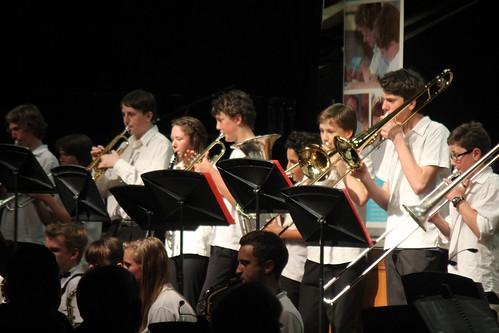
Music Education
1. ZOROASTRIANISM /ˌzɒroʊˈæstriənɪzəm/, also called Zarathustraism, Mazdaism and Magianism, is an ancient monotheistic Iranian religion and a religious philosophy. It was once the state religion of the Achaemenid, Parthian, and Sasanian empires. Estimates of the current number of

Zoroastrians worldwide vary between approximately 145,000 circa 2000 and 2.6 million in more recent estimates. The change over the last decade is attributed to a greater level of reporting and open self-identification more so than to an actual increase in population; however, precise numbers remain difficult to obtain in part due to high levels of historic persecution in Middle Eastern regions.

Zoroastrianism arose in the eastern region of the ancient Persian Empire, when the religious philosopher Zoroaster simplified the pantheon of early Iranian gods[2] into two opposing forces: Spenta Mainyu ("progressive mentality") and Angra Mainyu ("destructive mentality") under the one God, Ahura Mazda ("Illuminating Wisdom").

Zoroaster's ideas led to a formal religion bearing his name by about the 6th century BCE and have influenced other later religions including Judaism, Gnosticism, Christianity and Islam

2. The MITHRA is the faith or way the ROME venerated before converting to this lewd failed form of Christendom (false polluted form of Christian faith) they still worship today.

The Roman Empire were very good at illusion and creating the story along with the pomp and pageantry to make it look right royal and all the while it stunk to high heaven. For example, the corruption and thievery the entire RELIGION is built on. Its not good.. not at all.

Then to carry out their plans throughout history they continually had around them the brightest scholars and people at their disposal to write history how ever they chose to record it I suppose.
They did everything else with deceit - why would this be any different today? If someone could tell me why it would, I would listen?

This same false CHRISTENDOM had to be pushed out to the infidels... That is where that word was used first - by the Roman Church ... They built universities to propagate their lies to the world. They dressed it up with a bit more pomp and pageantry to give the illusion 'one' was entering a hallowed place of learning and contemplation.

 All UNIVERSITIES [like these] are instruments of this same system. And its a joke to think you can win by joining it - You SIMPLY CAN NOT WIN. Poor Jesus .. lol if he come back today would say WHO ARE YOU? I NEVER KNEW YOU!

Images @ Eminpee Fotography

Sunday, September 14, 2014

Queen Boudicca - The courageous warrior queen who fought for freedom from oppression, for herself, and all Celtic tribes.

QUEEN of the ICENI TRIBE
"I am descended from mighty men! But I am not fighting for my kingdom and wealth now. I am fighting as an ordinary person, for my lost freedom, my bruised body and my outraged daughters ....consider how many you are fighting . . .and why!  The you will win this battle, or perish.   That is what I, a woman plan to do! - Let the men live in slavery if they will."


Let the religiturds,  all the ones who love their pig, live in slavery for all time and perish accordingly. Gaze upon those you think are the cavalry, and know --- they are your beloved controlled opposition.   The very ones who aid are your real enemy!  If I said nothing I would be as they are, a cog in the wheel of the most determined enemy!
Choose wisely..  see things for what they really are not what you want them to be. This is the secret.

IMG 227 Farms not Mines
I will not go quietly.  I will not go along with what I know is wrong.
Its not quite Queen Boudicca, and I don't have a very sharp steel sword in my right hand.  What I do have is a sharp pen in my right hand and I use the principal that the pen is mightier than the sword. 

I write about the truth as much as I can.  I would love this to be my legacy.  I would posthumously love it if my daughters read the wisdom I have chronicled here on the pages from On the Hill.  Wouldn't that be special if they read this and thought - she did know what she was talking about, perhaps we could have tried to listen.

Images @ Eminpee Fotography

Friday, May 09, 2014

Aesculapius

Aesculapius:
A red cross with a snake, like rod of Aesculapius
A red cross with a snake, like rod of Aesculapius (Photo credit: Wikipedia)

The ancient Roman god of medicine, whose staff with a snake curled around it is commonly used as a symbol of medicine. According to mythology, Aesculapius's children included Hygeia, the goddess of health, and Panaceia, the goddess of healing.

English: Panacea Helping the Sick. The Verones...
English: Panacea Helping the Sick. The Veronese physician J. Gazola created this picture as part of a larger woodcut in 1716. It was for his book, The World is Deceived by False Doctors, in which he wrote of the four elements of the panacea (the cure-all). He cited Ecclesiastes 7:17b, “Do not be a fool — why die before your time?” as a reason to use his recipe (incidentally, the verse is taken out of context). (Photo credit: Wikipedia)

Hygiene Latin hugieinē technē, meaning "(art) of health"

The words Hygiene and  Cure come to mind here and I want to explore those words above, the names of the goddesses of health and healing.

Medicine is one of the oldest occupations on the planet too.   Those physicians and attendants who served this god were known as the Therapeutae of Asclepius.


Early Stanthorpe 1928
Stanthorpe Hospital build in 1923

Images @ Eminpee Fotography

Thursday, May 02, 2013

Sol Invictus

Religion of Ancient Rome...

IMG 8606 Mr Sun Man is here

Sol Invictus
("Unconquered Sun") was the official sun god of the later Roman Empire and a patron of soldiers. In 274 the Roman emperor Aurelian made it an official cult alongside the traditional Roman cults. Scholars disagree whether the new deity was a refoundation of the ancient Latin cult of Sol, a revival of the cult of Elagabalus or completely new. The god was favored by emperors after Aurelian and appeared on their coins until Constantine. The last inscription referring to Sol Invictus dates to 387 AD and there were enough devotees in the 5th century that Augustine found it necessary to preach against them.
Elagabalus AV Aureus. Struck 218-219 AD. Antio...
Elagabalus AV Aureus. Struck 218-219 AD. Antioch mint. IMP C M AVR ANTONINVS P F AVG, laureate, draped & cuirassed bust left, seen from behind / SANCT DEO SOLI, ELAGABAL in exergue, quadriga right bearing stone of Emesa upon which is an eagle; four parasols around. (Photo credit: Wikipedia)

It is commonly claimed that the date of 25 December for Christmas was selected in order to correspond with the Roman festival of Dies Natalis Solis Invicti, or "Birthday of the Unconquered Sun". 
Invictus ("Unconquered, Invincible") was an epithet for several deities of classical Roman religion, including the supreme deity Jupiter, the war god Mars, Hercules, Apollo and Silvanus.

Invictus
was in use from the 3rd century BC, and was well-established as a cult title when applied to Mithras from the 2nd century onwards.

It has a clear association with solar deities and solar monism; as such, it became the preferred epithet of Rome's traditional Sol and the novel, short-lived Roman state cult to Elagabalus, an Emesan solar deity who headed Rome's official pantheon under his namesake emperor.


Roman Imperial repoussésilver disc of Sol Invictus (3rd century), found at Pessinus (British Museum)
The earliest dated use of Sol invictus is in a dedication from Rome, AD 158. Another, stylistically dated to the 2nd century AD, is inscribed on a Roman phalera: "inventori lucis soli invicto augusto" (to the contriver of light, sol invictus augustus ).

Here "augustus" is most likely a further epithet of Sol as "august" (an elevated being, divine or close to divinity), though the association of Sol with the Imperial house would have been unmistakable and was already established in iconography and stoic monism.
These are the earliest attested examples of Sol as invictus, but in AD 102 a certain Anicetus restored a shrine of Sol; Hijmans (2009, 486, n. 22) is tempted "to link Anicetus' predilection for Sol with his name, the Latinized form of the Greek word ἀνίκητος, which means invictus".

Elagabalus

The first sun god consistently termed invictus was the provincial Syrian god Elagabalus. According to the Historia Augusta, the teenaged Severan heir adopted the name of his deity and brought his cult image from Emesa to Rome. Once installed as emperor, he neglected Rome's traditional State deities and promoted his own as Rome's most powerful deity. This ended with his murder in 222.
The Historia Augusta refers to the deity Elagabalus as "also called Jupiter and Sol" (fuit autem Heliogabali vel Iovis vel Solis).
This has been seen as an abortive attempt to impose the Syrian sun god on Rome;but because it is now clear that the Roman cult of Sol remained firmly established in Rome throughout the Roman period,this Syrian Sol Elagabalus has become no more relevant to our understanding of the Roman Sol than, for example, the Syrian Jupiter Dolichenus is for our understanding of the Roman Jupiter.

Images @ Melonpopzdropz  Flickr
Enhanced by Zemanta

Wednesday, May 01, 2013

If you don't know who Eusebius was then you don't know much about Churches of today.


Icon depicting the First Council of Nicaea.
Icon depicting the First Council of Nicaea. (Photo credit: Wikipedia)
Eusebius...  He put together the bible you read today... his choice of what books were included and what books were not included.
The Roman Catholic Church was a religion put together to control the people and to make it a business that gained power through wealth.

 Eusebius was a Roman historian, exegete and Christian polemicist. He became the Bishop of Caesarea in Palestine about the year 314. Together with Pamphilus, he was a scholar of the Biblical canon.
Born: 263 AD, Palestine
Died: 339 AD
known for being bishop of Caesarea Maritima, being involved in the Council of Nicea and the Arian Controversy, and for writing a 10-book Ecclesiastical History that covers Church history and the accession of the Roman emperors to A.D. 324.  

Eusebius' Ecclesiastical History includes quotations from earlier writers who are no longer extant. Before it, Eusebius had written an annalistic Chronicle of world history. After Emperor Constantine I died, Eusebius wrote a panegyric 4-book Life of Constantine. He also wrote an Onomasticon, which is useful for its geography of contemporary Palestine.

Religious Importance of Eusebius

Eusebius became bishop in Caesarea, Palestine, in about 313. He was involved in the Arian controversy supporting the Alexandrian priest Arius. He was provisionally excommunicated at a synod at Antioch, in about January 325. Later that year, at the Council of Nicaea, Eusebius was exonerated with the help of Constantine I. In 335, Eusebius attended a council of Tyre to oppose Athanasius and then was present when Arius was readmitted to the Church.


The Nicene Creed
The big thing which happened was the Nicene Creed, but in this way:
Most held out at first for a Scriptural language and expression to make clear against the Arians what the catholic doctrine had been, but as the discussions progressed it became evident that there was no Scriptural vocabulary which would correctly express the orthodox teaching. They lighted on a philosophical term, homoosios (same substance as) to express what they meant and what had always been the catholic teaching, but there was still needed a formula to summarize and convey their meaning. Of all bishops, Eusebius of Caesarea, who had been clobbered by the synod at Antioch the year before, produced a creed he used in his church. As far as it went, it was acceptable to the rest of the bishops, but they made additions in order to make it very clear that Arius' position was not what they espoused. This creed would be further amended by the First Council of Constantinople, and hence is technically known as the "Nicene-Constantinopolitan Creed", but maybe it should be known as the Caesarean-Nicene-Constantinopolitan Creed.
The Baptism of Constantine (1520-24) Fresco St...
The Baptism of Constantine (1520-24) Fresco Stanza di Constantino, Palazzi Pontifici, Vatican (Photo credit: Wikipedia)
Here it is beneficial to explain something councils do, almost as a byproduct. Primarily a council's purpose, at least a dogmatic council, is to proclaim with unmistakable clarity a doctrine already a part of the teaching of the Church. But at Nicaea there were not a few bishops, well-intentioned and open to the Spirit, who actually would have been hard pressed themselves to give a clear explanation of the relationship of the Son to the Father. But because they had humility and good will they learned from the discussions of the Council, at the same time that they were a part of the council process. Hence a council can also teach bishops. All of the bishops present signed the Creed, except two, Secundus of Ptolemais and Theonas of Marmarica. Constantine banished them along with Arius (whom he later recalled).
Date of Easter
Among other things they also settled (they thought) was the date of Easter. While most celebrated Easter on a Sunday to commemorate the resurrection, there were a few who celebrated on weekdays (even Good Friday) according to a Jewish reckoning (the Quartodeciman controversy  addressed by Pope Victor, 189-198), and those who did observe Sunday did not all observe on the same Sunday. Constantine wanted, as did most bishops, a universal observance.

To this very day it is disputed what the council fathers meant by their decision, and Easter is still observed variously, but the points of their decree supposed by most are:
1) Easter should be celebrated on the same day by all (a point all agree was contained in the decree);
2) Jewish custom was not the criterion to be followed (a point which is not cited by the Greeks, but strongly mentioned both in the writings which preceded the council and in Eusebius' report of it); and
3) that the practice of Rome and Alexandria (then West and Egypt) should remain in force, namely the Sunday after the first full moon of the vernal equinox 
(the Creeks do not cite the first half of this point, only the second).

But even Alexandria and Rome did not agree for a long time, due to calculations (miscalculations) as to the date of the vernal equinox. Rome celebrated the equinox on March 18, and Alexandria on March 23.

Since this is something scientific, that is, half way between the shortest and the longest day of the year, it could be and was eventually solved by the devising of various cycles, so that a fixed day in the lunar calendar (14th of Nisan) would occur according to a predetermined pattern in the Julian calendar.

Today Greeks and other Orthodox maintain that the Roman date of Easter is wrong, saying that the Nicene Council stipulated that the Resurrection must always be celebrated after the Jewish Passover.
Now it must be remembered that only incomplete records of canons and decrees exist from the Council at Nicaea. What we actually have is the Creed, the disciplinary action against the Arians, 20 disciplinary canons, a letter to the Alexandrian church, and a list of the bishops present (a list which varies from language to language).
English: Caesarea Maritima, Israel.
English: Caesarea Maritima, Israel. (Photo credit: Wikipedia)


The rest of the canons (if authentic at all) have been garnered from other sources, including Arabic writings. In thus citing Nicea about Easter coming after the Jewish Passover, the Greeks must have sources which are not commonly known, and stronger sources than the west is aware. For example, Eusebius of Caesarea writing just after the Council quotes from the letter of Emperor Constantine to all who were not present at the Council..

". . .relative to the sacred festival of Easter. . . it was declared to be particularly unworthy for this holiest of all festivals to follow the custom of the Jews. We ought not therefore, to have anything in common with the Jews. We desire to separate ourselves from the detestable company of the Jews for it is surely shameful for us to hear the Jews boast that without their direction we could not keep this feast. In their blindness, they frequently celebrate two Passovers in the same year. . . How then could we follow these Jews. . . for to celebrate the Passover twice in one year is totally inadmissible ."
For more information Read Here

IMG 5972
Catholic Church in Urunga NSW.

Images @ Melonpopzdropz  Flickr
Enhanced by Zemanta

Monday, November 19, 2012

MITHRAISM

From the area of S. Stefano Rotondo, Rome.
From the area of S. Stefano Rotondo, Rome. (Photo credit: Wikipedia)
The ancient Roman religion known as the Mithraic mysteries has captivated the imaginations of scholars for generations. There are two reasons for this fascination. First, like the other ancient "mystery religions," such as the Eleusinian mysteries and the mysteries of Isis, Mithraism maintained strict secrecy about its teachings and practices, revealing them only to initiates. As a result, reconstructing the beliefs of the Mithraic devotees has posed an enormously intriguing challenge to scholarly ingenuity. Second, Mithraism arose in the Mediterranean world at exactly the same time as did Christianity, and thus the study of the cult holds the promise of shedding vital light on the cultural dynamics that led to the rise of Christianity.

Owing to the cult's secrecy, we possess almost no literary evidence about the beliefs of Mithraism. The few texts that do refer to the cult come not from Mithraic devotees themselves, but rather from outsiders such as early Church fathers, who mentioned Mithraism in order to attack it, and Platonic philosophers, who attempted to find support in Mithraic symbolism for their own philosophical ideas. However, although our literary sources for Mithraism are extremely sparse, an abundance of material evidence for the cult exists in the many Mithraic temples and artifacts that archaeologists have found scattered throughout the Roman empire, from England in the north and west to Palestine in the south and east. The temples, called mithraea by scholars, were usually built underground in imitation of caves. These subterranean temples were filled with an extremely elaborate iconography: carved reliefs, statues, and paintings, depicting a variety of enigmatic figures and scenes. This iconography is our primary source of knowledge about Mithraic beliefs, but because we do not have any written accounts of its meaning the ideas that it expresses have proven extraordinarily difficult to decipher.


Underground Mithraic temple in Rome
The typical mithraeum was a small rectangular subterranean chamber, on the order of 75 feet by 30 feet with a vaulted ceiling. An aisle usually ran lengthwise down the center of the temple, with a stone bench on either side two or three feet high on which the cult's members would recline during their meetings. On average a mithraeum could hold perhaps twenty to thirty people at a time. At the back of the mithraeum at the end of the aisle was always found a representation-- usually a carved relief but sometimes a statue or painting-- of the central icon of Mithraism: the so-called tauroctony or "bull-slaying scene" in which the god of the cult, Mithras, accompanied by a dog, a snake, a raven, and a scorpion, is shown in the act of killing a bull. Other parts of the temple were decorated with various scenes and figures. There were many hundreds-- perhaps thousands-- of Mithraic temples in the Roman empire. The greatest concentrations have been found in the city of Rome itself, and in those places in the empire (often in the most distant frontiers) where Roman soldiers-- who made up a major segment of the cult's membership-- were stationed.
Mithraeum in Capua, Italy
Our earliest evidence for the Mithraic mysteries places their appearance in the middle of the first century B.C.: the historian Plutarch says that in 67 B.C. a large band of pirates based in Cilicia (a province on the southeastern coast of Asia Minor) were practicing "secret rites" of Mithras. The earliest physical remains of the cult date from around the end of the first century A.D., and Mithraism reached its height of popularity in the third century. In addition to soldiers, the cult's membership included significant numbers of bureaucrats and merchants. Women were excluded. Mithraism declined with the rise to power of Christianity, until the beginning of the fifth century, when Christianity became strong enough to exterminate by force rival religions such as Mithraism.

For most of the twentieth century it has been assumed that Mithraism was imported from Iran, and that Mithraic iconography must therefore represent ideas drawn from ancient Iranian mythology. The reason for this is that the name of the god worshipped in the cult, Mithras, is a Greek and Latin form of the name of an ancient Iranian god, Mithra; in addition, Roman authors themselves expressed a belief that the cult was Iranian in origin. At the end of the nineteenth century Franz Cumont, the great Belgian historian of ancient religion, published a magisterial two- volume work on the Mithraic mysteries based on the assumption of the Iranian origins of the cult. Cumont's work immediately became accepted as the definitive study of the cult, and remained virtually unchallenged for over seventy years.

There were, however, a number of serious problems with Cumont's assumption that the Mithraic mysteries derived from ancient Iranian religion. Most significant among these is that there is no parallel in ancient Iran to the iconography which is the primary fact of the Roman Mithraic cult. For example, as already mentioned, by far the most important icon in the Roman cult was the tauroctony. This scene shows Mithras in the act of killing a bull, accompanied by a dog, a snake, a raven, and a scorpion; the scene is depicted as taking place inside a cave like the mithraeum itself. This icon was located in the most important place in every mithraeum, and therefore must have been an expression of the central myth of the Roman cult. Thus, if the god Mithras of the Roman religion was actually the Iranian god Mithra, we should expect to find in Iranian mythology a story in which Mithra kills a bull. However, the fact is that no such Iranian myth exists: in no known Iranian text does Mithra have anything to do with killing a bull.


Mithras killing bull
Franz Cumont had responded to this problem by focusing on an ancient Iranian text in which a bull is indeed killed, but in which the bull-slayer is not Mithra but rather Ahriman, the force of cosmic evil in Iranian religion. Cumont argued that there must have existed a variant of this myth-- a variant for which there was, however, no actual evidence-- in which the bull-slayer had been transformed from Ahriman to Mithra. It was this purely hypothetical variant on the myth of Ahriman's killing of a bull that according to Cumont lay behind the tauroctony icon of the Roman cult of Mithras.

In the absence of any convincing alternative, Cumont's explanation satisfied scholars for more than seventy years. However, in 1971 the First International Congress of Mithraic Studies was held in Manchester England, and in the course of this Congress Cumont's theories came under concerted attack. Was it not possible, scholars at the Congress asked, that the Roman cult of Mithras was actually a new religion, and had simply borrowed the name of an Iranian god in order to give itself an exotic oriental flavor? If such a scenario seemed plausible, these scholars argued, one could no longer assume without question that the proper way to interpret Mithraism was to find parallels to its elements in ancient Iranian religion. In particular, Franz Cumont's interpretation of the tauroctony as representing an Iranian myth was now no longer unquestionable. Thus from 1971 on, the meaning of the Mithraic tauroctony suddenly became a mystery: if this bull-slaying icon did not represent an ancient Iranian myth, what did it represent?

Within a few years after the 1971 Congress, a radically different approach to explaining the tauroctony began to be pursued by a number of scholars. It is not an exaggeration to say that this approach has in just the past few years succeeded in completely revolutionizing the study of the Mithraic mysteries. According to the proponents of this interpretation, the tauroctony is not, as Cumont and his followers claimed, a pictorial representation of an Iranian myth, but is rather something utterly different: namely, an astronomical star map!

This remarkable explanation of the tauroctony is based on two facts. First, every figure found in the standard tauroctony has a parallel among a group of constellations located along a continuous band in the sky: the bull is paralleled by Taurus, the dog by Canis Minor, the snake by Hydra, the raven by Corvus, and the scorpion by Scorpio. Second, Mithraic iconography in general is pervaded by explicit astronomical imagery: the zodiac, planets, sun, moon, and stars are often portrayed in Mithraic art (note for example the stars around the head of Mithras in the carving of the tauroctony illustrated above); in addition, numerous ancient authors speak about astronomical subjects in connection with Mithraism. In the writings of the Neoplatonic philosopher Porphyry, for example, we find recorded a tradition that the cave which is depicted in the tauroctony and which the underground Mithraic temples were designed to imitate was intended to be "an image of the cosmos." Given the general presence of astronomical motifs in Mithraic art and ideology, the parallel noted above between the tauroctony-figures and constellations is unlikely to be coincidence.
Tauroctony encircled by zodiac
My own research over the past decade has been devoted to discovering why these particular constellations might have been seen as especially important, and how an icon representing them could have come to form the core of a powerful religious movement in the Roman Empire.

In order to answer these questions, we must first have in mind a few facts about ancient cosmology. Today we know that the earth rotates on its axis once a day, and revolves around the sun once a year. However, Greco-Roman astronomy at the time of the Mithraic mysteries was based on a so-called "geocentric" cosmology, according to which the earth was fixed and immovable at the center of the universe and everything went around it. In this cosmology the universe itself was imagined as being bounded by a great sphere to which the stars, arranged in the various constellations, were attached. So, while we today understand that the earth rotates on its axis once every day, in antiquity it was believed instead that once a day the great sphere of the stars rotated around the earth, spinning on an axis that ran from the sphere's north pole to its south pole. As it spun, the cosmic sphere was believed to carry the sun along with it, resulting in the apparent movment of the sun around the earth once a day.


This diagram shows the daily rotation of the cosmic sphere around the earth according to the "geocentric" cosmology. As shown here, the sun is carried along by the cosmic sphere around the earth once a day. However, as explained below, in the "geocentric" cosmology the sun was also believed to possess a second movement beyond its daily rotation with the cosmic sphere: namely, its yearly revolution along the circle of the "zodiac."
In addition to this daily rotation of the cosmic sphere carrying the sun along with it, the ancients also attributed a second, slower motion to the sun. While today we know that the earth revolves around the sun once a year, in antiquity it was believed instead that once a year the sun-- which was understood as being closer to the earth than the sphere of the stars-- traveled around the earth, tracing a great circle in the sky against the background of the constellations. This circle traced by the sun during the course of the year was known as the "zodiac"-- a word meaning "living figures," which was a reference to the fact that as the sun moved along the circle of the zodiac it passed in front of twelve different constellations which were represented as having various animal and human forms.


Zodiac (circle of 12 figures) with sun in Aries. In the "geocentric" cosmology the sun was believed to move along this circle around the earth once a year. The other cosmic circle shown here, parallel to the earth's equator, is called the "celestial equator."
Because the ancients believed in the real existence of the great sphere of the stars, its various parts-- such as its axis and poles-- played a central role in the cosmology of the time. In particular, one important attribute of the sphere of the stars was much better known in antiquity than it is today: namely, its equator, known as the "celestial equator." Just as the earth's equator is defined as a circle around the earth equidistant from the north and south poles, so the celestial equator was understood as a circle around the sphere of the stars equidistant from the sphere's poles. The circle of the celestial equator was seen as having a particularly special importance because of the two points where it crosses the circle of the zodiac: for these two points are the equinoxes, that is, the places where the sun, in its movement along the zodiac, appears to be on the first day of spring and the first day of autumn. Thus the celestial equator was responsible for defining the seasons, and hence had a very concrete significance in addition to its abstract astronomical meaning.

As a result, the celestial equator was often described in ancient popular literature about the stars. Plato, for example, in his dialogue Timaeus said that when the creator of the universe first formed the cosmos, he shaped its substance in the form of the letter X, representing the intersection of the two celestial circles of the zodiac and the celestial equator. This cross-shaped symbol was often depicted in ancient art to indicate the cosmic sphere. In fact, one of the most famous examples of this motif is a Mithraic stone carving showing the so-called "lion-headed god," whose image is often found in Mithraic temples, standing on a globe that is marked with the cross representing the two circles of the zodiac and the celestial equator.


Lion-headed god standing on globe with crossed circles
One final fact about the celestial equator is crucial: namely, that it does not remain fixed, but rather possesses a slow movement known as the "precession of the equinoxes." This movement, we know today, is caused by a wobble in the earth's rotation on its axis. As a result of this wobble, the celestial equator appears to change its position over the course of thousands of years. This movement is known as the precession of the equinoxes because its most easily observable effect is a change in the positions of the equinoxes, the places where the celestial equator crosses the zodiac. In particular, the precession results in the equinoxes moving slowly backward along the zodiac, passing through one zodiacal constellation every 2,160 years and through the entire zodiac every 25,920 years. Thus, for example, today the spring equinox is in the constellation of Pisces, but in a few hundred years it will be moving into Aquarius (the so-called "dawning of the Age of Aquarius"). More to our point here, in Greco-Roman times the spring equinox was in the constellation Aries, which it had entered around 2,000 B.C.

It is this phenomenon of the precession of the equinoxes that provides the key to unlocking the secret of the astronomical symbolism of the Mithraic tauroctony. For the constellations pictured in the standard tauroctony have one thing in common: namely, they all lay on the celestial equator as it was positioned during the epoch immediately preceeding the Greco-Roman "Age of Aries." During that earlier age, which we may call the "Age of Taurus," lasting from around 4,000 to 2,000 B.C., the celestial equator passed through Taurus the Bull (the spring equinox of that epoch), Canis Minor the Dog, Hydra the Snake, Corvus the Raven, and Scorpio the Scorpion (the autumn equinox): that is, precisely the constellations represented in the Mithraic tauroctony.


In the above diagram the celestial equator intersects the zodiac in Aries. This was the situation during the "Age of Aries." The sun is here pictured (in Aries) as it was located on the day of the spring equinox in that age.


Here the cosmic axis has wobbled, so that the celestial equator intersects the zodiac in Taurus-- the situation during the "Age of Taurus." The sun is here pictured (in Taurus) as it was located on the day of the spring equinox in that age. In this "Age of Taurus" the celestial equator passed through Taurus, Canis Minor, Hydra, Corvus, and Scorpio: precisely the constellations pictured in the Mithraic bull-slaying icon.
In fact, we may even go one step further. For during the Age of Taurus, when the equinoxes were in Taurus and Scorpio, the two solstices-- which are also shifted by the precession-- were in Leo the Lion and Aquarius the Waterbearer. (In the above diagram of the "Age of Taurus," Leo and Aquarius are the northernmost and southernmost constellations of the zodiacal circle respectively-- these were the positions of the summer and winter solstices in that age.) It is thus of great interest to note that in certain regions of the Roman empire a pair of symbols was sometimes added to the tauroctony: namely, a lion and a cup. These symbols must represent the constellations Leo and Aquarius, the locations of the solstices during the Age of Taurus. Thus all of the figures found in the tauroctony represent constellations that had a special position in the sky during the Age of Taurus.

The Mithraic tauroctony, then, was apparently designed as a symbolic representation of the astronomical situation that obtained during the Age of Taurus. But what religious significance could this have had, so that the tauroctony could have come to form the central icon of a powerful cult? The answer to this question lies in the fact that the phenomenon of the precession of the equinoxes was unknown throughout most of antiquity: it was discovered for the first time around 128 B.C. by the great Greek astronomer Hipparchus. Today we know that the precession is caused by a wobble in the earth's rotation on its axis. However, for Hipparchus-- because he held to the ancient geocentric cosmology in which the earth was believed to be immovable-- what we today know to be a movement of the earth could only be understood as a movement of the entire cosmic sphere. In other words, Hipparchus's discovery amounted to the discovery that the entire universe was moving in a way that no one had ever been aware of before!

At the time Hipparchus made his discovery, Mediterranean intellectual and religious life was pervaded by astrological beliefs. It was widely believed that the stars and planets were living gods, and that their movements controlled all aspects of human existence. In addition, at this time most people believed in what scholars call "astral immortality": that is, the idea that after death the human soul ascends up through the heavenly spheres to an afterlife in the pure and eternal world of the stars. In time, the celestial ascent of the soul came to be seen as a difficult voyage, requiring secret passwords to be recited at each level of the journey. In such circumstances, Hipparchus's discovery would have had profound religious implications. A new force had been detected capable of shifting the cosmic sphere: was it not likely that this new force was a sign of the activity of a new god, a god so powerful that he was capable of moving the entire universe?

Hipparchus's discovery of the precession made it clear that before the Greco-Roman period, in which the spring equinox was in the constellation of Aries the Ram, the spring equinox had last been in Taurus the Bull. Thus, an obvious symbol for the phenomenon of the precession would have been the death of a bull, symbolizing the end of the "Age of Taurus" brought about by the precession. And if the precession was believed to be caused by a new god, then that god would naturally become the agent of the death of the bull: hence, the "bull-slayer."

This, I propose, is the origin and nature of Mithras the cosmic bull-slayer. His killing of the bull symbolizes his supreme power: namely, the power to move the entire universe, which he had demonstrated by shifting the cosmic sphere in such a way that the spring equinox had moved out of Taurus the Bull.

Given the pervasive influence in the Greco-Roman period of astrology and "astral immortality," a god possessing such a literally world-shaking power would clearly have been eminently worthy of worship: since he had control over the cosmos, he would automatically have power over the astrological forces determining life on earth, and would also possess the ability to guarantee the soul a safe journey through the celestial spheres after death.

That Mithras was believed to possess precisely such a cosmic power is in fact proven by a number of Mithraic artworks depicting Mithras in various ways as having control over the universe. For example, one scene shows a youthful Mithras holding the cosmic sphere in one hand while with his other hand he rotates the circle of the zodiac.


Mithras holding cosmic sphere and rotating zodiac
Another image shows Mithras in the role of the god Atlas, supporting on his shoulder the great sphere of the universe, as Atlas traditionally does.


Mithras as Atlas
A further example is provided by a number of tauroctonies that symbolize Mithras's cosmic power by showing him with the starry sky contained beneath his flying cape (see illustration at beginning of article).

If Mithras was in fact believed to be capable of moving the entire universe, then he must have been understood as in some sense residing outside of the cosmos. This idea may help us to understand another very common Mithraic iconographical motif: namely, the so-called "rock-birth" of Mithras. This scene shows Mithras emerging from the top of a roughly spherical or egg-shaped rock, which is usually depicted with a snake entwined around it.


Rock-Birth of Mithras
As I mentioned previously, the tauroctony depicts the bull-slaying as taking place inside a cave, and the Mithraic temples were built in imitation of caves. But caves are precisely hollows within the rocky earth, which suggests that the rock from which Mithras is born is meant to represent the Mithraic cave as seen from the outside. Now as we saw earlier, the ancient author Porphyry records the tradition that the Mithraic cave was intended to be "an image of the cosmos." Of course, the hollow cave would have to be an image of the cosmos as seen from the inside, looking out at the enclosing, cave-like sphere of the stars. But if the cave symbolizes the cosmos as seen from the inside, it follows that the rock out of which Mithras is born must ultimately be a symbol for the cosmos as seen from the outside. This idea is not as abstract as might first appear, for artistic representations of the cosmos as seen from the outside were in fact very common in antiquity. A famous example is the "Atlas Farnese" statue, showing Atlas bearing on his shoulder the cosmic globe, on which are depicted the constellations as they would appear from an imaginary vantage point outside of the universe.


Atlas Farnese statue, 2nd century A.D.
That the rock from which Mithras is born does indeed represent the cosmos is proven by the snake that entwines it: for this image evokes unmistakeably the famous Orphic myth of the snake-entwined "cosmic egg" out of which the universe was formed when the creator-god Phanes emerged from it at the beginning of time. Indeed, the Mithraists themselves explicitly identified Mithras with Phanes, as we know from an inscription found in Rome and from the iconography of a Mithraic monument located in England.

The birth of Mithras from the rock, therefore, would appear to represent the idea that he is in some sense greater than the cosmos. Capable of moving the entire universe, he cannot be contained within the cosmic sphere, and is therefore depicted in the rock-birth as bursting out of the enclosing cave of the universe, and establishing his presence in the transcendent space beyond the cosmos.

This imaginary "place beyond the universe" had been described vividly by Plato several centuries before the origins of Mithraism. In his dialogue Phaedrus (247B-C) Plato envisions a journey by a soul to the outermost boundary of the cosmos, and then gives us a glimpse of what the soul would see if for a brief moment it were able to "look upon the regions without." "Of that place beyond the heavens," says Plato,
none of our earthly poets has yet sung, and none shall sing worthily. But this is the manner of it, for assuredly we must be bold to speak what is true, above all when our discourse is upon truth. It is there that true being dwells, without colour or shape, that cannot be touched; reason alone, the soul's pilot, can behold it, and all true knowledge is knowledge thereof.


Beyond the heavens
I would suggest that the awe-inspiring quality of Plato's vision of what is beyond the outermost boundary of the cosmos also lies behind the appeal of Mithras as a divine being whose proper domain is outside of the universe. As the text from Plato shows, the establishment by ancient astronomers of the sphere of the stars as the absolute boundary of the cosmos only encouraged the human imagination to project itself beyond that boundary in an exhilarating leap into an infinite mystery. There beyond the cosmos dwelled the ultimate divine forces, and Mithras's ability to move the entire universe made him one with those forces.

Here in the end we may sense a profound kinship between Mithraism and Christianity. For early Christianity also contained at its core an ideology of cosmic transcendence. Nowhere is this better expressed than in the opening of the earliest gospel, Mark. There, at the beginning of the foundation story of Christianity, we find Jesus, at the moment of his baptism, having a vision of "the heavens torn open." Just as Mithras is revealed as a being from beyond the universe capable of altering the cosmic spheres, so here we find Jesus linked with a rupture of the heavens, an opening into the numinous realms beyond the furthest cosmic boundaries. Perhaps, then, the figures of Jesus and Mithras are to some extent both manifestations of a single deep longing in the human spirit for a sense of contact with the ultimate mystery.

Jesus

Images @ Luciano Sitta