Showing posts with label Festivals. Show all posts

Sunday, December 13, 2020

Sankta Lucia.. The Winter Solstice .. Northern Hemisphere.

Lucia of Siracusa
Saint Lucia's Day is on December 13.  This feast once coincided with the Winter Solstice.  It has become a festival of light.

St. Lucia’s Day is celebrated in Scandinavia with their long dark winters.

A young women is dressed in a beautiful white dress.  Draped around her waist is a red ribbon sash.  The red is symbolic of martyrdom.  The girl carries palm fronds and she precariously wears a wreath circlet with candles attached on her head.

In the countries of Sweden and Norway it is traditional now for a group of young girls to dress as Lucy and carry rolls and biscuits with them in a procession while singing songs.

Celebrating St Lucia's Day is said to bring favor to endure the long winter with enough light.  

In America, the Swedish American Society of West Michigan honours this festival on the first Saturday of the month of December each year.

December 13 is the feast day of Sankta Lucia, the patron saint of Sweden. Until the Pope Gregory XII made the Gregorian calendar official in AD 1582, the winter solstice fell on December 13-Lucia’s feast day. Lucia (Lucy) was actually an Italian, she is celebrated in certain parts of Italy, but she is most associated with the Nordic countries. 

Read More Here : Sankta Lucia: The Survival of a Nordic Sun Goddess 

Modern Traditions have the eldest daughter dressing up and making the coffee and serving rolls dressed in the classic white dress with red ribbon.  

More Images @ Eminpee Fotography

Wednesday, June 20, 2018

Midwinter's Eve: YULE

IMG 0680

BY MIKE NICHOLS
Our Christian friends are often quite surprised at how enthusiastically we Pagans celebrate the ‘Christmas’ season. Even though we prefer to use the word “Yule”, and our celebrations may peak a few days before the twenty-fifth, we nonetheless follow many of the traditional customs of the season: decorated trees, caroling, presents, Yule logs, and mistletoe. We might even go so far as putting up a ‘Nativity set’, though for us the three central characters are likely to be interpreted as Mother Nature, Father Time, and the baby Sun God. None of this will come as a surprise to anyone who knows the true history of the holiday, of course.

In fact, if truth be known, the holiday of Christmas has always been more Pagan than Christian, with its associations of Nordic divination, Celtic fertility rites, and Roman Mithraism. That is why John Calvin and other leaders of the Reformation abhorred it, why the Puritans refused to acknowledge it, much less celebrate it (to them, no day of the year could be more holy than the Sabbath), and why it was even made illegal in Boston! The holiday was already too closely associated with the birth of older Pagan Gods and heroes. And many of them (like Oedipus, Theseus, Hercules, Perseus, Jason, Dionysus, Apollo, Mithra, Horus, and even Arthur) possessed a narrative of birth, death, and resurrection that was uncomfortably close to that of Jesus. And to make matters worse, many of them predated the Christian Savior.


Ultimately, of course, the holiday is rooted deeply in the cycle of the year. It is the winter solstice that is being celebrated, seedtime of the year, the longest night and shortest day. It is the birthday of the new Sun King, the Son of God–by whatever name you choose to call him. On this darkest of nights, the Goddess becomes the Great Mother and once again gives birth. And it makes perfect poetic sense that on the longest night of the winter, “the dark night of our souls”, there springs the new spark of hope, the Sacred Fire, the Light of the World, the Coel Coeth.

That is why Pagans have as much right to claim this holiday as Christians. Perhaps even more so, since the Christians were rather late in laying claim to it, and tried more than once to reject it. There had been a tradition in the West that Mary bore the child Jesus on the twenty-fifth day, but no one could seem to decide on the month. Finally, in 320 C.E., the Catholic fathers in Rome decided to make it December, in an effort to co-opt the Mithraic celebration of the Romans, the Yule festival of the Saxons, and the midwinter revels of the Celts.
There was never much pretense that the date they finally chose was historically accurate. Shepherds just don’t “tend their flocks by night” in the high pastures in the dead of winter! But if one wishes to use the New Testament as historical evidence, this reference may point to sometime in the spring as the time of Jesus’ birth. This is because the lambing season occurs in the spring and that is the only time when shepherds are likely to “watch their flocks by night”–to make sure the lambing goes well. Knowing this, the Eastern half of the church continued to reject December 25, preferring a “movable date” fixed by their astrologers according to the moon.
Thus, despite its shaky start (for over three centuries, no one knew when Jesus was supposed to have been born!), December 25 finally began to catch on. By 529, it was a civic holiday, and all work or public business (except that of cooks, bakers, or any that contributed to the delight of the holiday) was prohibited by the Emperor Justinian. In 563, the Council of Braga forbade fasting on Christmas Day, and four years later the Council of Tours proclaimed the twelve days from December 25 to Epiphany as a sacred, festive season. This last point is perhaps the hardest to impress upon the modern reader, who is lucky to get a single day off work. Christmas, in the Middle Ages, was not a single day, but rather a period of twelve days, from December 25 to January 6. The Twelve Days of Christmas, in fact. It is certainly lamentable that the modern world has abandoned this approach, along with the popular Twelfth Night celebrations.

Of course, the Christian version of the holiday spread to many countries no faster than Christianity itself, which means that “Christmas” wasn’t celebrated in Ireland until the late fifth century; in England, Switzerland, and Austria until the seventh; in Germany until the eighth; and in the Slavic lands until the ninth and tenth. Not that these countries lacked their own midwinter celebrations. Long before the world had heard of Jesus, Pagans had been observing the season by bringing in the Yule log, wishing on it, and lighting it from the remains of last year’s log. Riddles were posed and answered, magic and rituals were practiced, wild boars were sacrificed and consumed along with large quantities of liquor, corn dollies were carried from house to house while caroling, fertility rites were practiced (girls standing under a sprig of mistletoe were subject to a bit more than a kiss), and divinations were cast for the coming spring. Many of these Pagan customs, in an appropriately watered-down form, have entered the mainstream of Christian celebration, though most celebrants do not realize (or do not mention it, if they do) their origins.

For modern Witches, Yule (from the Anglo-Saxon yula, meaning “wheel” of the year) is usually celebrated on the actual winter solstice, which may vary by a few days, though it usually occurs on or around December 21. It is a Lesser Sabbat or Low Holiday in the modern Pagan calendar, one of the four quarter days of the year, but a very important one. Pagan customs are still enthusiastically followed. Once, the Yule log had been the center of the celebration. It was lighted on the eve of the solstice (it should light on the first try) and must be kept burning for twelve hours, for good luck. It should be made of ash. Later, the Yule log was replaced by the Yule tree but, instead of burning it, lighted candles were placed on it. In Christianity, Protestants might claim that Martin Luther invented the custom, and Catholics might grant St. Boniface the honor, but the custom can demonstrably be traced back through the Roman Saturnalia all the way to ancient Egypt. Needless to say, such a tree should be cut down rather than purchased, and should be disposed of by burning, the proper way to dispatch any sacred object.

Along with the evergreen, the holly and the ivy and the mistletoe were important plants of the season, all symbolizing fertility and everlasting life. Mistletoe was especially venerated by the Celtic Druids, who cut it with a golden sickle on the sixth night of the moon, and believed it to be an aphrodisiac. (Magically–not medicinally! It’s highly toxic!) But aphrodisiacs must have been the smallest part of the Yuletide menu in ancient times, as contemporary reports indicate that the tables fairly creaked under the strain of every type of good food. And drink! The most popular of which was the “wassail cup”, deriving its name from the Anglo-Saxon term waes hael (be whole or hale).

Medieval Christmas folklore seems endless: that animals will all kneel down as the Holy Night arrives, that bees hum the 100th psalm on Christmas Eve, that a windy Christmas will bring good luck, that a person born on Christmas Day can see the Little People, that a cricket on the hearth brings good luck, that if one opens all the doors of the house at midnight all the evil spirits will depart, that you will have one lucky month for each Christmas pudding you sample, that the tree must be taken down by Twelfth Night or bad luck is sure to follow, that “if Christmas on a Sunday be, a windy winter we shall see”, that “hours of sun on Christmas Day, so many frosts in the month of May”, that one can use the Twelve Days of Christmas to predict the weather for each of the twelve months of the coming year, and so on.

Remembering that most Christmas customs are ultimately based upon older Pagan customs, it only remains for modern Pagans to reclaim their lost traditions. In doing so, we can share many common customs with our Christian friends, albeit with a slightly different interpretation. And, thus, we all share in the beauty of this most magical of seasons, when the Mother Goddess once again gives birth to the baby Sun God and sets the wheel in motion again. To conclude with a long-overdue paraphrase, “Goddess bless us, every one!”
MOST RECENT TEXT REVISION: TUESDAY, MAY 3, 2005 C.E.
TEXT EDITING COURTESY OF ACORN GUILD PRESS.
DOCUMENT COPYRIGHT © 1986, 1995, 2005 BY MIKE NICHOLS.
PERMISSION IS GIVEN TO RE-PUBLISH THIS DOCUMENT ONLY AS LONG AS NO INFORMATION IS LOST OR CHANGED, CREDIT IS GIVEN TO THE AUTHOR, AND IT IS PROVIDED OR USED WITHOUT COST TO OTHERS. THIS NOTICE REPRESENTS AN EXCEPTION TO THE COPYRIGHT NOTICE FOUND IN THE ACORN GUILD PRESS EDITION OF THE WITCHES’ SABBATS AND APPLIES ONLY TO THE TEXT AS GIVEN ABOVE. OTHER USES OF THIS DOCUMENT MUST BE APPROVED IN WRITING BY MIKE NICHOLS.

Tuesday, October 31, 2017

Southern Hemisphere Beltane Celebration

 The tide is a turning and it is now halfway between the Spring Equinox and the Summer Solstice! 

BELTANE

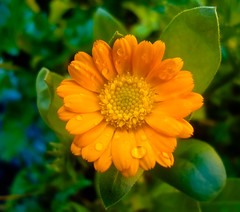
Calendula

Down here in the Southern Hemisphere in Australia neo-paganistically speaking, on the eternal eight spoke wheel covering the year this be the time of BELTANE and the lighting of the protective fires.


Tis a great thing to do to celebrate and use the special vibratory time.  You can do this with the making of Calendula Oil / Balm / Creme and harness the magic healing powers of this precious herb ready for Summer. 

Calendula gets this name from the Kalends which was the first day of the month in the ancient Roman calendar. It's said 
Calendulas  bloom at the beginning of the month. 


Prepare a basket by filling it with flowers and goodwill and then give it to someone in need of healing and caring in these next few days.

Calendula 

Calendula Recipes

CALENDULA SALVE / BALM
In a clean jar infuse either dried flowers or whole flower heads in a cold pressed vegetable oil, enough to cover all of the flowers and for all the oxygen bubbles to disappear.  Sit this somewhere so the warmth and the light for approximately four weeks to draw out the magic from the flowers into the oil.


Strain this infused oil through a cloth or a coffee filter into another pot and add some beeswax and heat to melt the wax.  Add some rose oil or Lavender Oil for pleasure and extra benefits.  This makes a lovely salve and has a shelf life of three months not using a preservative. If you want a thicker more solid balm you just add more bees wax and a few drops of Preservative 12.


CALENDULA CREME
To make a creme use the strained oil, some beeswax, some spring water and some glycerin and heat gently and then blend until lovely and creamy white.  Add some preservative 12 to stop the creme going rancid and also add a few drops of Rose Oil to give your Calendula creme a pleasant smell.  This will have a shelf life of about twelve months so remember to date your creme.

CALENDULA OIL
You can always use the Calendula Oil  straight as well for all sorts of skin irritations and rashes.  Dryness of the skin can be caused from getting older in age.  It is one of the reasons I use all of the above concoctions on my skin.

Happy Beltane here in Australia folks as we watch Summer arrive for 2017.

Its not easy to understand the truths about  the festivals anymore especially in Australia. You have people running around dressed in Halloween costumes and trick or treating. 

When you see this its a sign there is no real grasp of the understanding. Going along with the crowd who are making a mockery of the wisdom behind understanding of the seasons.  


Images @ Eminpee Fotography

Tuesday, October 04, 2016

Carnival .... now where did this word originate?

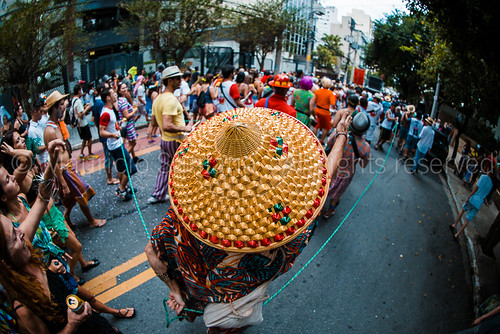
Sao Paulo Street Carnival
Image Source: Mauricio Santana

So it seems rather inane, but according to some we might be wrong with this.  Carnival is something we equate to fun and pretty lights and people celebrating but this word seems to have a very dark past. 

Nimrod who was known also as Baal brought in a demented idea of human sacrifice and cannibalism to the ritual practices.
“The priests of Nimrod or Baal were necessarily required to eat of the human sacrifices; and thus it has come to pass that ‘Cahna-Bal’ (cahna meaning priest & Bal referring to Baal) is the established word (cannibal) in our own tongue for a devourer of human flesh.” - Alexander Hislop
Hence this innocent sounding word 'Carnival' also relates to the same dastardly history. Cannibalism derives from Caníbales, the Spanish name for the Caribs, a West Indies tribe that formerly practiced cannibalism. 

The Korowai tribe located in the south-eastern area of Indonesian West Papua is reported to be one of the last known tribes of the world who take part in ritual cannibalism. A local cannibal cult killed and ate victims as late as 2012.  

So after reading the histories of several cultures who engaged in this practice - it is clear to me that the Japanese who ate prisoners during the war was a terribly low point in humanity. 

So is Carnival and Cannibal distantly related?  Probably, because festivals were originally times of offerings to the Gods for good favor for the year ahead or for giving thanks.   Today's festivals both secular and religious all stem from these original practices.


IMG 3153
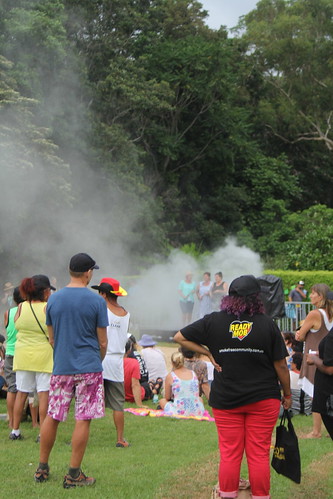
Saltwater - Freshwater Festival, Coffs Harbour NSW
Images @ Eminpee Fotography

Saturday, October 31, 2015

Halloween or Beltane...

IMG 8906 Uncle Lewis's Fire
Images @ Eminpee Fotography
It is always a good time to celebrate All Hallows and honor those that have died by lighting candles and visiting cemeteries.  They call this Halloween.  I celebrated with a charity dress up event.  I had never ever gone to anything in fancy dress before.  I have always longed to do this.  So I can tick that one off the bucket list.  It was lots of fun.

Witch Queen of New Orleans / Cajun Zombie
Here in Australia it is the wrong season to celebrate All Hallows / Samhain rituals because we are going into a hot summer down under and not the death of Winter.

Down Under we need to honor the waxing power of the Summer Sun that bringeth forth growth and prosperity.
Image result for samhainSamhain is a festival of the Dead. Meaning "Summer's End" and pronounced saah-win or saa-ween, Samhain is a celebration of the end of the harvest and the start of the coldest half of the year. For many practitioners, Samhain also is the beginning of the spiritual new year.  [From Google Search]
www.jattdisite.com


Sunday, March 15, 2015

One of my calendars.

The Romans did not number days of a month sequentially from the first through the last day. Instead, they counted back from three fixed points of the month:

  • The Nones (5th or 7th, depending on the length of the month), 
  • The Ides (13th or 15th), 
  • The Kalends (1st) of the following month. 

The Ides occurred near the midpoint, on the 13th for most months, but on the 15th for March, May, July, and October. The Ides were supposed to be determined by the full moon, reflecting the lunar origin of the Roman calendar. On the earliest calendar, the Ides of March would have been the first full moon of the new year. [skullion]

Religious observances

The Ides of each month was sacred to Jupiter, the supreme deity of the Romans. The Flamen Dialis, Jupiter's high priest, led the "Ides sheep" (ovis Idulius) in procession along the Via Sacra to the arx, where it was sacrificed.[3]

In addition to the monthly sacrifice, the Ides of March was also the occasion of the Feast of Anna Perenna, a goddess of the year (Latin annus) whose festival originally concluded the ceremonies of the new year. The day was enthusiastically celebrated among the common people with picnics, drinking, and revelry.

One source from late antiquity also places the Mamuralia on the Ides of March.
This observance, which has aspects of scapegoat or ancient Greek pharmakos ritual, involved beating an old man dressed in animal skins and perhaps driving him from the city. The ritual may have been a new year festival representing the expulsion of the old year.

In the later Imperial period, the Ides began a "holy week" of festivals
for Cybele and Attis. The Ides was the day of Canna intrat ("The Reed enters"), when Attis was born and exposed as an infant among the reeds of a Phrygian river.

He was discovered—depending on the version of the myth—by either shepherds or the goddess Cybele, who was also known as the Magna Mater, "Great Mother".

A week later, on 22 March, the day of Arbor intrat ("The Tree enters") commemorated the death of Attis under a pine tree. A college of priests called "tree bearers" (dendrophoroi) cut down a tree, suspended from it an image of Attis, and carried it to the temple of the Magna Mater with lamentations.

The day was formalized as part of the official Roman calendar under Claudius. A three-day period of mourning followed, culminating with the rebirth of Attis on 25 March, the date of the vernal equinox on the Julian calendar

Sources
Wikipedia
H.H. Scullard,  Festivals and Ceremonies of the Roman Republic (Cornell University Press, 1981), pp. 42–43

Images @ Eminpee Fotography

Sunday, October 27, 2013

The Dorrigo Folk and Bluegass Festival

Dorrigo Folk and Blues Festival
Photo from http://www.flickr.com/photos/hipsternewsau/
 Uncle Tom Kelly and I went up to Dorrigo yesterday after lunch and poked around up at the festival.  Uncle Tom was pleased because he has always wanted to go.  He wanted to see Gleny Rae Virus and her Playboys,  it was too late last evening as they were on at 10:30PM and we were not staying that long.

Images @ Eminpee Fotography

Tuesday, July 30, 2013

IMG 2459 The Fires of Creation

Beltane or Beltain /ˈbɛlteɪn/ (also Beltine or Beltaine) is the Gaelic May Day festival. Most commonly it is held on 30 April –1 May, or halfway between the spring equinox and the summer solstice. It was observed in Ireland, Scotland and the Isle of Man. In Irish it is Bealtaine ([ˈbʲal̪ˠt̪ˠənʲə]), in Scottish Gaelic Bealltainn ([ˈpjaul̪ˠt̪ˠɪɲ]) and in Manx Gaelic Boaltinn or Boaldyn. It is one of the four Gaelic seasonal festivals; along with Samhain, Imbolc and Lughnasadh.

Beltane is mentioned in some of the earliest Irish literature and it is associated with important events in Irish mythology. It marked the beginning of summer and was when cattle were driven out to the summer pastures. Rituals were performed to protect the cattle, crops and people, and to encourage growth.

Special bonfires were kindled, and their flames, smoke and ashes were deemed to have protective powers. The people and their cattle would walk around the bonfire, or between two bonfires, and sometimes leap over flames or embers. All household fires would be doused and then re-lit from the Beltane bonfire.

Doors, windows, byres and the cattle themselves would be decorated with yellow May flowers, perhaps because they evoked fire. In parts of Ireland, people would make a May Bush; a thorn bush decorated with flowers, ribbons and bright shells.

Holy wells were also visited, while Beltane dew was thought to bring beauty and maintain youthfulness. Many of these customs were part of May Day or Midsummer festivals in other parts of Great Britain and Europe.

As a festival, Beltane had largely died-out by the mid-20th century, although some of its customs continued and in some places it has been revived as a cultural event. Since the latter 20th century, Celtic neopagans and Wiccans have observed Beltane, or something based on Beltane, as a religious holiday. Neopagans in the Southern Hemisphere often celebrate Beltane at the other end of the year (~31 October–1 November). From Wiki
 
Images @ Eminpee Fotography

Saturday, July 27, 2013

Wheel of the Year

IMG 1860
Pink Dawn at Urunga
The Wheel of the Year is an annual cycle of seasonal festivals in contemporary Paganism. It consists primarily of eight festivals based around the solstices and equinoxes, known as the quarter days, and the midpoints between, known as the cross quarter days.

Within Paganism, many festivals are celebrated. They can vary considerably in name and date amongst specific traditions, however the eight festivals of the Wheel comprise the most adhered and important annual celebrations. They are a unifying feature of modern Paganism.

The Wheel has been important to many people, both ancient and modern, and its festivals are based to varying degrees on folk tradition.

The Wheel of the Year is an annual cycle of seasonal festivals in contemporary Paganism. It consists primarily of eight festivals based around the solstices and equinoxes, known as the quarter days, and the midpoints between, known as the cross quarter days.
Within Paganism, many festivals are celebrated. They can vary considerably in name and date amongst specific traditions, however the eight festivals of the Wheel comprise the most adhered and important annual celebrations. They are a unifying feature of modern Paganism. The Wheel has been important to many people, both ancient and modern, and its festivals are based to varying degrees on folk tradition.

File:Wheel of the Year.svg

Images @ Eminpee Fotography

Friday, July 26, 2013

Festivals

IMG 5665 The Bellingen River Festival
River Festival getting ready to 'feste'
The word fest derives from the Middle English, from Middle French word festivus, from the Latin word festivus. Festival was first recorded as a noun in 1589. Before it had been used as an adjective from the fourteenth century, meaning to celebrate a church holiday.

The etymology of feast is very similar to that of festival. The word "feste" comes from Middle English, from Middle French, from the Latin word festa. Feast first came into usage as a noun circa 1200, and feast was used as a verb circa 1300.

A festival is a special occasion of feasting or celebration, that is usually religious. There can be many different types of festivals, like Halloween, Saturnalia, and Christmas.

Images @ Eminpee Fotography

Saturday, November 03, 2012

The River Festival - Bellingen NSW Australia

Yes! It is that time again..

IMG 5661.1 The Bellingen River Festival 

Sat 3rd November 2012 (10am-10pm) Jarrett Park & Sir Edmunds Reserve Bellingen info@bellingenriverfestival.org

The
Mission of this festival is to
connect, care, celebrate the river and the community..
What is this festival on the river Bellinger or the river Baarlinjin? What is the whole concept of a festival like this?  It is amazing thats what it is!
“An opportunity to celebrate the beauty of the Bellinger River together; to reflect on its history, understand the current issues and move forward as a community to nurture and value it into the future.”
General information about the Bellinger River Festival: 

Parking is available South side of the festival in Church Street & Oak Street, Bellingen Park & Connell Park or the car parks located behind the Federal Hotel or Diggers Tavern.

North side parking is available in Black Street & the showground. ***Please do not park in the Black Street lane, residential parking only-tow away zone.

No parking is available on site at Jarrett Park or Sir Edmund's Reserve.

Disabled parking is available at the riverbank car park at the end of Ford Street.

***Please note There will be a total road closure at Lavenders Bridge on Bridge St Bellingen from 7.00pm-7.45pm on Sat 3rd November. Delays expected.

Images @ Melonpopzdropz Flickr

Sunday, September 02, 2012

Thursday, August 02, 2012

UN Security face-off with Russia and China

"Lock the Gate" song peformed at the Bellingen Energy Festival 2012

IMG 2797 Bellingen Energy Festival 2012
Ava ringing out Lock the Gate against Csg mining.
We have to lock our gates against this unscrupulous and greedy mining take over of land.  Land of all types, traditional land, farming land, beautiful Australian country just eaten up and degraded forever.

The Olympics in Britain with all the strange carrying on over there, the on going wars still raging out of control with the US at the helm it seems, indiscriminate mining all over the Earth,  unfair and unjust laws together with food shortages culminating in making people suffer in pain and hunger; die senselessly. 

This is coming to a head.  I cannot stand the pain in my head of this anymore.  I do not know what to do with the knowledge at times.  It makes me zing and then I cry!  I channel at times and wonder what I have to tell.  They don't ever like it though.  It isn't comfortable for many to hear truth in their faces about the way things are for a certain amount of the populace.  If you commit atrocities then expect to be punished.

In the wake of the UN Security Council face-off with Russia and China, a new and dangerous phase of the war on Syria is now happening. The Obama government administration, along  with London, Paris, Tel Aviv and NATO headquarters in Brussels, are presently checking their military "intervention options", including using  both naval and air forces in support of "opposition" rebel forces on the ground.

Image by Mezza - Macropod performing at  Bellingen's Energy Festival 2012. Lock the Gate on Csg.