The Illuminati use an alphabet code to title all forms of popular media.

Images from Flickr
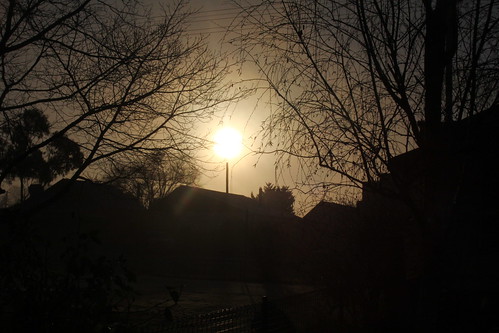
Quite often the sun was depicted with both short and long rays extending out intimating to me they understood both Solar Maximum and Solar Minimum and the cycles of this star that gives us light and life.
Observation of Solar Cycles
The observation of what is now known as Solar Cycles was first observed by Heinrich Schwabe. Schwabe was initially looking for the planet Vulcan, in doing this, daily for 17 years he scanned the sun. He noticed there were regular variations in the number of sunspots. He published an article on this in 1843. The paper was called "Solar Observations during 1843". Schawabe had noticed a ten year cycle of 'maxima and minima'.
Another scientist Rudolf Wolf an astronomer and mathematician decided to look at this work of Schwabe's. He was so interested that he began to observe himself and take notes. He collected data on Sunspot activity right back to 1610. He also calculated it was a cycle of 11.1 years.
Wallace Thornhill (b. May 2, 1942) earned a degree in physics and electronics at the University of Melbourne, Australia, and began postgraduate studies. Before entering university he had been inspired by Immanuel Velikovsky‘s best-selling book, Worlds in Collision. However, the lack of curiosity and the frequent hostility toward this challenge to mainstream science convinced Thornhill to pursue an independent path outside academia.According to mainstream science Gravity has no poles and is therefore it's not ever a repulsive force. Wal talks about Gravity in the video below in an entire new light. Wal talks about a time when Saturn was Earths Luminary. The Sun has captured all the gas giants.

 |
| Image Source - |
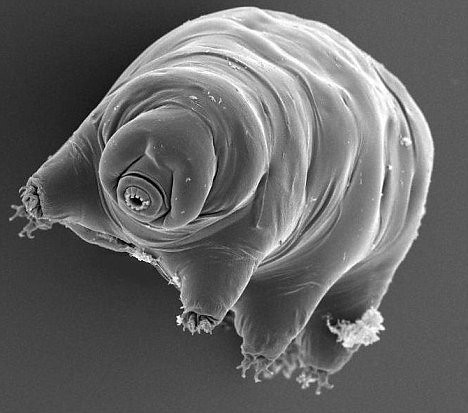
From the Article: Water bears, known to scientists as tardigrades, are famously adorable microscopic creatures who can survive anything: freezing, total dehydration, radiation bombardment, and even the vacuum of deep space. Now scientists have sequenced a tardigrade genome, and are very surprised by the results.
Yesterday a group of researchers led by University of North Carolina at Chapel Hill biologist Thomas Boothby published their analysis of the tardigrade genome in the Proceedings of the National Academy of Sciences. What they found was that 17.5 per cent of the tardigrade genome actually comes from other organisms, including plants, fungi, bacteria, and viruses. These genes entered tardigrade DNA in a process known as horizontal gene transfer, which is quite common among single-celled organisms but rare among animals. The closest comparison with the tardigrade is a microscopic form of plankton called a rotifer (pictured below, eating), which has about 9 per cent of its DNA from other organisms.
 |
‘The stream of knowledge is heading toward a non-mechanical reality; the universe begins to look more like a great thought than like a great machine. Mind no longer appears to be an accidental intruder into the realm of matter, we ought rather hail it as the creator and governor of the realm of matter. Get over it, and accept the inarguable conclusion. The universe is immaterial-mental and spiritual.'”

 |
| Image from Physics World |
https://www.google.com/search?q=pentaquark&num=50&source=lnms&tbm=isch&sa=X&ved=0CAgQ_AUoAmoVChMIrLbistvfxgIVVI6SCh2OGQlv&biw=1920&bih=918“A pentaquark is a hypothetical type of subatomic particle consisting of four quarks and one antiquark bound together.
As quarks have a baryon number of +1⁄3, and antiquarks of −1⁄3, it would have a total baryon number of 1, thus being classified as an exotic baryon. By contrast, regular baryons (or ‘triquarks’)—which also have a total baryon number of 1—consist of three quarks.
The name pentaquark was coined by Harry J. Lipkin in 1987, although the possibility of five-quark particles was identified as early as 1964 when Murray Gell-Mann first postulated the existence of quarks.
Although predicted for decades, pentaquarks have proved surprisingly difficult to discover, and some physicists were beginning to suspect that an unknown law of nature forbids their production.
The first claim of pentaquark discovery was recorded at LEPS in Japan in 2003, and several experiments in the mid-2000s also reported discoveries of other pentaquark states. However, others were not able to replicate the LEPS results, and the other pentaquark discoveries were not accepted because of poor data and statistical analysis. On 13 July 2015, the LHCb collaboration at CERN reported results consistent with pentaquark states in the decay of bottom Lambda baryons (Λ0b).
 |
| Image From Science Network 4 |
 |
| Image Source - The Ultimate Curiosity |
 |
| "Collision Time" |





 |
| Tap near the footbridge at Urunga NSW |
Water is unique in that it is the only natural substance that is found in all three physical states—liquid, solid, and gas—at the temperatures normally found on Earth.
Water freezes at 32° Fahrenheit (F) and boils at 212°F (at sea level, but 186.4° at 14,000 feet). Water is unusual in that the solid form, ice, is less dense than the liquid form, which is why ice floats.
The water molecule is highly cohesive—it is very sticky. Water is the most cohesive among the non-metallic liquids.
Water has a high specific heat index—it absorbs a lot of heat before it begins to get hot. This is why water is valuable to industries and in your car's radiator as a coolant.


 |
| Dawn Sky in Urunga |


