Showing posts with label Antimony. Show all posts

Sunday, April 16, 2017

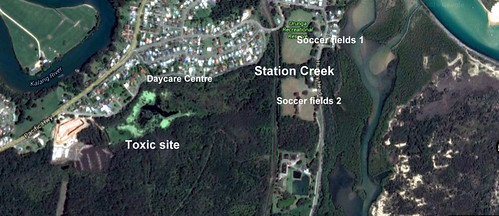
Toxic Station Creek at Urunga

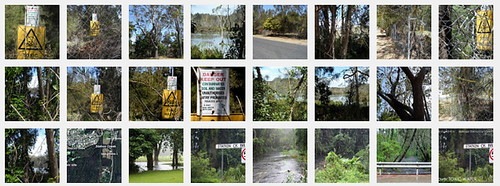
SAM 8209 Antimony Toxicity in Urunga NSW  

http://www.environment.nsw.gov.au/resources/beach/bppsob/bpp0203_mainreport.pdf

Levels of arsenic and antimony measured in Pipe Clay Creek were generally low, and similar to those measured at Sea Lido.
In contrast, levels of arsenic and antimony measured in Station Creek were much higher than those at Sea Lido.
Antimony levels exceeded the NHMRC (1996) drinking water quality guideline of 3 on all occasions, while levels of arsenic consistently exceeded the ANZECC (2000) swimming water quality guideline of between March and May 2003.
Levels of both arsenic and antimony in Station Creek increased after February 2003, a period dominated by many small rainfall events.

These results suggest that arsenic and antimony are washed into the creek during wet weather. 


collage station creek

This is an update to an earlier blog which I am unable to locate and fear it may have been taken down.  I will add more to this as I regather my previous information.

URUNGA TOXICITY

Sunday, May 11, 2014

Harsh Mining and RIO TINTO and others in the Centre of Australia.

These are the active mining licences and the active exploration licences that are in my local area.  I have been so concerned about these since 2012 in May when I flew over the degradation of this country while flying in and out to Uluru NT.  What I saw from the air promoted me to look on the internet about what I saw below me and I was left in a state of shock.

The situation with Mining in Australia right across the land is it is too mixed up with politics.  All the politicians should be feeling very much on edge as the ICAC investigation drags their mouldy carcasses to the Corruption Commission.   NSW is only one state.  Many are now calling for an Australia wide Commission.  Abbott won't favor this though because he needs this mining to pay back the money they have promised for resources that if the people have there way will never come out of the ground in many places.  Many places are already so far gone from the degradation that these company CEO's should be jailed for the mess they have left and the sickness and illness that has been caused to people.

Mining companies are also really wonderful at employing lobbyists to say what ever they want them to say and they have no problems in finding falsified medical evidence to back up their twisted web of lies.   I will be looking at the issue of Solastalgia in regards to the condition that makes a person grieve the environment they knew and the environment they see with their eyes.  I have always called this Cognitive Dissonance.  The word that Albrect
Bracken Resources (Hillgrove Antimony/Gold) Active Mining License ($1.5 Billion Resource)

Precious Metal Resources (Halls Peak) copper, lead, zinc and silve,) Exploration almost completed and looking very likely a mining license will be applied for and granted.

Precious Metal Resources (Taylors Arm/Burrapine -Antimony) Exploration has commenced

Anchor Resources (Blicks River near Dorrigo - Gold) Exploration has commenced

Anchor Resources (Nymboida/Beilsdown - Antimony) Exploration has commenced
Altius Gold (Karangai/Orara Valley (Gold) Exploration has commenced
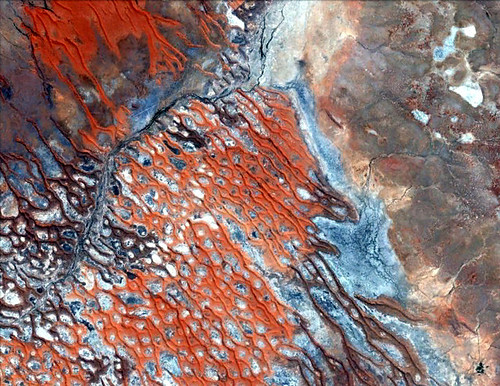
29032014 13005  The centre of Australia
Looking down on Australia in the centre of the continent
1. Rio Tinto, ‘Rio Tinto and Water’, pg.4, http://www.riotinto.com/documents/reportspublications/rtandwater.pdf 

2. ICMM, ‘Report’, ‘Water Management in Mining: A Selection of Case Studies’, May 2012, pg.9 http://www.icmm.com/document/3660 

3. Bendigo Advertiser, ‘Leakage Reported- Mine Water Pipe Breaks’, Nov 2006, http://www.bendigoadvertiser.com.au/story/677898/leakage-reported-mine-water-pipe-breaks/ 

4. Department of the Environment, ‘Report on the leak of water from the Tailings Water Return Pipe at the Ranger uranium mine during the 1999/2000 wet season’, pg. 42, http://www.environment.gov.au/system/files/resources/a036f018-0eec-4b95-b4d8-fc270704e8b6/files/ssr153-6.pdf  

5. Latimer, Cole, Australian Mining, ‘Miner Fined for Zinc Spill’, April, 2012, http://www.miningaustralia.com.au/news/miner-fined-for-chemical-spill

 6. Georgatos, Gerry, The Stringer Independant News, ‘Major Uranium Leak Endangers Kakadu- But Played Down’, Dec 2013, http://thestringer.com.au/major-uranium-leak-endangers-kakadu-but-played-down/#.U3WMLfmSxu1 

Images @ Eminpee Fotography
Enhanced by Zemanta

Thursday, April 04, 2013

Mining Madness creeps closer to my backyard.

SAM 8205 Antimony Toxicity in Urunga NSW 

The re-opening of various mines up on the plateau is a worry.  The Hillgrove mine and the antimony mine at Wild Cattle Creek.   Both of these mines pose great threats once again to an already stressed ecosystem. 

This is the head waters of so many rivers and creeks.  We cannot let them go ahead with this simply on the grounds that it was done before.

SAM 8203 Antimony Toxicity in Urunga NSW 

Before they made many mistakes and we must learn from these or face a very uncertain future regarding the health and welfare of everyone living along any of these waterways. 

The people's health will be impacted and there is no denying this.  Money was given to the Kempsey-Macleay Council to effect change and they said and did nothing.  Is this corruption and collusion?

This article below was printed in the Don Dorrigo Gazette December 2011.
PRINTED .under the heading ‘Mining in Dorrigo’

It presents information that appears to be directly from an Anchor Resources brochure on the Bielsdown Project. It would seem appropriate to question and challenge this article and highlight perhaps what we the community haven’t been told.

Anchor Resources is one of three companies holding mineral exploration licences on the Plateau and is currently the most active. Anchor Resources activities include drilling for gold at Dundurrabin, proposed drilling for antimony/gold at Wongwibinda (Fishington Mine) and further drilling at Bielsdown.

This flurry of activity in our region reflects the rising price of antimony, gold and other metals and I question whether this is due to resource scarcity or market manipulation? China produces 90% of the world’s antimony, and we have seen the price of antimony skyrocket from $4K per tonne to $16K per tonne in the last two years.

This price increase has largely been associated with the closure of a number of large producing antimony mines in China due to human health/safety and environmental concerns. It is pertinent to add here that Anchor Resources is now at least 96% owned by the Chinese company Shandong Jinshunda Group as of mid 2011.

I note that Anchor Resources refer to the exploration licence process, however it is difficult to find the latest approval for their Bielsdown project with the Government gazette showing an application to renew the licence in February 2011, however this licence doesn’t appear to be granted as yet.

Also of concern is that a Review of Environmental Factors (REF) has not been undertaken for any of the exploration licence applications submitted by Anchor for the Bielsdown project since 2007. My understanding is that a REF is a requirement of all exploration licence applicants to undertake an environmental impact assessment of the proposed activities so that NSW DPI can make an assessment under the Environmental Planning and Assessment Act 1979 prior to granting the licence.

Given that the Bielsdown project location has state and national significance as habitat for threatened species I question the currency of the exploration licence and how the NSW government has overlooked an important part of the approval process. This is not to mention the requirements under the Commonwealth legislation that the location triggers.

It is unclear whether Anchor Resources have notified the Commonwealth government to determine if their exploration activities are considered a ‘controlled action’ under the Environmental Protection Biodiversity Conservation Act 1999 requiring further environmental impact assessment and approval.

Many farmers have shared with me their frustration about their efforts and sacrifices in conserving native vegetation and habitat for the public good only to see mining companies given open slather. I don’t wish to dwell solely on the environmental issues surrounding the potential of mining on the Plateau, as there are other issues that need to be considered.

It seems that Dorrigo is not immune to the unprecedented mining expansion in regional Australia where the potential social and economic impacts need to be considered by the communities faced with these challenges.

As the current legislation has been identified as inadequate to accommodate the risks, new policies are being developed and proposals to change legislation under debate. In the meantime, mining activities continue to expand. In considering the full impacts of mining, the concerns of landholders and rural communities should not be dismissed as simply ‘alarmist’.

The current inquiries and reports demonstrate the validity of these concerns:
  • Inquiry into Murray Darling Basin expanded to include coal seam gas (May 2011) 
  • Inquiry into coal seam gas impacts: NSW Parliament (August 2011) 
  •  Inquiry into the impacts of ‘Fly in Fly Out’ workers on regional Australia (August 2011) 
  •  National Water Commission Report (Sept 2011) concern about coal seam gas use of water
It is important that communities can openly, safely and respectfully discuss the positive and negative impacts of mining, assisted by access to all information and learning from our past. I note that Anchor Resources provides a brief long-term perspective on the use of antimony presenting it to be a very safe substance, however its important to remember that history teaches us many things.

Asbestos was also used historically in early times with a variety of uses. The human health problems related to asbestos identified in Europe in the late 1800s until a ban in Australia in 2003 teaches us that it is responsible and not alarmist to question the human health aspects of antimony.

There is a lot of uncertainty surrounding antimony such as conflicting information on bio-accumulation and a lack of Health Investigation Levels (HIL) or Ecological Investigation Levels (EIL) under the National Pollution Environmental Measure (NEPM) 1999 or by NSW EPA. The only current guidelines we have are the safe limits set for waterways (0.009 mg/L ANZECC 2000), and for drinking water (0.003 mg/L NHMRC 2004).

At the Bielsdown project site a number of the creek sample locations have concentrations of antimony, arsenic and zinc that breach both the ANZECC and NHMRC guidelines. The results of the laboratory tests for surface water samples suggest that there is residual surface water contamination of antimony, arsenic and zinc downstream of the former antimony mine site. (Source: Coffey Report in Anchor Resources Ltd 2009).

The majority of past antimony mining in Australia has occurred in our region and sadly we still have the legacy of pollution from these abandoned mines and processing sites (such as Urunga). Recent spillages from the Hillgrove mine has highlighted the historic pollution in the Macleay River and concerns of landholders living downstream.

As China produces 90% of antimony globally, it is worth looking at the science emerging there: · Serious Antimony and Arsenic contamination in the aquatic environment in Hunan China (large antimony mining area). The Antimony concentration in drinking water exceeded both Chinese and WHO drinking water guidelines by 13 and 3 times.

Fish gills exhibited the highest Antimony concentrations but the extent of accumulation varied with habitat (Fu et al 2010 Science of the Total Environment 16:408) ·

Water samples from Xikuangshan China the world’s largest Antimony mine were found to be two to three orders of magnitude higher compared to the typical concentrations of dissolved Antimony in unpolluted rivers.

Signs of intoxication were observed among local mine workers with extensive exposure to different forms of Antimony for a long period of time (Lui et al 2010 Environmental Geochemistry and Health 32:5). ·

Concentrations of hair samples from Xikuangshan Antimony mining area and Guiyang City were compared. The contents of antimony, arsenic and mercury of human hair of Xikuangshan antimony areas are much higher than those of Guiyang City. These results show that heavy metals in antimony mining area may significantly affect human health (Liu et la 2009 Huan Jing Ke Xue 15, 30:3)

Lessons from other regions in Australia provide a few insights to consider on whether there are true social and economic benefits from mining for our regions.

The Hunter Valley

  • Mining brings jobs but can deplete the labour pool (mining vs agriculture)·Mining brings benefits but they are not equally spread ·
  • Mining provides infrastructure but community networks/family life is often neglected, including polarising of communities; psychosocial impacts; feelings of social dislocation and changing community identity · 
  •  The social changes accompanying mining can mobilise communities (Source: Dr Jo-Anne Everingham University of Qld 2011)
The Bowen Basin ·
  • Positive economic impacts limited by use of non resident workers 
  • Shortages/negative outcomes in housing, infrastructure, services, recreational amenities, local employment, local business/economy; crime; community justice and lifestyle 
  •  Projected cumulative social impacts in the region include: deteriorating infrastructure, damage to transport corridors, drain on human and social services, fly-over effects on local business and economy; acute housing and rental shortages, which can in turn force out residents and business owners. (Sources: Carrington and Pereira School of Justice QUT June 2011; Rolfe et al 2007)
 I recently attended the Dorrigo Rotary Club meeting where Anchor Resources presented information about their mining activities. I asked whether we could have more information about the 60 jobs for the Plateau that had been quoted by Luke Hartsuyker MP in a newspaper after a briefing by Anchor Resources. I was told three times by Ian Price of Anchor Resources that he didn’t know about this despite him being quoted as the source.

Another guest asked of the mining royalty payment to the NSW government, this question could also not be answered.

If our local councils and local member are being told of the estimate of jobs that the mining development will bring I can only assume that the proposal is well past any preliminary feasibility study.

It is disappointing that our community has not been privy to the same level of detailed information. The planning process is currently in a state of transition in NSW with the planning legislation amended in September this year, which notably changed the Minister’s powers in assessing such developments. Hence the information provided by Anchor Resources on the mining lease process is incorrect as depending on whether the proposed mine development is considered a state significant project or not will determine if it is assessed either by the local council or by the NSW Planning Assessment Commission.

There are also other approval processes that this development may require to undertake on state and commonwealth levels. Regardless of who the final approval body is, the community will have 30 days to respond to the development application including the Environmental Impact Assessment.

It is important that our community has access to support and information to be able to participate in a meaningful and informed way. I can only say that the current system is biased towards the development proponent with communities provided with little information or support.

My background is as an environmental and social scientist currently based at University of New England and I have spent many years working with rural communities around natural resource issues. However I am wearing two hats as I am also a member of our community and It is the inequity of the current planning process that has influenced my active involvement in Dorrigo Environment Watch who has stepped up to assist our local community through the provision of information about antimony, mining and the planning assessment process.

Jacqueline Williams.
[Letter to the Editor, Don Dorrigo Gazette, December 2011]
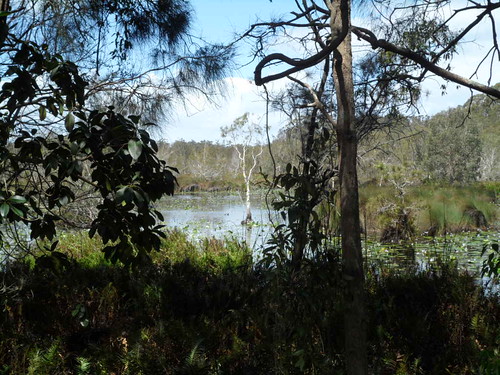
Images @ Melonpopzdropz Flickr
Enhanced by Zemanta

Tuesday, November 27, 2012

Clean up Happening Now!

See what happens when people start speaking out.  This area was just forgotten about and not until you jump up and down and start reading the facts to people in black and white simple language like you are living next to death are you aware of this ????

No they didn't know.  We as parents didn't know.  I would not have let my kids play soccer on those soccer fields at Urunga If I had known the facts.  I would have no let anyones kids play on those fields at Urunga if I had known the facts.

From the Courier Sun Bellingen


Antimony clean-up underway 


The NSW Government is working to remediate the contaminated site at Hillside Drive in Urunga with the completion of a detailed site investigation.
The Antimony processing activities occurred on the site in the early 1970s which sourced Stibnite ore from the Wild Cattle Creek mine in Dorrigo.
When the short term spike in Antimony metal prices fell, both the mine and the Urunga processing plant were abandoned. Since this time, the waste tailings containing antimony, arsenic, mercury, chromium, nickel, zinc, copper, lead and cyanide have spread into the adjoining SEPP14 wetland.
Project manager, Clayton Colmer is pleased that the results of recent sampling by local consultants GHD Pty Ltd have provided a clearer picture of the extent and nature of contaminated material on the site.
“Many investigations have been conducted in the past but did not give a complete picture of the contamination,” he said.
“The latest investigation used historical results but also involved an extra 300 samples. These samples included surface water, groundwater, soil, tailings and wetland sediments,” Mr Colmer said.
The recent sampling also used the latest technology X-Ray Fluorescence (XRF) hand held sensor which allows a cost effective method of undertaking higher density sampling. Samples were also sent off for NATA accredited laboratory testing to confirm the concentrations of the heavy metals.
“We will be considering a wide range of practical remediation measures to clean up the site and how to best use the $1 million government funding. It is hoped that on-site remediation works can begin in mid 2013,” Mr Colmer said.
GHD are cleaning it up now but are they to be trusted HONESTLY look who their board of directors are and It appears they get all the best jobs for the boys in this game .. PLEASE READ ON

Founded in 1928, GHD has been active in the professional services business for more than 80 years. Since its inception, GHD has assisted global communities to realise their potential and create lasting value by delivering innovative and sustainable solutions.

GHD is a company built on partnerships. It continues to be an enduring force to connect, collaborate and communicate with our clients to solve their challenges, to drive our success and to make the world a better place.
1928 Gordon Gutteridge founded GHD and focuses on water and sewerage.
1937 Hobart office established.
1939 Gerald Haskins & Geoffrey Davey joins the partnership.
1949 Innovative sewerage design for Cairns, the largest city in Australia at the time without sewerage.
1950s GHD expands into transport infrastructure, manufacturing plants, building and civil works, energy, mining and dams.
1962 GHD employs 300 people.
1967 GHD opens Gold Coast office.
1970 GHD employs 500 people and provides extensive services for Hobart’s landmark Wrestpoint Casino.
1972 Townsville office opened.
1974 Formation of GHD-Parsons Brinkerhoff Pty Ltd. GHD plays a major role in the design of a new city and infrastructure for Darwin, following Cyclone Tracey.
1975 Offices opened in Albury/Wodonga and Perth.
1976 Offices opened in Adelaide, Bundaberg, Mackay and the Sunshine Coast.
1978 GHD begins international expansion and establishes a joint venture in Malaysia.
1980 GHD employs more than 700 people. Bunbury and Newcastle offices opened.
1981 Gladstone office opened. Merger with Planner West Pty Ltd. Joint venture of GHD-Black & Veatch established. GHD-Wood Geotechnical Pty Ltd established.
1983 Offices opened in Katherine, Port Hedland and Rockhampton.
1984 Offices opened in Alice Springs and Wollongong.
1985 GHD-Wright joint venture established.
1988 GHD carries out planning services for World Expo 88 in Brisbane and opens office in Coffs Harbour.
1990 International projects burgeon and offices opened in the Philippines, Thailand and Vietnam.
1993 GHD earns ISO 9001: 1987 accreditation
1995 Acquisition of Water Corporation of Western Australia's water engineering group
1997 Acquisition of WORKS Australia and LongMac Group
1999 Manukau Consultants Ltd (NZ) join GHD.
2000 Martin & Co in Gladstone join GHD.
2001 Smith and Wood Consultants, NZ join GHD. Acquisition of MME in Doha, Qatar and in Dubai and Abu Dhabi.
2002 Mergers completed with Geo-Eng Group and EGIS Consulting Australia. GHD people increased to 2300.
2003 GHD celebrates its 75th year of operations.
2004 Baker Saran, NSW, joins GHD
2005 Mergers completed with AJP, Malaysia, Qest Consulting, NSW, City Design, SA, and Civil Design Services, NZ.
2006 GHD broadens its reach in Hong Kong, China and the UK, completing mergers with Rankine & Hill, a Hong Kong consulting engineering company, and Archispace, a provider of urban planning, architectural and landscape design services throughout China. Alliance formed with London-based AMCL, and offices opened in York and London.
2007 Three companies joined GHD including Leddy Sergiacomi & Associates, a Queensland engineering and environmental consultancy company, ProAnd, a New Zealand specialist meat process design engineering consultancy and PCT Engineers, a Western Australia/Queensland consultancy company providing engineering services to the oil, gas and mining sectors.
2008 GHD celebrates 80 years. Hassall & Associates, a consulting firm specialising in International Development Assistance, agriculture, natural resource and environmental issues joins GHD. Offices opened in Ireland and Canada.
2009 GHD now employs 6000 people. Four strategic mergers completed in the USA that build on our core water and wastewater services, including RoseWater Engineering, the Arizona Engineering Company, CSA Engineering and Stearns & Wheler.
2010 Continuous strong performance of our operations including strategic mergers with SMGC in the mining sector in Australia and China Water International Engineering Consulting Company (CWIECC) in China. Health and safety of our workforce was recognised with the 2010 Best Workplace Health and Safety Management System Award. Community engagement was strengthened with ‘GHD in the Community’ contributing to the MSABI project in Tanzania, supporting vital charities and making contributions to natural disasters around the world.
2011 Mergers completed with MGF Consultants in North Queensland, Australia, CollinsonDutton Ltd (CDL) in the UK as well as Winzler & Kelly, Commonwealth Engineering & Technology, Inc (CET) and RobsonWoese in the USA. We also expanded our capabilities in the energy and resources sector and registered significant wins in transportation. We achieved a period of 3.4 million hours free Lost Time Injury and continued to engage in a range of Corporate Social Responsibility initiatives including community contributions in New Zealand following the earthquake in Christchurch.
2012 We continued our expansion in the Americas with the acquisition of the Sernas Group in Canada's Greater Toronto Region in Whitby, Mississauga and Kitchener and in the USA, in Madison, Wisconsin. We also broadened our water services with the acquisition of the Water Sciences Group of Australian Laboratory Services. We have been named the fourth most attractive company to work for in Australia by recruitment firm Randstad and recognised as the best waste consultant in Australia according to a survey completed by Inside Waste Magazine.


Images @ Melonpopzdropz Flickr
Enhanced by Zemanta

Wednesday, October 24, 2012

Dorrigo residents oppose Chinese mine drill

8533 Waters Falling
by  Mark Dodd
From: The Australian written in September 2011

PLANS by a Chinese company to start exploration drilling for rare earths and gold on the pristine Dorrigo Plateau in NSW has triggered community fears of contamination of the water catchment for Coffs Harbour and nearby Grafton.
Anchor Resources, 96 per cent-owned by the Shandong Jin Shunda Group, wants to start a $2.6 million drilling program around an old antimony mine at Wild Cattle Creek and a gold prospect at nearby Blicks River.
But many local residents fear the drilling is a precursor to the start of large-scale mining that would threaten the crucial Macleay catchment.
More than 100 concerned residents from Dorrigo and nearby Bellinger Valley attended a community meeting at the weekend to vent their concerns and learn more about the mining proposal.
Dorrigo Environment Watch spokeswoman Gwen Hanna said any full-scale mining operation posed unacceptable pollution risks in an area that lies close to the World Heritage listed Dorrigo National Park, a major tourist attraction.
The habitat of three endangered frogs -- the Giant Barred, Stuttering and Pouched -- lies within the proposed exploration area, Ms Hanna said.
"This area is in a unique environment and we're really concerned that if they do open cut, which they're proposing in addition to open shaft -- it's going to be a really serious blot on the landscape," she said.
In addition to pollution fears, she said residents were worried about the prospect of ore-laden lorries travelling through Dorrigo to what would be the most likely processing facility at Hill Grove, near Armidale.
But local National Party member Luke Hartsuyker, the federal MP for Cowper, said any plans to resume mining on the plateau would create up to 60 jobs in a hard-pressed rural economy.
"This not an Olympic Dam," Mr Hartsuyker said referring to the South Australian mine site containing the world's largest known single deposit of uranium.
Antimony is used in the manufacture of fire retardants, plastics, medical applications and next generation computer memory drives. Demand for the metal is so strong, its price has rocketed from $4000 a tonne in 2006 to $16,000.
Federal Environment Minister Tony Burke told The Australian he was closely monitoring developments.
"If the company was to propose to mine following exploration, it is more likely federal powers would be triggered at that point," he said.

Sunday, October 21, 2012

Who is behind ELA 4581 Billy Goat Knob?

old quarry

PMR3 PTY LTD and associated companies (PMR 1, PMR4 & PMR5 Pty Ltd) has made 6 applications
under the mining act for exploration licences for group 1 minerals since May 2012.
You can see the full list of current exploration licence applications here
(http://www.resources.nsw.gov.au/titles/status-reports/MineralsMonthly-ELsCurrent2012-06.pdf)
Group 1 minerals include Antimony and Gold but lots more as well.


View Larger Map

Proposed Work Program ELA 4581 ELA 4581 Billygoat Knob - Group 1 - Antimony
The area, near Burrapine, inland on the north coast of NSW, is 70 kilometres east of Hillgrove, one of the largest provinces of antimony mineralisation in the world. It includes twenty five former small scale mines, and this mode of occurrence it resembles the Hillgrove province, and other antimony provinces throughout the world including China, which has the largest reserves in the world. Here there are 111 producing areas of antimony ore in 18 provinces. Xikuangshan of Hunan province is an ultra-large antimony deposit.
Objectives
The program aims by the end of the first term to have field examined all previous mines, and to have interpreted their extent and mode of occurrence. Surface geochemistry will have been carried out to prioritise drilling targets. The most significant old mines and newly identified anomalies will be drilled with shallow holes to determine the potential of each for further work by drilling. During the following term drilling out of an inferred resource is planned.  It is likely that the nature of the deposits will demand small underground narrow vein mining operations, with several small mines working at once to produce commercial quantities of concentrate for export. Environmental issues are likely to be minimised by this method. Bulk transport and processing at the Hillgrove mine plant may be investigated if possible at the time.
Exploration Methods
The program for the initial two year term of the Licence is as follows:
Completion of literature studies
Initially, the Applicant proposes to undertake literature studies in relation to the area of this Application. This will involve a review of all literature and existing geological results for the area so as to formulate a plan of the resource prospectivity and the most appropriate means of exploring same.  This review will include in house interpretation of the available geophysical data over the prospective area, and if warranted, detailed reinterpretation and modelling of features which may localise mineralisation conduits.
Landownership negotiations
Subsequent to the finalisation of the literature search, the applicant proposes to contact and
negotiate with affected landowners in respect to land access, compensation and/or ownership.
This step will involve the conducting of various land inquiries and onsite attendances to meet with the landowners in question.

MacLeay River

MacLeay River


How has the Macleay River been poisoned?
‘Hillgrove’ antimony and gold mine is located on the edge of the escarpment, 20 km east of Armidale. Over the last 3 years we have experienced high rainfall which has created spills from the antimony and arsenic holding dams which now leak down the escarpment in to the Macleay river catchment.  A study published by the CSIRO in 2009 described the waterways near Hillgrove as ‘’highly contaminated’’ and estimated about 7000 tonnes of waste had accumulated along the bed of the Macleay River.
Read more: http://www.smh.com.au/environment/water-issues/mines-toxic-fl ow-gives-river-users-a-scare-20111021-1mcay.html#ixzz28ymJJQIW
The mine operator, Straits Gold, were fined $50,000 dollars in the Land and Environment Court of New South Wales for one spill. There have been numerous spills over the last three years. What will be the cost to all of us? The quote below is from a geology report on the Macleay River, before the known spills of the last 3 years. “Estimates of sediment migration rates and amounts of Sb(Antimony) and As(Arsenic)transported in suspension and solution imply that the catchment contamination will be long-term (centuries to millennia) such that environmental effects need to be ascertained and management strategies implemented”.
Australian Journal of Earth Sciences: An International Geoscience Journal of the Geological Society of Australia-Volume 54, Issue 1,2007
http://www.tandfonline.com/doi/abs/10.1080/08120090600981467#preview
The residents of Bellbrook, on the banks of the Macleay River are to receive a water treatment plant after having drinking water trucked into town due to the Macleay being poisoned. The maximum guideline for drinking water is 30 micrograms/L of Arsenic/Antimony. The levels are 126 times that in the Macleay River.
“A new drinking water treatment plant will ensure Bellbrook residents have a safe, secure and clean drinking water supply”. “This means the residents of Bellbrook can turn on their taps and fill their glasses without fear of water quality issues including heavy metal contamination.”
http://www.environment.gov.au/minister/farrell/2011/mr20110625.html

What is Antimony?
Antimony is a toxic substance used in fire retardants, alloys and electronics. It is potentially fatal if ingested and even small doses can cause headaches, dizziness & nervous disorders. High levels of arsenic were also detected.
Antimony contamination is spread through water, soil and dust in the air. The world price for antimony has increased by 300% in the last two years. Some of the most toxic chemicals known to man are used for mining Antimony. Do you want to see the Nambucca River suffer contamination similar to the Macleay River because of past unsafe mining practices in a high rainfall area?
Our governments insist that mining companies use best practice when it comes to environmental & community safety. Macleay is expected to be poisoned for thousands of years. The contamination of the Macleay River is recognised and acknowledged by the present State Government in the ABC documentary on Antimony and the Macleay River ‘Poison in Paradise’.
http://www.youtube.com/watch?v=i_Nbmk2eNBQ
For further reading Google...Macleay River, Hillgrove, Antimony
 old quarry

http://lockthemidnorthcoast.com.au/downloads/InfoPackv1-colour.pdf 
http://www.smh.com.au/environment/questions-about-as-much-as-minister-can-bear-20111027-1mm80.html