Dungog is a Dairy and Timber town in the Upper Hunter Valley on the Williams River, which is one of ten tributaries which flow into the Hunter River.
Observing the town from my perspective back in 1981, I could see that Dungog had become a quiet place and it appeared a shadow of its former self. This was evident in the buildings of the main street still there for all to see when I visited for the first time. I am seriously not sure what it looks like now after the fatal 2015 weather event.

My friends lived in a tin house. The entire house was corrugated iron. Apparently this was a very cheap way to clad a house in the early part of the 20th Century. The house would have been erected around the 1920's circa. It was a funny old house with a grape vine with the sweetest grapes I have ever tasted growing from the grape trellis build on the southern side of the house. This area was an oasis to sit down under during the heat in the endless summers of the Upper Hunter Valley area.
From Wikipedia, the free encyclopedia
Gringai
The Gringai people, a group of indigenous people of Australia, are those Australian Aborigines that were united by a common language, strong ties of kinship and survived as skilled hunter–fisher–gatherers in family groups as a clan of the Worimi people, whose traditional land is now known as the Port Stephens of New South Wales, Australia.
Gringai lands are mostly in the Williams River and the Manning Valley, and include what is now known as Dungog, Paterson, Gresford, Brookfield, Tocal, to the headwaters of the Williams and Chichester rivers.
Gringai land also includes the southern valleys of the Barrington Tops.
Two people of the Gringai are known by that name as a result of their arrest and subsequent trials. Wong-ko-bi-kan and Charley were both arrested within a year or so of each other in the 1830s.
Wong-ko-bi-kan was sentenced to be transported to Tasmania for manslaughter after spearing a John Flynn, where he died soon after. Charley was the only man to be hanged in the town of Dungog on the Williams River, as a demonstration to his fellow Gringai.
Another was Jack Cook Maloogat (born 1830, Cobark Station NSW, died 1925), Captain Thunderbolt's horse boy. Maloogat was also one the last of his tribe to have gone through the last known Keepara - Kiapara ceremony or Boombit (from boy to man) where he got his name (Maloogat-son of thunder).
One of the Bora rings, initiation grounds of the local tribe, was in the Bulliac-Tugrabakh area, 4 miles (6 km) from Gloucester. Another two Bora rings where they used to camp and hold their corroborees are located where the Gloucester Public School now stands; one ring was used by the women and the other used by the men.
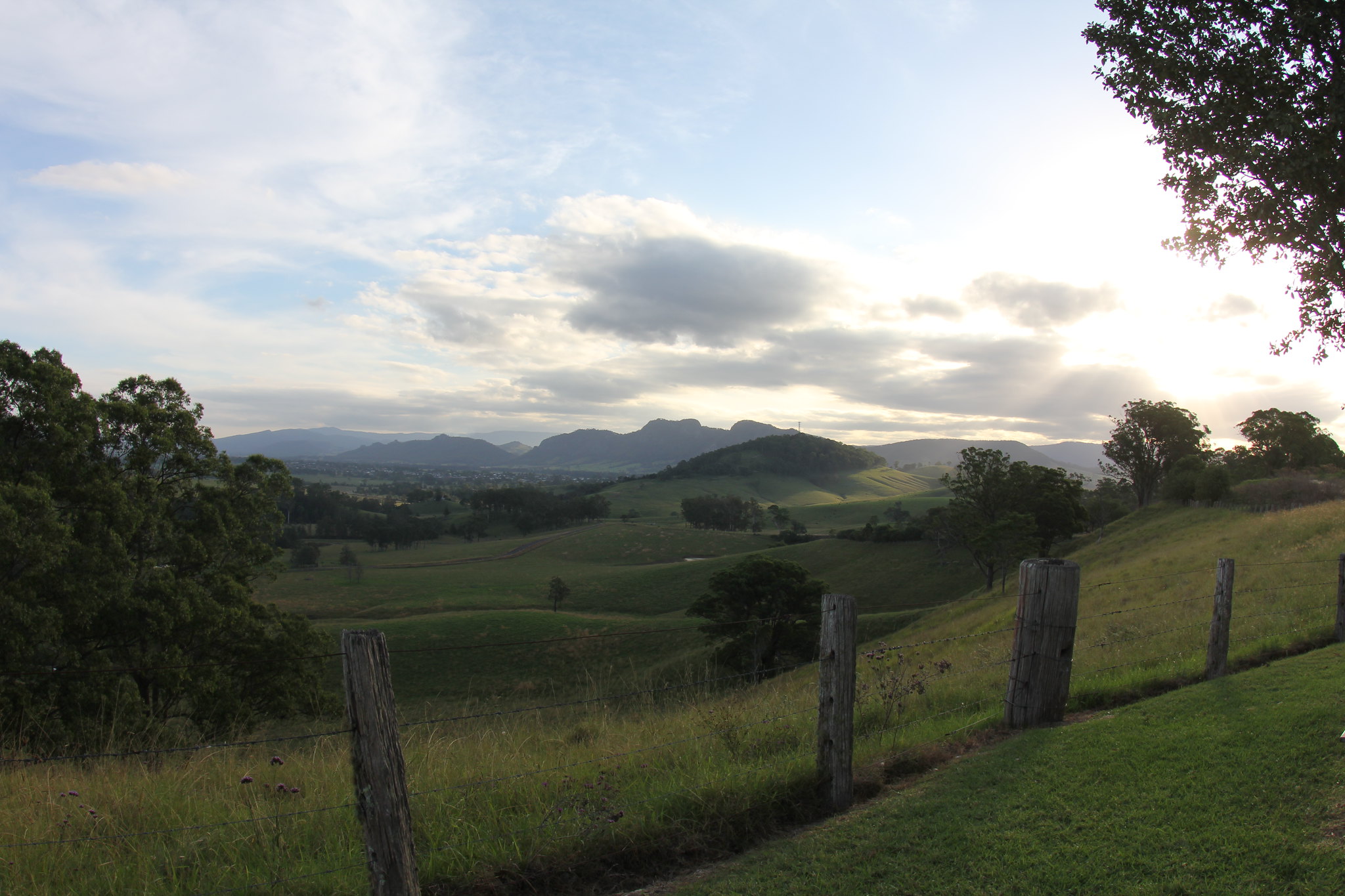 |
| Looking across the valley overlooking Gloucester |
On the 21st April, 2015 a devastating weather event occurred in the Dungog area. This resulted in houses washed away and the human and material cost was gigantic.
Captain Thunderbolt - Fred Ward a close friend of my great grand father Edward Butler. They often met in the bush for smoko. This is a well known story in my family told to me by grandmother and her sisters.
It became known as Dungog's stormageddon!NSW wild weather: Dungog like 'war zone' after flash flooding
Updated
"Despite their best efforts, three elderly people died when their homes were literally swept away after 300 millimetres of rain hit the area in less than 24 hours."
Link ABC: Dungog like 'war zone' after flash flooding
Images @ Eminpee Fotography


