Showing posts with label Winter. Show all posts

Saturday, June 22, 2019

Winter Solstice Southern Hemisphere Style.

IMG 2708
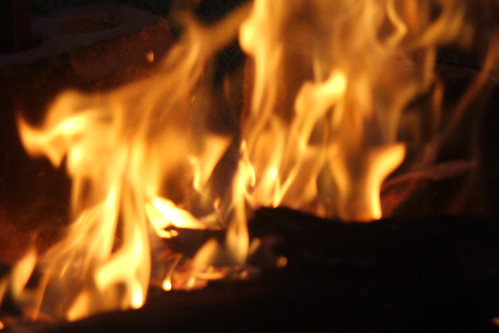
A Deepwater Winter Fire

Winter Solstice in Oz is usually celebrated in the middle of the year, in our winter in June.


Yule in the Southern Hemisphere


Lore:

The Lady labours through the longest night of the year, giving birth to the Lord at dawn and beginning her recovery. Lights and candles are left burning to guide the Lord from the Goddess' womb and to symbolise the return of the Sun, bringing light to the Earth. The long, cold nights are shortening and the days are getting longer and warmer.

Keywords:

Rebirth, reincarnation, depth of darkness, turning point, remembering light in darkness, festivity, generosity, merriment, warmth, mother & baby, wonderment, joy, mystery.

Botanicals:

Holly (masculine), ivy (feminine), mistletoe (fertility), cinnamon, pine cones, cloves, nutmeg.

Colours:

Red (the Goddess' menstrual blood), white (the God's semen), green (plant kingdom), gold (the Sun).
The second balefire holiday, with the fire usually taking the form of a Yule log - from a special species of tree, or part of the Maypole from Beltane. Yule logs are burned from dusk on the Winter Solstice till dawn on the following day to symbolise the return of the Lord and the Sun. The log should traditionally be from a hardwood tree and in Australia mallee roots, Victorian ash, Tasmanian oak and Eucalyptus (to name a few) are ideal for this purpose. The Yule log is burned down until only a small piece remains, which is saved and kept to be used as a lighter for the following year's Yule fire - in doing this, the Yule fire is symbolically reborn each year as well.
This is a turning point, a point of change, where the tides of the year turn. At this time of the year, no matter how cold it may be, there is a glimmer of spring in the distance. The shortest day of the year has come and the next festival on the calendar is Imbolc, which marks the beginning of Spring.
At Yule, homes are decorated with evergreen, non-deciduous trees, and gifts are given to all family members and all who pass the threshold to symbolise the gift the Lady has bestowed upon the Earth.
A good time to do workings for peace, harmony, love, and increased happiness.

Altar decoration:

A small white candle inside a cauldron on the altar (symbolises the return of light from within the Goddess' womb), pine cones, symbols of the Sun, wreaths, nativity scene (representing the Mother, Father and infant Sun God), red/green/white candles, evergreens, acorns, nuts, apples, cinnamon sticks, reindeer.

A note on Yule and Christmas:

You'll note that the Wiccan Yule lore/celebrations and the Christian Christmas lore/celebrations are quite similar. The main reason they are so similar is that Christmas is based on the pre-Christian pagan festival of Yule, held on the Winter Solstice long before the advent of Christianity.  Now, I'm not saying that Mary and Joseph didn't turn up at the inn 2000-odd years ago, only that the Yule festival itself predates Christianity by thousands of years. Many of the Christmas traditions we observe today (the evergreen Christmas tree, gift-giving, celebrating the birth of the infant Lord, etc.) are remnants of the ancient pagan Winter Solstice celebrations: these practices were 'absorbed' by the Church to make the Christian Christmas more palatable to the pagans they were converting.
Information from a now dead link. (www.shadowsofoz.net/)

Images @ Eminpee Fotography

Wednesday, June 20, 2018

Midwinter's Eve: YULE

IMG 0680

BY MIKE NICHOLS
Our Christian friends are often quite surprised at how enthusiastically we Pagans celebrate the ‘Christmas’ season. Even though we prefer to use the word “Yule”, and our celebrations may peak a few days before the twenty-fifth, we nonetheless follow many of the traditional customs of the season: decorated trees, caroling, presents, Yule logs, and mistletoe. We might even go so far as putting up a ‘Nativity set’, though for us the three central characters are likely to be interpreted as Mother Nature, Father Time, and the baby Sun God. None of this will come as a surprise to anyone who knows the true history of the holiday, of course.

In fact, if truth be known, the holiday of Christmas has always been more Pagan than Christian, with its associations of Nordic divination, Celtic fertility rites, and Roman Mithraism. That is why John Calvin and other leaders of the Reformation abhorred it, why the Puritans refused to acknowledge it, much less celebrate it (to them, no day of the year could be more holy than the Sabbath), and why it was even made illegal in Boston! The holiday was already too closely associated with the birth of older Pagan Gods and heroes. And many of them (like Oedipus, Theseus, Hercules, Perseus, Jason, Dionysus, Apollo, Mithra, Horus, and even Arthur) possessed a narrative of birth, death, and resurrection that was uncomfortably close to that of Jesus. And to make matters worse, many of them predated the Christian Savior.


Ultimately, of course, the holiday is rooted deeply in the cycle of the year. It is the winter solstice that is being celebrated, seedtime of the year, the longest night and shortest day. It is the birthday of the new Sun King, the Son of God–by whatever name you choose to call him. On this darkest of nights, the Goddess becomes the Great Mother and once again gives birth. And it makes perfect poetic sense that on the longest night of the winter, “the dark night of our souls”, there springs the new spark of hope, the Sacred Fire, the Light of the World, the Coel Coeth.

That is why Pagans have as much right to claim this holiday as Christians. Perhaps even more so, since the Christians were rather late in laying claim to it, and tried more than once to reject it. There had been a tradition in the West that Mary bore the child Jesus on the twenty-fifth day, but no one could seem to decide on the month. Finally, in 320 C.E., the Catholic fathers in Rome decided to make it December, in an effort to co-opt the Mithraic celebration of the Romans, the Yule festival of the Saxons, and the midwinter revels of the Celts.
There was never much pretense that the date they finally chose was historically accurate. Shepherds just don’t “tend their flocks by night” in the high pastures in the dead of winter! But if one wishes to use the New Testament as historical evidence, this reference may point to sometime in the spring as the time of Jesus’ birth. This is because the lambing season occurs in the spring and that is the only time when shepherds are likely to “watch their flocks by night”–to make sure the lambing goes well. Knowing this, the Eastern half of the church continued to reject December 25, preferring a “movable date” fixed by their astrologers according to the moon.
Thus, despite its shaky start (for over three centuries, no one knew when Jesus was supposed to have been born!), December 25 finally began to catch on. By 529, it was a civic holiday, and all work or public business (except that of cooks, bakers, or any that contributed to the delight of the holiday) was prohibited by the Emperor Justinian. In 563, the Council of Braga forbade fasting on Christmas Day, and four years later the Council of Tours proclaimed the twelve days from December 25 to Epiphany as a sacred, festive season. This last point is perhaps the hardest to impress upon the modern reader, who is lucky to get a single day off work. Christmas, in the Middle Ages, was not a single day, but rather a period of twelve days, from December 25 to January 6. The Twelve Days of Christmas, in fact. It is certainly lamentable that the modern world has abandoned this approach, along with the popular Twelfth Night celebrations.

Of course, the Christian version of the holiday spread to many countries no faster than Christianity itself, which means that “Christmas” wasn’t celebrated in Ireland until the late fifth century; in England, Switzerland, and Austria until the seventh; in Germany until the eighth; and in the Slavic lands until the ninth and tenth. Not that these countries lacked their own midwinter celebrations. Long before the world had heard of Jesus, Pagans had been observing the season by bringing in the Yule log, wishing on it, and lighting it from the remains of last year’s log. Riddles were posed and answered, magic and rituals were practiced, wild boars were sacrificed and consumed along with large quantities of liquor, corn dollies were carried from house to house while caroling, fertility rites were practiced (girls standing under a sprig of mistletoe were subject to a bit more than a kiss), and divinations were cast for the coming spring. Many of these Pagan customs, in an appropriately watered-down form, have entered the mainstream of Christian celebration, though most celebrants do not realize (or do not mention it, if they do) their origins.

For modern Witches, Yule (from the Anglo-Saxon yula, meaning “wheel” of the year) is usually celebrated on the actual winter solstice, which may vary by a few days, though it usually occurs on or around December 21. It is a Lesser Sabbat or Low Holiday in the modern Pagan calendar, one of the four quarter days of the year, but a very important one. Pagan customs are still enthusiastically followed. Once, the Yule log had been the center of the celebration. It was lighted on the eve of the solstice (it should light on the first try) and must be kept burning for twelve hours, for good luck. It should be made of ash. Later, the Yule log was replaced by the Yule tree but, instead of burning it, lighted candles were placed on it. In Christianity, Protestants might claim that Martin Luther invented the custom, and Catholics might grant St. Boniface the honor, but the custom can demonstrably be traced back through the Roman Saturnalia all the way to ancient Egypt. Needless to say, such a tree should be cut down rather than purchased, and should be disposed of by burning, the proper way to dispatch any sacred object.

Along with the evergreen, the holly and the ivy and the mistletoe were important plants of the season, all symbolizing fertility and everlasting life. Mistletoe was especially venerated by the Celtic Druids, who cut it with a golden sickle on the sixth night of the moon, and believed it to be an aphrodisiac. (Magically–not medicinally! It’s highly toxic!) But aphrodisiacs must have been the smallest part of the Yuletide menu in ancient times, as contemporary reports indicate that the tables fairly creaked under the strain of every type of good food. And drink! The most popular of which was the “wassail cup”, deriving its name from the Anglo-Saxon term waes hael (be whole or hale).

Medieval Christmas folklore seems endless: that animals will all kneel down as the Holy Night arrives, that bees hum the 100th psalm on Christmas Eve, that a windy Christmas will bring good luck, that a person born on Christmas Day can see the Little People, that a cricket on the hearth brings good luck, that if one opens all the doors of the house at midnight all the evil spirits will depart, that you will have one lucky month for each Christmas pudding you sample, that the tree must be taken down by Twelfth Night or bad luck is sure to follow, that “if Christmas on a Sunday be, a windy winter we shall see”, that “hours of sun on Christmas Day, so many frosts in the month of May”, that one can use the Twelve Days of Christmas to predict the weather for each of the twelve months of the coming year, and so on.

Remembering that most Christmas customs are ultimately based upon older Pagan customs, it only remains for modern Pagans to reclaim their lost traditions. In doing so, we can share many common customs with our Christian friends, albeit with a slightly different interpretation. And, thus, we all share in the beauty of this most magical of seasons, when the Mother Goddess once again gives birth to the baby Sun God and sets the wheel in motion again. To conclude with a long-overdue paraphrase, “Goddess bless us, every one!”
MOST RECENT TEXT REVISION: TUESDAY, MAY 3, 2005 C.E.
TEXT EDITING COURTESY OF ACORN GUILD PRESS.
DOCUMENT COPYRIGHT © 1986, 1995, 2005 BY MIKE NICHOLS.
PERMISSION IS GIVEN TO RE-PUBLISH THIS DOCUMENT ONLY AS LONG AS NO INFORMATION IS LOST OR CHANGED, CREDIT IS GIVEN TO THE AUTHOR, AND IT IS PROVIDED OR USED WITHOUT COST TO OTHERS. THIS NOTICE REPRESENTS AN EXCEPTION TO THE COPYRIGHT NOTICE FOUND IN THE ACORN GUILD PRESS EDITION OF THE WITCHES’ SABBATS AND APPLIES ONLY TO THE TEXT AS GIVEN ABOVE. OTHER USES OF THIS DOCUMENT MUST BE APPROVED IN WRITING BY MIKE NICHOLS.

Saturday, May 31, 2014

Last Day of Autumn and its hot.

Its the end of Autumn and there is a strange warmth in the air everywhere I have been people have been saying the plants are confused and so are the insects confused.  This isn't hard to believe because its been upwards of 30 Degrees and that is very warm for the middle of the year heading into Winter.

IMG 8814 Sorry Day Action
A very warm Sydney.

Sydney has experienced  16 days above 22C, which is highly unusual for May.
The May mean maximum temperature is 23.3C - 3.9C above what Sydney usually experiences at this time of year.

Retail outlets selling winter clothing items and electrical outlets who sell heaters and other devices for warming are all suffering large downturns in profits and will have to discount stock dramatically to recoup some money back.

Recently I travelled to Sydney and usually at this time it is very chilly and as it turned out for me it was very very warm and I had only winter cloths with me on my journey.  Very inconvenient weather I have to say.  

Images @ Eminpee Fotography
Enhanced by Zemanta

Wednesday, June 05, 2013

Like the legend it is from beginning to end.

You can never go too far or give up.  Some days are just so beautiful down by the waters edge in Urunga.

IMG 0981

Meanwhile so much is going on the is just madness in the world.  What is the reasoning behind all of the madness of the world?  The energy is returning, feel it reeling towards the positive.  Its hard to see but it is a foregone conclusion the government and the mining and energy companies are going to meet with far more opposition than clearly they are banking on.

This issue of Csg Mining is a not negotiable issue.  Some keep crowing about how it can co-exist and in a very swift voice back I say NO.  No it clearly cannot co-exist anywhere as it is poison to the water and the water is important everywhere.

IMG 0981

Not just some places, Everywhere!

Images @ Eminpee Fotography
Enhanced by Zemanta

Tuesday, May 28, 2013

Into the Silence of Winter


The Caravanserai

File:Sangi caravansara.jpg
Ali Majdfar's Image in Sanjan Iran Caravanserai
There are  three steps the average person follows through his cycle of life that is exactly the same as the sun has to follow through its yearly cycle.

The sun as does the individual, goes from its  birth to its point of greatest restoring and resurrecting power and then it passes from there to the time when it goes to harvest  and then it goes into the silence of winter. 

So what is the silence of winter in relationship to this mystery cycle? 

Winter
is the great sabbath .  It is the time of rest.  It is the time for all things which have passed through experience to then be rewarded by rest and repose.  Winter is a time of peacefulness within.  It is the time where the individual no longer has to to labor and he can rest for a time before he goes forth on another cycle.  

In the words of the men and woman of the Turkish desert,  Winter  is the great Caravanserai or the place of rest and repose where the individual who has completed the cycle of life has an opportunity to prepare for further life. 

The ancients held that under that same heading also comes the word "digestion".
  Digestion is an alchemical term.   This term is interesting,  and it has great significance for humanity.    Digestion simply means that having passed through a series of experiences it is necessary for the individual to summarize what he has accomplished.    It is then necessary to transform that experience into an awakening of inner value.

The individual has had a life with many problems and he has had many different decisions to make.   In the Pythagorean discipline of retrospect, he goes back over the years of his life to find out what he has really learned, and to know what mistakes he has made.  The individual also looks at how he corrected those mistakes along the way that he discovered with in himself. 

Here, the individual finds out how the weaknesses of his own character are still holding him back,  he discovers where little germs of self-centeredness have prevented certain magnificent facts from being manifested fully to him.  'Retrospection' therefore in the Pythagorean schools  was given at night just before bed or before sleep.  

In the great solar cycle this retrospection is part of the cycle of winter.   In the great cycle,  winter is an interesting phenomenon that  we know very little about except everything seems goes to rest or goes to sleep.  The evergreen stays green through this time and this is why it became the symbol of immortality and this is why it is the Chrissy tree. 

In this phase. the soul comes to the temporary condition of after death awareness and its not judged by something else but it is where the soul is judged by itself. 

One reviews his own conduct,  detached from body to contemplate what he has learned while embodied to help him to be unembodied forever.   This is the same as the yearly cycle once again.  Next year we will do it better because we have learned where we went wrong. 

This is the Great Solar Cycle of life.   This is all inspired from listening to "The Solar Christmas parts 1 and 2" by Manly P Hall.

The "WINTER" OF METGASCO FIASCO at Glenugie and we were all in tents and caravans.
Images @  Eminpee Fotography GLENUGIE

Tuesday, July 03, 2012

He who lives sees, He who travels sees more! . . . Anonymous

Small is the number of people who see with their eyes and think with their minds.
~Albert Einstein~

IMG 2327 Thats different! Its Brighter

I was fascinated with the vision in the sky this morning before dawn on the Eastern sky.  It was Jupiter and it was the brightest I have ever seen this.  I got Brice out of bed to look at it with me because of it's luminous brilliance. Tonight the moon is 99% brilliant going into full brilliance at 4.30am,  we are going out to the sandmines to light a fire and watch the beautiful silver ball rise in the evening sky.

We are about to have some more amazing things happen in the sky above us at the later part of this month of July 2012.  I will be keen to see these phenomena.

Image by Mezza - The Eastern Sky at five o'clock  in the AM  today / 03/07/2012

Friday, June 01, 2012

“Laughter is the sun that drives winter from the human face.”

Victor Hugo
Cheer up it is only the first day of Winter.  I love Winter so it is fine with me.  I have a hot water bottle.

IMG_9807 Uluru Dreaming 2012
Grasses at Sunset
The first day of Winter means that tomorrow is my birthday.  Funny enough this never seems to change.  I like the first of June because Marilyn Monroe was born this day and I always seem to be reminded of this.  There are many Marilyn quotes of hers I like.  If you can't handle me at my worst etc being my most favored of these.
Happy Winter 2012.

Image by Mezza - Grasses in the evening sun