The nature of frankincense and the preparing of it is like this:
In size it is a small tree, and in appearance it resembles the white
Egyptian Acacia, its leaves are like those of the willow, as it is
called, the bloom it bears is in colour like gold, and the frankincense which comes from it oozes forth in drops like tears.
But the myrrh-tree is like the mastich-tree, although its leaves are
more slender and grow thicker. It oozes myrrh when the earth is dug away
from the roots, and if it is planted in fertile soil this take place
twice a year, in spring and in summer; the myrrh of the spring is red,
because of the dew, but that of the summer is white.
You haven't got to be a rocket scientist to see that these two trees are highly related and that could mean that these two area were once joined before the great catclysm that split up the earth. People talk land bridges and I tend to think it was far closer than this given the Egyptian stuff found in many places across Australia that is largely hushed up. We are talking about a time before time as we all know it now. The Dreaming reaches back into those times with ceremony.
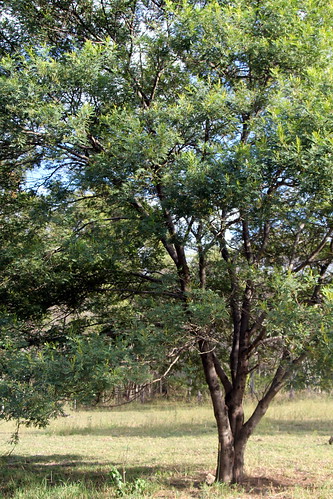
ACACIA MELANOXYLON common names: sally wattle, blackwood type collected: R Brown, Tas, 1804. habit: Small to relatively large tree, 8 - 30m.
Black Sally Wattle up near Tabulam NSW by Eminpee Fotography
foliage: Variable lanceolate to elliptic phyllodes, 60 - 120mm x 10 -
20mm, 3 - 5 main veins with numerous secondary nerves between and
conecting them. Gland small and inconspicuous.
flowers: Creamy yellow ball flowers on racemes, flowers late winter to spring.
pods: Tightly coiled and twisted leathery pods, 50 - 120mm x 5 - 10mm, thickened margins.
seeds: Longitudinal in pod, pinkish aril wraps around seed twice, not toally encircling it.
distribution: Widespread in Sth and E Vic, coast and tablelands of NSW, also SA, Tas and Qld.
notes: Victorian Aborigenes used a hot infusion of the roasted bark to
bathe rheumatic joints. Bark and twigs used as a fish poison.
Fine
timber, used in cabinet and ornamental work, once used in coach and boat
building, also for beer barrels, regarded as the best Australian timber
for this.
Pituitary and pineal glands (Photo credit: Wikipedia)
The Pineal gland is located within the vertebrate brain between the left
and right hemispheres. It is ruffly the size of a grain of rice and is
fully grown at 2 years of age. The gland is stimulated by darkness and
hindered by light.
It produces melatonin, melatonin is a hormone which influences your biological clock.
It
is said that the Pineal gland is the "The Crown Chakra" or "The Third
Eye" and that it is a Bio-luminescent gland that can improve learning
capabilities, increase memory, enhance intuition, wisdom and creativity
and may be the link to enhancing psychic abilities.
From 2012 Awakening
Pineal Gland - The pineal gland is unique in that it sits alone in the
brain whose other parts are paired. It is the first gland to be formed
in the foetus and is distinguishable at 3 weeks. When our individual
life force enters our foetal body at 7 weeks, the moment in which we
become truly human, it passes through the pineal and triggers the first
primordial flood of DMT ( N-dimethyltryptamine). Later, at birth, the
pineal releases more DMT. DMT is also capable of mediating pivotal
experiences of deep meditation, shamanic states of consciousness,
psychoses, spiritual emergence and near death experiences.
The pineal
gland’s location deep in the brain seems to intimate hidden importance.
In the days before its function as a physical eye that could see beyond
space-time was discovered, it was considered a mystery linked to
superstition and mysticism.
This pineal gland is activated by Light, and
it controls the various bio-rhythms of the body. It works in harmony
with the hypothalamus gland which directs the body’s thirst, hunger,
sexual desire and the biological clock that determines our aging
process. When it awakens, one feels a pressure at the base of the brain.
While the physiological function of the pineal gland has been unknown
until recent times, mystical traditions and esoteric schools have long
known this area in the middle of the brain to be the connecting link
between the physical and spiritual worlds. Considered the most powerful
and highest source of ethereal energy available to humans, the pineal
gland has always been important in initiating supernatural powers.
Development of psychic talents has been closely associated with this
organ of higher vision. To activate the ‘third eye’ is to raise one’s
frequency and moving into higher consciousness – all is a consciousness
experience perceived through the Eye of Time or Third Eye.
Meditation,
Visualization Yoga, and all forms of Out of Body travel, open the Third
Eye and allow you to ‘see’ beyond the physical. As you practice, you
will get it faster and more frequently. Your psychic abilities will
increase as well as your dream time messages. You may first begin with
your eyes closed, but as you practice, you will be able to open your
third eye by focusing your attention and receiving messages with your
physical eyes open.
Planetary vibration/frequency is accelerating
exponentially, allowing souls to peer into other realms far more easily
than in the past. Frequency will continue to rise until consciousness
evolves out of the physical.
A healthy lifestyle
of exercise, outdoor activities, eating natural unprocessed foods, and
reducing your sugar intake will be the first steps to activating your
Pineal gland.
The Pineal gland resembles a pine cone. The pine cone has
been used in symbolism for thousands of years! Many historical figures
from Osiris to the Pope hold a staff of the pine cone. There is no
question that the Pineal gland and its purpose have been known
throughout history. There is also no question that those in power have
suppressed the development and knowledge of the Pineal gland. Free
thought and expression should never be suppressed.
So explore the infinite universe within you. Balance your mind and everything is possible.