Showing posts with label Contamination. Show all posts

Sunday, May 29, 2016

9 Uses For Hemp You Won’t Learn From Mainstream Media

by
TOPICS:
Hemp
By Amanda Froelich

Though the negative stigma associated with cannabis has lessened in recent years – especially since CBD-rich oils to be a powerful aid in fighting cancer, it still hasn’t garnered full support from the public.

Such is unfortunate, as hemp is one of the most versatile (and longest cultivated) crops on the planet and can be used for a variety of practical and economical uses. According to some sources, the crop is humanity’s answer to eliminating smog from current fuels, creating a cleaner energy source that can replace nuclear power, remove radioactive water from the soil, and eliminate smog from skies in industrialized areas.

In addition, nationwide hemp production could eliminate deforestation by converting current paper to hemp paper which can be recycled up to 8 times. Compare this to wood pulp, which is recyclable up to 3 times. Finally, hemp seeds are incredibly nutritious and can even serve as a suitable feed for animals and livestock.

Obviously, numerous benefits could be derived from legalizing the crop and allowing it to be cultivated all over the world. However, people have been conditioned to view the herb as a negative addition to society. Such is largely a result of big business and political propaganda which began in 1915. Drug Warrant relays that even though the Declaration of Independence was printed on hemp paper and the crop was mandated to be grown in the U.S. in 1619, only in the last hundred years or so have people been demonizing the plant.

Perhaps if people knew the many ways hemp and marijuana, which are closely related but are not the same, can be used, their opinions on legalizing the crop would change. Considering that marijuana results in 0 annual deaths while pharmaceutical drugs are responsible for over 100,000, keeping an open mind is the least people could do.

Following are 9 benefits of hemp you won’t learn about from mainstream media:


1) Fuel

Similar to plants like corn, cannabis can be used to develop biofuels to power automobiles, generators, and pretty much anything else one can imagine. In fact, the University of Connecticut has been studying whether or not the fuel is actually viable, and the results are confirming that it is is.
One of the major problems with current biofuel production, according to Cheat Sheet, is that it often takes more energy to create than what it’s worth. Cannabis may be able to change that.
And, thanks to the growing interest in the cultivating the crop, developing a cannabis biofuel industry is speculated to be an easy task.
Professor Richard Parnas of the University of Connecticut says:
If someone is already growing hemp, they might be able to produce enough fuel to power their whole farm with the oil from the seeds they produce. The fact that a hemp industry already exists means that a hemp biodiesel industry would need little additional investment.
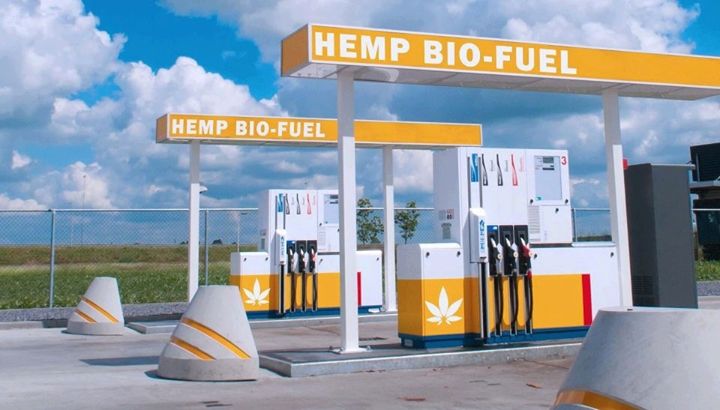
hempbiofuel 
Credit: pinterest.com

2) Batteries

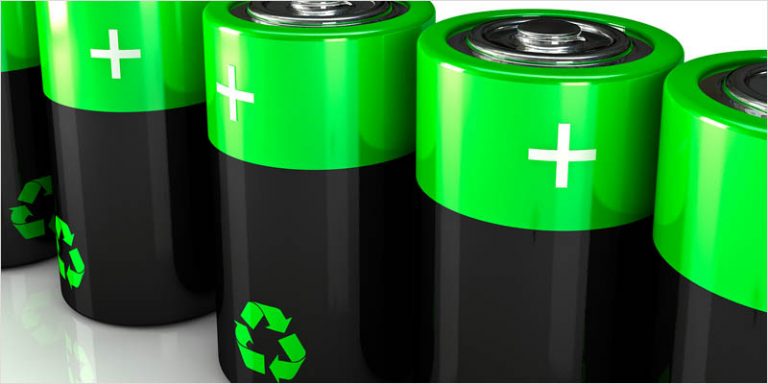
According to AlterNet, cannabis could help improve the way we store energy. Researchers are discovering that cannabis may assist the process of producing more efficient supercapacitors.  Basically, nanosheets can be made by hemp fibers in the same way scientists have been able to use graphene in the past. An added bonus is that hemp is more economical, as it can cost thousands of times less than graphene or similar materials.
As it becomes more socially acceptable to work with hemp, engineers and scientists will have more freedom to develop other innovations with the material.

Never buy another battery again (Ad)
hempbattery1-768x384 
Credit: Herb.co

3) Building Materials

You may not know this, but hemp can be used to create various kinds of building materials. In fact, it’s likely that in the future, houses and even business structures will be comprised of hemp.
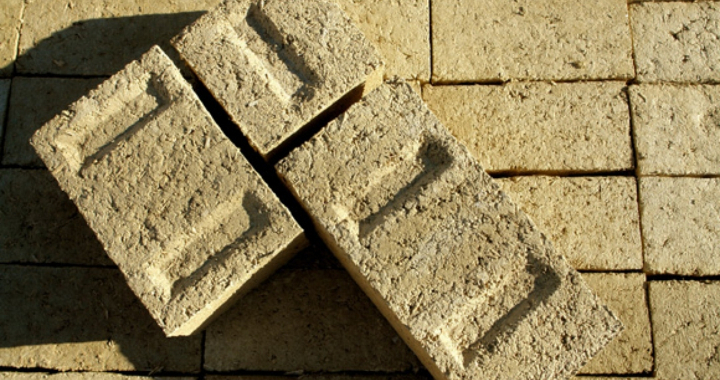
Not only can hemp be made into insulation, it can also be used to create engineered building products like fiberboard and pressboard. In addition, it can even be used to make ‘hempcrete’, which is a stronger, lighter, and more environmentally friendly version of concrete.
hempbuildling 
Credit: leafscience.com

4) Livestock Feed

Livestock is often fed corn-based feeds, but cannabis-based options could soon become the norm. The change would not only reduce costs, it would spare more food for people who need it.
In addition, feeds with cannabis would cut down on transportation needs, as the crop grows practically anywhere.

cannabis 
Credit: Beefproducer.com

5) Plastic Production

In the early 1940s, Henry Ford (below) produced a prototype car made out of hemp & soy plastic. Though it never went into production due to the influence from chemical giant DuPont, the photo of Ford trying to ax his way through the car proved hemp plastic’s durability.
Now, it’s well-known that hemp plastic would be a suitable alternative for consumers as it is more easily recycled and degrades at a faster rate than traditional plastic.
Everyday items like soda bottles, CD & DVD cases, shower curtain liners, and even food packaging could be easily switched to hemp-based plastics.

HenryFord 
Credit: TreeHugger

6) Food & Beverages

Hemp seeds are touted as a ‘super food’ because one-third of hemp seed’s weight comes from hemp oil, which is both edible and highly nutritious. The food source contains essential fatty acids (more omega-3’s than walnuts) which lower inflammation, and the whole seed is about 25% protein. It’s also a great source of calcium and iron.
One can use hemp seeds in desserts, by sprinkling them on salads, or by making homemade hemp milk (just substitute for almonds).

hempfood 
Credit: 420Magazine

7) Nuclear Waste Cleanup

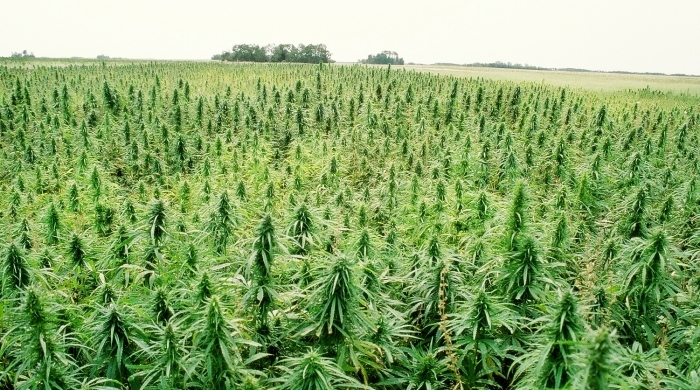
One of the most intriguing uses for hemp is how it can assist in cleaning up soil contamination. In the early 1990s, the crop was planted at the site of the Chernobyl nuclear disaster in Ukraine to assess its abilities to heal the soil. Reportedly, the plant shows great potential in cleaning up land contaminated with coal fly ash, sewage sludge, or heavy metals due to its fast rate of growth and ability to remove contaminants from the soil.
Hemp1 
Credit: nationofchange.org

8) Paper

2,000 years ago, hemp paper was commonly utilized. This is astounding, considering that only 0.05% of world paper production today is made from the crop.
Being a far more sustainable source of pulp than paper, hemp would lend great benefits to the environment if humanity relied on this crop rather than trees.

d7_tout_constitution-768x432 

 9) Clothing

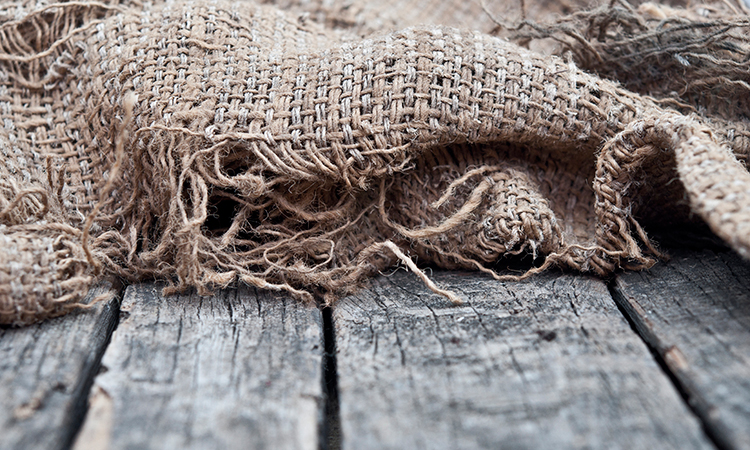
Hemp was first woven into fabric between 7,000 and 8,000 B.C. but is rarely used nowadays. Perhaps that’s because hemp clothing has earned the reputation of being rough and tough.
Thanks to modern methods of working with the crop, however, even the high fashion industry is playing with hemp, merging it with silk for lingerie. Of course, its durability could be applied to more obvious applications, such as sportswear and outdoor clothing.
hemp3 
Credit: leafly.com

What are your thoughts? Please comment below and share this news!

 This article (9 Uses For Hemp You Won’t Learn From Mainstream Media) is free and open source. You have permission to republish this article under a Creative Commons license with attribution to the author and TrueActivist.com

Friday, March 06, 2015

My Hypothesis on what is destroying the lives of the 'Elsaya Georgesi' Turtle


IMG 1976 Gleniffer Magic
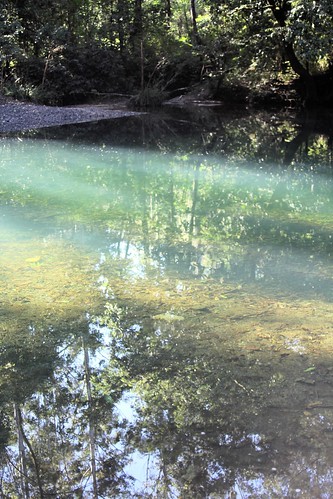
Clean water is a must for native wildlife
Elsaya Georgesi or the Georges Turtle is still turning up dead in the Bellinger River on the Mid North Coast Hinterland.  This is a very serious situation for the river, the turtles and the people along the river who depend on the river for water for numerous reasons.


The authorities are all there in force. The NPWS is working closely with Bellingen Shire Council, Taronga Zoo, Department of Primary Industries, Wildlife Health Australia (WHA), the Environment Protection Authority (EPA) and WIRES as well as the local community from Bellingen who are helping where possible.

Boats are being launched from Lavender's Bridge to head up river taking samples and collecting sad and or dead turtles along the length of the Bellinger River. 


The NPWS have sent samples for testing and Dolphin Marine Magic are care-taking some of the turtles and have also sent samples for testing.  This is good to at least have two testing platforms with which to compare results.

I woke up yesterday morning with a vision of the turtles and in this vision I could see gravel trucks and rocks and a quarry.  I thought I was seeing the quarry up behind Dorrigo.  I needed only one lead to bring my vision into full clarity. 

The road work on Waterfall Way just past the Nut Farm which has been wanting since the floods of 2009 was commenced on 17th May 2013 and finally completed last year in February 2014 by RMS with funding from the $4 million allocated by the O'Farrell-Stoner Government.

Quarry site from the air at Valla.
The rocks used for this large construction to fill in the wash out land slip and various other road works along waterfall way to bring it into line with RMS Guidelines for better roads were brought in from a quarry at Valla NSW which is southeast of Bellingen.  The quarry where these rocks were quarried from was a Gold Mine before it was a quarry.  A Gold Mine!

I think the incidence of toxicity could come from those rocks and the cyanide and or arsenic toxicity that the local Valla residents are continually speaking up about and who are conveniently not being heard?  Gold mines are not nice places.  The mine sites are toxic time bombs waiting to explode. 

The rocks when first transported from the quarry to the job site were being washed on site.  This process was suspended allegedly due to the mess it was making.  The mess it was making was running into the Bellinger River.  The Bellinger River is adjacent to this RMS Job Site.   The rocks were put in place and the job was completed. 

This area experiences an above average rainfall and lately we have had above average plus rainfall, therefore those rocks are continually being cleaned by the action of rain.   Rain would then wash the run off into the river and in the river is where the turtles live.  The turtles do not like the contamination of heavy metals which are the results of gold mining, metals such a mercury, antimony and the use of Cyanide to process the gold.   All of this could have been transported from the quarry site to the RMS Job Site on Waterfall way, and done so knowingly as well.  It cannot be said it is not  known as many have complained about the quarry for years because of the damage it continually causes in the local Valla area.
"We would like to look at levels of arsenic in the environment from the dust that is coming off the quarry."  Valla Resident 
This quarry is now no longer locally owned and operated.  It is a Queensland company and its name is South East Queensland Excavation Quarry Solutions, and the locals in that are are up in arms about the fact of the doubling of the quota of rock allowable out of the quarry.  This was supposed to be scaled back.  It appears no one is listening to the residents of the quarry area either who are continually smothered with dust full of arsenic. READ MORE HERE on the Valla issue.

Gold and what is left behind these days is a time bomb if they continue to mine this substance and dig up the earth for so little return and such a great damage bill to the environment.  Gold is a costly substance in so many ways. 
 The majority of gold ores are classified refractory because the gold mineralogy is contained in sulphides. This type of gold is typically very fine gold or locked in solid solution within sulphide minerals pyrite and arsenopyrite (FeAsS).

The arsenic bearing pyrite is commonly known as arsenian pyrite and can contain gold in its structure. Rimming of pyrite with arsenic-rich assemblages is often common as well as arsenopyrite-marcasite-pyrite associations.

The gold-pyrite association is dependent on ore grade and textural features of the ore. When present with pyrite, arsenopyrite commonly will have significantly higher gold grades than the pyrite associations.

Enargite (and Luzonite) is a common copper-arsenic mineral that can be a significant gold carrier.

Other less common are chalcopyrite and other sulphides and sulphosalts such as pyrrhotite, covellite, arsenides, and antimonite.   Pdf

IMG 1976 Gleniffer Magic
The waters that flow into the Bellinger
News Links :
RMS : Roads and Maritime Services
DMM : Dolphin Marine Magic
NPWS: National Parks and Wildlife Service

BLOGS:  Bellinger River Turtles
Updates: Courier Sun

Images @ Eminpee Fotography

Saturday, February 07, 2015

HALLIBURTON BTEX in flowback water at Gloucester NSW.

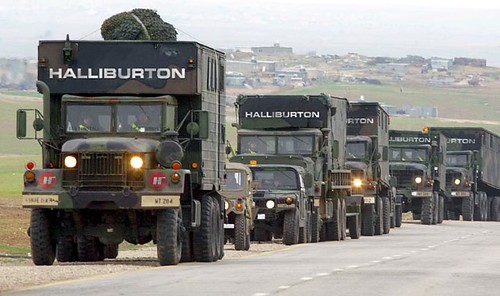
US Army or Halliburton..?
Photo from Flickr
AGL (Australian Gas Light)  advised the NSW Environment Protection Authority (EPA) that ground and surface water monitoring data from the Gloucester Gas Project logged during November shows detected traces of a chemical used in the fracking process. 

This is a BTEX Chemical cocktail.  Halliburton patent this chemical cocktail of environmental death and destruction.  Halliburton did the Frack at Gloucester NSW.  The workers were ferried in  buses under police guard.

Read Sledge's take on Halliburton and co... HERE
Halliburton along with BP  also caused one of the biggest Gas disaster in the planets living history to date and were involved in the Marcellus Shale Gas rush in Pennsylvania.  They changed the towns they went into from quiet idyllic places to absolute bedlam.  People  were reported to have said if the trucks were painted green you would think you were being invaded.


Death threats were rife against people who refused access.  In one town a the Ecologist reports:
In 2010 alone, it was reported that more than a dozen children around the small town of Towanda had been put into foster care, their families turfed out of low-rent accommodation by unscrupulous landlords to make way for gas-industry employees who are able to offer higher rents. 'The feel of the place has just changed,' remarked Tom and Amy, a couple from Towanda, lifelong local residents who have recently put their house on the market and are looking to move away. 'Greed is ugly and greed is rampant in Bradford county today.'
Things changed dramatically for the fracking industry when the so called loophole was born in politics in the USA.
Halliburton loophole
http://www.theecologist.org/trial_investigations/687515/us_natural_gas_drilling_boom_linked_to_pollution_and_social_strife.html


Fracking involves the use of huge volumes of water and a potent cocktail of chemical ingredients that are pumped underground to assist with the process.

What isn't known, however, is exactly which chemical combinations are actually being used, a confidentiality that is enshrined in national law.

Referred to affectionately as the Halliburton loophole, in 2005 the Bush administration effectively exempted the gas industry from a number of federal acts that would have enabled critics to clamp down, regulate and scrutinise the gas industry; and specifically, understand the precise nature of the chemicals being used in fracking processes.

It is a situation that exasperates healthcare professionals and local citizens alike.
Am I comfortable with an industry that won't disclose and tell me, as an American citizen, what they're putting underneath my feet? asks John Lykens, an engineer from Bradford county. Absolutely not. They're exempt from the Superfund Act, the Safe Drinking Act, the Clean Air Act, the Clean Water Act... environmental acts that were put down to protect everyday citizens.’
Fracking fluid shows up in water monitoring | Gloucester Advocate

I am beginning to feel that because Halliburton are so entrenched in the Fracking process at Gloucester and Mark Vaille was responsible for Queensland company getting the Halliburton war contracts that there is some sort of shady connection with this deal as well.

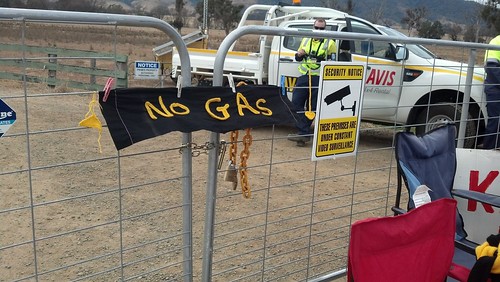
NO GAS at AGL Gloucester
AGL - Aussie Gas Lairs  - we don't care.  That should be their Motto (pictured AGL Frack Gate)

Considering Mark Vaille was the deputy Prime Minister at the same time and participated in all of the other Halliburton War contracts which were handed out to Australian contractors eager to profit from the war in Iraq.   Halliburton opened their futuristic offices in Canberra.   This grand entrance and "Opening" in Canberra leaves me thinking there is more to look at regarding Mark Vaille.  

He should be looked at concerning all things Halliburton.  Considering that AGL's Frack farm is in his former electorate seemingly is too close to be a mistake.  But hey these are just all suspicions to be looked at.  I would look at them more closely if I was on a panel for example.

Given that the Nationals bloke Dr David Gillespie (Gastroenterologist, Port Macquarie) is now sitting in the seat of Lynne (Mark Vaille's former seat) and this is traditionally the seat of the Deputy Prime Minister, it did make me think that he had that one in the bag if he could keep us all quiet perhaps.   So far this has not reared its ugly head to happen.


Both Dr Gillespie and his wife are shareholders of AGL Energy, according to his "Register of Public Interests".   How wonderful for them to have wasted their money because AGL will not profit from being involved with Halliburton either.  It does not seem to be the way they work.

Just before the election this is what he was quoted saying:
"I am very concerned about coal seam gas development and its potential effect on water but the federal government doesn't have the power to ban coal seam gas development.

What it can do is provide environmental protections such as the 'Water Trigger' amendment to the Environmental Biodiversity and Conservation Act, which The Nationals supported.

Our policy is quite clear on coal seam gas.

I do not support coal seam gas development where it poses a significant risk to the water, prime agricultural land or the wider environment.

I do not support coal seam gas development close to existing residential areas and I believe that landholders and communities should get a fair return from coal seam gas development on their land and in their towns.


IMG 8116
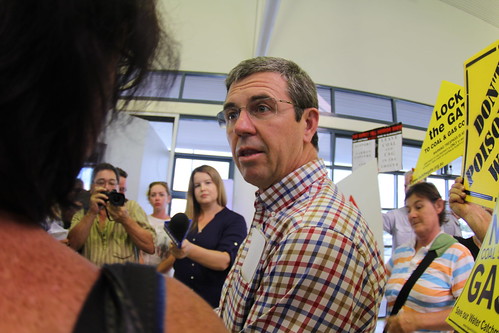
Dr David Gillespie
I am absolutely committed to seeing that our environment is preserved for the benefit of our future generations.
GILLESPIE Parliamentary speeches.  In his maiden speech to parliament he ignores the important issues and does not mention Gloucester's GAS INVASION,
"And our other regional transport links that we have committed to, like the Bucketts Way that will link the Manning Valley and Gloucester primary and secondary industries".
....A secondary mention is not a MENTION. 
This alerts me his is well aware of what is going on with the Gloucester Gas Project.  His idea must be to ignore it and hope it goes away because he is probably a good guy in over his head here with Halliburton in charge of things.  They US cannot fight a war without them, and AGL could not frack without them.
Dr David Gillespie on twitter: https://twitter.com/DaveGillespieMP

The  predecessor, independent Rob Oakeshott fought hard for the issue and he was voted in after the rampant Vaille built his outrageous mansion in the Taree area.  It is the most in your face house.  It is not what I call an ordinary person's house.

CONTACT DETAILS
Parliament Office
PO Box 6022
House of Representatives
Parliament House
Canberra ACT 2600
Telephone: (02) 6277 4960
Fax:(02) 6277 2856.

Electorate Office
75-77 Clarence Street
Port Macquarie, NSW, 2444

Postal address
PO Box 1112
Port Macquarie, NSW, 2444
Telephone: (02) 6583 2077
Fax:(02) 6584 1022

> http://www.coal-seam-gas.com/politics/gillespie.htm#.U1Tk15V_W00


Images @ Eminpee Fotography

Sunday, May 11, 2014

Harsh Mining and RIO TINTO and others in the Centre of Australia.

These are the active mining licences and the active exploration licences that are in my local area.  I have been so concerned about these since 2012 in May when I flew over the degradation of this country while flying in and out to Uluru NT.  What I saw from the air promoted me to look on the internet about what I saw below me and I was left in a state of shock.

The situation with Mining in Australia right across the land is it is too mixed up with politics.  All the politicians should be feeling very much on edge as the ICAC investigation drags their mouldy carcasses to the Corruption Commission.   NSW is only one state.  Many are now calling for an Australia wide Commission.  Abbott won't favor this though because he needs this mining to pay back the money they have promised for resources that if the people have there way will never come out of the ground in many places.  Many places are already so far gone from the degradation that these company CEO's should be jailed for the mess they have left and the sickness and illness that has been caused to people.

Mining companies are also really wonderful at employing lobbyists to say what ever they want them to say and they have no problems in finding falsified medical evidence to back up their twisted web of lies.   I will be looking at the issue of Solastalgia in regards to the condition that makes a person grieve the environment they knew and the environment they see with their eyes.  I have always called this Cognitive Dissonance.  The word that Albrect
Bracken Resources (Hillgrove Antimony/Gold) Active Mining License ($1.5 Billion Resource)

Precious Metal Resources (Halls Peak) copper, lead, zinc and silve,) Exploration almost completed and looking very likely a mining license will be applied for and granted.

Precious Metal Resources (Taylors Arm/Burrapine -Antimony) Exploration has commenced

Anchor Resources (Blicks River near Dorrigo - Gold) Exploration has commenced

Anchor Resources (Nymboida/Beilsdown - Antimony) Exploration has commenced
Altius Gold (Karangai/Orara Valley (Gold) Exploration has commenced
29032014 13005  The centre of Australia
Looking down on Australia in the centre of the continent
1. Rio Tinto, ‘Rio Tinto and Water’, pg.4, http://www.riotinto.com/documents/reportspublications/rtandwater.pdf 

2. ICMM, ‘Report’, ‘Water Management in Mining: A Selection of Case Studies’, May 2012, pg.9 http://www.icmm.com/document/3660 

3. Bendigo Advertiser, ‘Leakage Reported- Mine Water Pipe Breaks’, Nov 2006, http://www.bendigoadvertiser.com.au/story/677898/leakage-reported-mine-water-pipe-breaks/ 

4. Department of the Environment, ‘Report on the leak of water from the Tailings Water Return Pipe at the Ranger uranium mine during the 1999/2000 wet season’, pg. 42, http://www.environment.gov.au/system/files/resources/a036f018-0eec-4b95-b4d8-fc270704e8b6/files/ssr153-6.pdf  

5. Latimer, Cole, Australian Mining, ‘Miner Fined for Zinc Spill’, April, 2012, http://www.miningaustralia.com.au/news/miner-fined-for-chemical-spill

 6. Georgatos, Gerry, The Stringer Independant News, ‘Major Uranium Leak Endangers Kakadu- But Played Down’, Dec 2013, http://thestringer.com.au/major-uranium-leak-endangers-kakadu-but-played-down/#.U3WMLfmSxu1 

Images @ Eminpee Fotography
Enhanced by Zemanta

Wednesday, April 23, 2014

Testimony of a CSG Drill Rig Worker


22nd April 2013.

I contacted the Gasfield Community Support group after hearing Laurence Springborg saying on the radio that no workers in the CSG industry had become sick, and the air and water tests were good quality.

IMG 5279

I started in the industry in 2008, and worked for 3 ½ years on a mobile drill rig. Initially I was employed by Mitchell drilling who were taken over by AJ Lucas. With the exception of one well, at all other times Mitchell drilling /AJ Lucas were contracted to Santos. I was employed as the “offsider” initially, graduating to senior drillers assistant.

One of the tasks was mixing chemicals into the mud pits to pump down the drill string. There were different polymers used. They pumped “mud” down the drill string. (Salt water, KCL and polymer JK261, (a lubricant)). On an average lease, if they were not taking losses, you would use an average of 12 tons of KCL and 15 pallets (720 drums /10,800kg of polymer) to keep the viscosity up and lubricate the drill bit. The polymer was mixed in the pits through a hopper. The polymer had to be sprinkled into the hopper and it was blowing in the face, in the eyes; we were constantly breathing it in. This happened for hours at a time.

Sunday, April 20, 2014

No Horse Stud for the Sheik ... sickened by the ravaged landscape of the coalfields.

 British thoroughbred breeder David Redvers is looking to establish a new stud in the Southern Hemisphere for Qatari Sheik Fahad Al-Thani.  The Hunter Valley was on the definite short list.

IMG 5645

He flew over the Hunter region last week and after witnessing the shocking site of the Hunter Vally coalfields, Mr Redvers changed his plans with a complete about face ,he said he'll now be looking to establish the stud in either New Zealand or Victoria.

Redver's doesn't believe  mining and agriculture is an example of co-existence, he was horrified to see the close proximity of these industries to each other.

David Redvers said:
"Firstly, I was surprised by just how green it was and that turned to shock and sadness at seeing just how huge the scale of destruction is there of what is prime country."
Images @ Eminpee Fotography
Enhanced by Zemanta

Thursday, March 13, 2014

“Coal seam methane gas exploration and extraction should be ordered to cease immediately,”

~ Graeme Gibson ~ Hunter Valley Protection Alliance vice-chairman

People in the Hunter Valley are outraged by the recent contamination of the Pilliga.
The Maitland Mercury ran a Poll Monkey Poll and the results were phenomenal. 
94.4%  voted No   and only a tiny 5.6% voted Yes to Coal Seam Gas Mining.

Graeme Gibson said news from the Pilliga was a particular concern to him when interviewed by the Mercury newspaper.  The news of the EPA fine of $1500 has been seen as a joke by the people of Australia and they want more justice than this because the water is at risk.

IMG 4474
Gloucester NSW
“AGL, it’s time to move on,” Mr Gibson said emphatically."
“You clearly cannot now, and will not be able in the future, guarantee the safety of the fresh water aquifers upon which the vineyards rely to maintain their international reputation.”
I shared the poll as widely as I possibly could to get people to vote and tell the real story of the people and what they want on this issue of water.  Thanks to Peter for his help on this matter because with out him I would not have seen this poll perhaps.

Contaminating aquifers is a treasonous thing to do and our prime minister has openly participated in treasonous activities known to poison the people. 

If you want to read more please go to the Maitland Mercury and view this for yourself because the results are quite clear indeed.

 
Images @ Eminpee Fotography


Sunday, March 09, 2014

PILLIGA DISASTER - AQUIFER CONTAMINATED with Uranium.

~ From Get Up . .
Santos' coal seam gas project in the Pilliga, NSW, has been found to have contaminated a nearby aquifer, with uranium levels 20 higher than safe drinking water. Santos have long claimed that coal seam gas won't damage water - but this suggests otherwise.

The consequences? A measly $1500 fine. Read more here:
http://bit.ly/1kDB2Tk
Get Up - Facebook

This is what we all knew was happening but now it is proven beyond a reasonable doubt that they are putting profit before people and health.   Saying that environmentalists are over-reacting is treasonous in my opinion.   I am not sure if these politicians are stupid or psychopathic.

To knowingly hurt someone without conscience and with out feeling is tagged as be psychopathic and is well documented in the DSM-IV.   List of mental health disorders.

IMG 7164.s7
SANTOS - NARRABRI

Images @ Eminpee Fotography
Enhanced by Zemanta

Friday, October 11, 2013

Philip Pells answers to John Ross from AGL!

IMG 4455
Water Testing by Parsons Brinkerhoff - Gloucester NSW
ABN 74 978 620 434
Phone: 02 4381 2125
Fax: 02 4381 2126

The Old Post Office
49 Lakeside Drive
MacMasters Beach 
NSW 2251
www.pellsconsulting.com.au

Our Ref:P034.L411
October 2013

To Mrs J Trynes
Gloucester
NSW Australia
Dear Madam
STATEMENTS BY JOHN ROSS RECORDED AT AGL ON 3 OCTOBER 2013

INTRODUCTION
This letter addresses two sets of statements by Mr John Ross at the AGL offices in

Sydney on 3 October 2013 recorded and available to the public on the Internet:
(http://www.youtube.com/watch?v=2_YurzVMAmw&feature=youtube
)


IMG 4440
AGL GLOUCESTER OFFICE
1. PRODUCED WATER IS SAME AS THE NATURAL PROCESS

The first set of statements claims that the groundwater at coal seam level in the Gloucester Basin all reports to the Avon River, so that bringing it to the surface as Produced Water from CSG bores is no different to the natural process.

To examine this statement recourse is made to the Parsons Brinkerhoff Groundwater Report (PB) of January 2012

.Parsons Brinkerhoff provides the following facts:
1. The groundwater in the young, alluvial deposits in the valley is sub-modern”.  Meaning it is between 50 and less than 1000 years old.
2. The groundwater in the fractured rock above the coal seams is between 4000 and 19000 years old.
3. The groundwater in the coal seams is between 9600 and 21600 years old.
4.  “Groundwater discharge from the alluvium is primarily to the rivers as baseflow, and during the monitoring period the following salinity ranges observed: TSW01 – 25.7 to 753.5 μS/cm ASW01 – 20.2 to 774.4 μS/cm ASW02 – 93.8 to 301.9 μS/cm.”
5. “The low permeability inter burden units are locally saturated, but generally act  as confining layers between and overlying the coal seams. The layered aquitards of the inter burden units create separate and distinct groundwater systems with no connection evident between the deeper coal seam water bearing zones
and the shallow rock and alluvial aquifers.
Contrast the above with the fact that a 1000m deep CSG bore will bring 10000 to 20000 year old   Produced Water to the surface in a matter of weeks, and according to the PB report that water would have a Total Dissolved Solids of about 3000milligrams per litre (conductivity of 3000 to 5000μS/cm) - i.e. about 10 to 100 times higher than the typical Avon water. In particular that water would have a high bicarbonate content which recent work at The University of Technology in Sydney has shown is significantly more toxic to river critters than are chlorides.

Therefore it is considered that it is misleading for AGL to claim that the Produced Water just mimics normal processes.

2..SALINITY

John Ross is recorded as saying that the Produced Water from The AGL wells at Gloucester will bring less salt to the surface than natural rainfall over 10 square
kilometres.

The facts are as follows:

According to published research by the CSIRO the chlorides deposited through rainfall diminishes rapidly with distance from the coast, and at Gloucester it can be expected that the deposition rate could be about 15kg per Hectare (10000 sq. metres) per annum. Therefore for 10 square km we would have 10*100*15= 15000 kg per annum (or 15 tonne). In this regard it should be noted that there are no data specific to the Gloucester-Stroud-Barrington area.

At this time there is no way of knowing how much Produced Water will come from the Stage 1 wells at Gloucester. We know that as of 2101 AGL had 56 million litres stored on site1, containing about 168 tonnes of dissolved solids (chlorides and bicarbonates).

We don’t know over what period this water was produced, but think it was about 3 years (giving 56 tonne per annum, or about 4 times John Ross’s 15 tonne.  We also don’t know what will be the annual Produced Water from the more than 100 Stage 1 production wells –but it is reasonable to assume that each well will produce between 2 to 5 litre per second.  If we adopt a value of 3 litres per second then each well will produce about: •3*3600*24*365 *32= 284 tonne of salt per year.

In order for John Ross’s claim to be true AGL would have to have only 1 CSG bore every 10 sq. km, with each bore yielding less than 0.16 litre per second of produced water.  This seems highly unrealistic to say the least.

Again, it can only be concluded that this statement by John Ross on behalf of AGL is misleading.

1. Parsons Brinkerhoff, Jan 2012  2 (litres per second)*(seconds in an hour)*(hours in a day)*(days in a year)*(gram of salt per litre), with PB measurements giving about 3 gram per litre in the coal seam water.
P034.L4
Pells Consulting
11 October 2013
PHILIP PELLS
FTSE BSc(Eng) MSc DSc(Eng) FIEAust MASCE
Enhanced by Zemanta

Tuesday, November 27, 2012

Clean up Happening Now!

See what happens when people start speaking out.  This area was just forgotten about and not until you jump up and down and start reading the facts to people in black and white simple language like you are living next to death are you aware of this ????

No they didn't know.  We as parents didn't know.  I would not have let my kids play soccer on those soccer fields at Urunga If I had known the facts.  I would have no let anyones kids play on those fields at Urunga if I had known the facts.

From the Courier Sun Bellingen


Antimony clean-up underway 


The NSW Government is working to remediate the contaminated site at Hillside Drive in Urunga with the completion of a detailed site investigation.
The Antimony processing activities occurred on the site in the early 1970s which sourced Stibnite ore from the Wild Cattle Creek mine in Dorrigo.
When the short term spike in Antimony metal prices fell, both the mine and the Urunga processing plant were abandoned. Since this time, the waste tailings containing antimony, arsenic, mercury, chromium, nickel, zinc, copper, lead and cyanide have spread into the adjoining SEPP14 wetland.
Project manager, Clayton Colmer is pleased that the results of recent sampling by local consultants GHD Pty Ltd have provided a clearer picture of the extent and nature of contaminated material on the site.
“Many investigations have been conducted in the past but did not give a complete picture of the contamination,” he said.
“The latest investigation used historical results but also involved an extra 300 samples. These samples included surface water, groundwater, soil, tailings and wetland sediments,” Mr Colmer said.
The recent sampling also used the latest technology X-Ray Fluorescence (XRF) hand held sensor which allows a cost effective method of undertaking higher density sampling. Samples were also sent off for NATA accredited laboratory testing to confirm the concentrations of the heavy metals.
“We will be considering a wide range of practical remediation measures to clean up the site and how to best use the $1 million government funding. It is hoped that on-site remediation works can begin in mid 2013,” Mr Colmer said.
GHD are cleaning it up now but are they to be trusted HONESTLY look who their board of directors are and It appears they get all the best jobs for the boys in this game .. PLEASE READ ON

Founded in 1928, GHD has been active in the professional services business for more than 80 years. Since its inception, GHD has assisted global communities to realise their potential and create lasting value by delivering innovative and sustainable solutions.

GHD is a company built on partnerships. It continues to be an enduring force to connect, collaborate and communicate with our clients to solve their challenges, to drive our success and to make the world a better place.
1928 Gordon Gutteridge founded GHD and focuses on water and sewerage.
1937 Hobart office established.
1939 Gerald Haskins & Geoffrey Davey joins the partnership.
1949 Innovative sewerage design for Cairns, the largest city in Australia at the time without sewerage.
1950s GHD expands into transport infrastructure, manufacturing plants, building and civil works, energy, mining and dams.
1962 GHD employs 300 people.
1967 GHD opens Gold Coast office.
1970 GHD employs 500 people and provides extensive services for Hobart’s landmark Wrestpoint Casino.
1972 Townsville office opened.
1974 Formation of GHD-Parsons Brinkerhoff Pty Ltd. GHD plays a major role in the design of a new city and infrastructure for Darwin, following Cyclone Tracey.
1975 Offices opened in Albury/Wodonga and Perth.
1976 Offices opened in Adelaide, Bundaberg, Mackay and the Sunshine Coast.
1978 GHD begins international expansion and establishes a joint venture in Malaysia.
1980 GHD employs more than 700 people. Bunbury and Newcastle offices opened.
1981 Gladstone office opened. Merger with Planner West Pty Ltd. Joint venture of GHD-Black & Veatch established. GHD-Wood Geotechnical Pty Ltd established.
1983 Offices opened in Katherine, Port Hedland and Rockhampton.
1984 Offices opened in Alice Springs and Wollongong.
1985 GHD-Wright joint venture established.
1988 GHD carries out planning services for World Expo 88 in Brisbane and opens office in Coffs Harbour.
1990 International projects burgeon and offices opened in the Philippines, Thailand and Vietnam.
1993 GHD earns ISO 9001: 1987 accreditation
1995 Acquisition of Water Corporation of Western Australia's water engineering group
1997 Acquisition of WORKS Australia and LongMac Group
1999 Manukau Consultants Ltd (NZ) join GHD.
2000 Martin & Co in Gladstone join GHD.
2001 Smith and Wood Consultants, NZ join GHD. Acquisition of MME in Doha, Qatar and in Dubai and Abu Dhabi.
2002 Mergers completed with Geo-Eng Group and EGIS Consulting Australia. GHD people increased to 2300.
2003 GHD celebrates its 75th year of operations.
2004 Baker Saran, NSW, joins GHD
2005 Mergers completed with AJP, Malaysia, Qest Consulting, NSW, City Design, SA, and Civil Design Services, NZ.
2006 GHD broadens its reach in Hong Kong, China and the UK, completing mergers with Rankine & Hill, a Hong Kong consulting engineering company, and Archispace, a provider of urban planning, architectural and landscape design services throughout China. Alliance formed with London-based AMCL, and offices opened in York and London.
2007 Three companies joined GHD including Leddy Sergiacomi & Associates, a Queensland engineering and environmental consultancy company, ProAnd, a New Zealand specialist meat process design engineering consultancy and PCT Engineers, a Western Australia/Queensland consultancy company providing engineering services to the oil, gas and mining sectors.
2008 GHD celebrates 80 years. Hassall & Associates, a consulting firm specialising in International Development Assistance, agriculture, natural resource and environmental issues joins GHD. Offices opened in Ireland and Canada.
2009 GHD now employs 6000 people. Four strategic mergers completed in the USA that build on our core water and wastewater services, including RoseWater Engineering, the Arizona Engineering Company, CSA Engineering and Stearns & Wheler.
2010 Continuous strong performance of our operations including strategic mergers with SMGC in the mining sector in Australia and China Water International Engineering Consulting Company (CWIECC) in China. Health and safety of our workforce was recognised with the 2010 Best Workplace Health and Safety Management System Award. Community engagement was strengthened with ‘GHD in the Community’ contributing to the MSABI project in Tanzania, supporting vital charities and making contributions to natural disasters around the world.
2011 Mergers completed with MGF Consultants in North Queensland, Australia, CollinsonDutton Ltd (CDL) in the UK as well as Winzler & Kelly, Commonwealth Engineering & Technology, Inc (CET) and RobsonWoese in the USA. We also expanded our capabilities in the energy and resources sector and registered significant wins in transportation. We achieved a period of 3.4 million hours free Lost Time Injury and continued to engage in a range of Corporate Social Responsibility initiatives including community contributions in New Zealand following the earthquake in Christchurch.
2012 We continued our expansion in the Americas with the acquisition of the Sernas Group in Canada's Greater Toronto Region in Whitby, Mississauga and Kitchener and in the USA, in Madison, Wisconsin. We also broadened our water services with the acquisition of the Water Sciences Group of Australian Laboratory Services. We have been named the fourth most attractive company to work for in Australia by recruitment firm Randstad and recognised as the best waste consultant in Australia according to a survey completed by Inside Waste Magazine.


Images @ Melonpopzdropz Flickr
Enhanced by Zemanta

Wednesday, October 24, 2012

Dorrigo residents oppose Chinese mine drill

8533 Waters Falling
by  Mark Dodd
From: The Australian written in September 2011

PLANS by a Chinese company to start exploration drilling for rare earths and gold on the pristine Dorrigo Plateau in NSW has triggered community fears of contamination of the water catchment for Coffs Harbour and nearby Grafton.
Anchor Resources, 96 per cent-owned by the Shandong Jin Shunda Group, wants to start a $2.6 million drilling program around an old antimony mine at Wild Cattle Creek and a gold prospect at nearby Blicks River.
But many local residents fear the drilling is a precursor to the start of large-scale mining that would threaten the crucial Macleay catchment.
More than 100 concerned residents from Dorrigo and nearby Bellinger Valley attended a community meeting at the weekend to vent their concerns and learn more about the mining proposal.
Dorrigo Environment Watch spokeswoman Gwen Hanna said any full-scale mining operation posed unacceptable pollution risks in an area that lies close to the World Heritage listed Dorrigo National Park, a major tourist attraction.
The habitat of three endangered frogs -- the Giant Barred, Stuttering and Pouched -- lies within the proposed exploration area, Ms Hanna said.
"This area is in a unique environment and we're really concerned that if they do open cut, which they're proposing in addition to open shaft -- it's going to be a really serious blot on the landscape," she said.
In addition to pollution fears, she said residents were worried about the prospect of ore-laden lorries travelling through Dorrigo to what would be the most likely processing facility at Hill Grove, near Armidale.
But local National Party member Luke Hartsuyker, the federal MP for Cowper, said any plans to resume mining on the plateau would create up to 60 jobs in a hard-pressed rural economy.
"This not an Olympic Dam," Mr Hartsuyker said referring to the South Australian mine site containing the world's largest known single deposit of uranium.
Antimony is used in the manufacture of fire retardants, plastics, medical applications and next generation computer memory drives. Demand for the metal is so strong, its price has rocketed from $4000 a tonne in 2006 to $16,000.
Federal Environment Minister Tony Burke told The Australian he was closely monitoring developments.
"If the company was to propose to mine following exploration, it is more likely federal powers would be triggered at that point," he said.