Wednesday, December 07, 2016

FAMILY TREE 
EDWARD BUTLER b. 26th June 1876, Broadwater, Stanthorpe, QLD. d. 27 August 1958, QLD. EDWARD'S Parents are:
SAMUEL BUTLER b. 12 Oct 1847, Shelford, Cambridgeshire,England. d. 10 Jul 1934, Applethorpe,QLD, &
PATIENCE TAYLOR b. 19 Apr 1849, Rimbanda,Armidale,NSW. d. 22 Sept 1915, Stanthorpe,QLD.


EDWARD BUTLER married CHRISTINA FLINT 7th Dec 1899,Stanthorpe, QLD place of residence was Maryland Station, Tenterfield, NSW.


CHRISTINA FLINT b. 3 Aug 1877, Thornhill, Maryland, NSW. d. 5 Mar 1962, Stanthorpe, QLD.


A little more about My Great Great Grandparents and my great grandfathers siblings!

Markus Henry Peters and Matilda Stella Peters (nee Butler) at the Killarney Show


Patience Taylor (b. 1849, d. 22September 1915) 

Patience Taylor (daughter of William Taylor and Ann Nunan) was born 1849 in St Peters, Armidale, New South Wales, Australia, and died 22 September 1915 in Stanthorpe, Queensland, Australia. She married Samuel Butler on 1868 in Tenterfield, New south Wales, Australia.

More About Patience Taylor:
Burial: 25 September 1915, Stanthorpe, Queensland, Australia.

More About Patience Taylor and Samuel Butler:
Marriage: 1868, Tenterfield, New south Wales, Australia.

Children of Patience Taylor and Samuel Butler are:
  1. William Butler, b. 27 November 1879, d. date unknown.
  2. +Isabella Butler, b. 18 November 1880, d. 9 November 1965, Stanthorpe, Queensland, Australia.
  3. Job Butler, b. 18 November 1880, Tenterfield, New South Wales, Australia, d. 22 November 1968, Stanthorpe, Queensland, Australia.
  4. Thomas Butler, b. 21 February 1883, d. date unknown.
  5. George Butler, b. 23 November 1888, d. date unknown.
MY GREAT GRANDMOTHERS OBITUARY
Mrs Christina Kirkpatrick Butler (nee Flint)

The death took place of Mrs Christina Kirkpatrick Russell Butler, aged 84 years on march 5th 1962 at her daughter's, Mrs Alicoque Glover's home in White Street, Stanthorpe.  Mrs Butler had had a stroke eight months prior to her death and was nursed by her daughter Alicoque until she passed away. With careful care and attention Mrs Butler was able to walk and move her right arm considerably with assistance only a month after having the stroke.

Mrs Butler was born on her father's sheep property at "Thorn Hill",Maryland. She lived there with her parents Mr &Mrs Robert Flint until she married Edward (Ted) Butler in 1899 at Stanthorpe, Queensland.

After her marriage she and her husband took up a small selection at Maryland. During her younger days she was noted for her horsemanship. She was a lover of outdoor life, especially as far as rough riding was concerned. Many a horse which no man would handle, she would break in, and many an old hand today still talks of her skill in breaking in of horses and buck jump riding. Most of her riding was done in a lady's side saddle. She was still riding at the age of 70 and in recent years when asked if she still rode,her reply was "No the pony is too old".

She learned to ride almost before she could walk for her father who was also an expert horseman and veterinary surgeon, broke in horses of all descriptions and owned and trained race horses and trotters which he raced in Brisbane and various other towns.

In her early days she was also noted for her art in ball room dancing; many a time being belle of the ball. She was a great lover of music and could play the accordion and mouth organ. She still could play a tune on the mouth organ up until she passed away.

Mrs Butler was a very keen reader all her life and never wore glasses. She always did have a fine sense of humor and an amazing quickness of wit. Many a laugh she gave each and all who came in contact with her during her later life.
She and her husband resided at Maryland until 1911 when Mrs Butler came to live with her daughter Alicoque at The Summit and lived with her for eight years.

She then bought a home at The Summit and lived there until her late husbands death four years ago,when she again moved to Stanthorpe to reside with her daughter Alicoque where she remained until her death.

During the whole of her life she only ever visited a doctor twice until just recently. The late Mrs Christina Kirkpatrick Butler is survived by 11 children; four sons and seven daughters.

These are 
Sid  ( The Summit) married  BEATRICE /
Victor (The Summit), married IVY /
Roy (Yarraman),  married Doris / Brian, Kevin
Bert (Brisbane),
Amy (Mrs Glasby) Murwillumbah),married DAVE GLASBY
Matilda (Mrs Peters) Killarney), Married Markus PETERS William (Dad),Mary,Joan,Dudley,Lawrence
Queenie (Mrs Carter) Malanda), - John, Max
Edith ( Mrs Cussen) married John Cussen / - Mavis, Kay
Gracie( Mrs Stonebridge) Ipswich) married George Stonebridge /, Baxter, Roselyn
Elsie ( Mrs McCanna) Mackay)Married Charlie McCANNA /,(twins that passed away)
Alicoque (Mrs Glover) Stanthorpe).
All 11 of her children were born at Maryland with her mother Mrs Flint as nurse.
There are 33 grandchildren and 50 great grand children. I am one of the 50 grandchildren and my grandmother was Matilda (Peters)
...I was reared by my grandmother's sister Edith  Cussen (Nee Butler).
 Image - My grandparents, Markus and Matilda at the Killarney show.  
Matilda was the second eldest daughter of Christina and Edward Butler, who were my great grandparents.
 44511_1564452717174_1411062983_1524219_2678494_n
This is an image of one of their sons William Henry Peters ( Billy)  and one of their grandchildren Mary-Ellen Peters  (Me) on his knee in the wheelchair he had been in for only a year at this point. Brisbane 1960.  This picture was taken at Rita Clarke's wedding.
                    ....oOo....
Updated to the list of Matilda's...
My Grandmother Matilda Stellar Peters has had two great grandchildren named after her and one Great great grandchild.  I named my first born daughter Matilda Sunshine Katherine after my Grandmother and Katherine after my mother's middle name, Ellen Katherine Peters /Fraser (Baguley).  My cousin  Anne Sullivan named her daughter Matilda. My Nephew Rick Ellen (son of my sister Julieanne) named his first daughter Matilda.

Tuesday, November 29, 2016

Playing Grapes

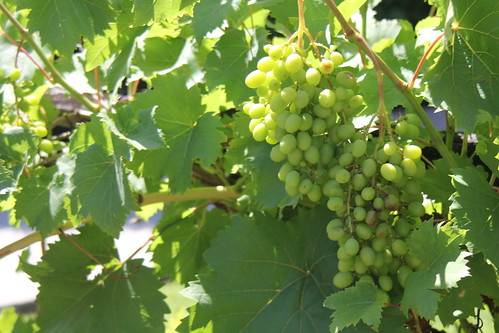
IMG 5802 Grapes

 The "Mother Plant" in Urunga in 2013

I took a cutting from a Grape Vine that grew in the lane behind the Library in Urunga NSW where we used to live.  I did this about four years ago.  It stayed in a pot for 3 years pretty well and then we planted it into the ground last year after we moved to our new home.

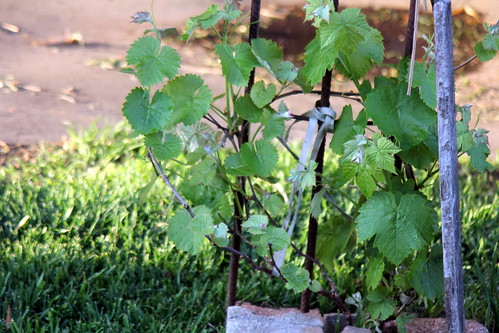
IMG 4749

It seems to  love it where it is and I am building a trellis for it to train on down the side of the car port.   There was so much growth it looked a little odd.  My friend Bruce Derkenne was so helpful when I posted an image of the vine and questioned to do this on social media.  He came straight back with the best information.  So easy really and common sense if I had thought longer about it.
I was keen to keep this conversation where I could refer to it again and to perhaps help others with the same task if they are new to this.
Bruce: Generally you nip all the side shoots off until the vine (terminal bud) is where you want it to go and then let the side shoots (auxiliary buds) sprout for cover and fruit. Each year cut back side shoots after fruiting has finished.

You can have as many terminal buds as you like depending on what area you want to cover or screen xo

Me: you are a god send. Thank you! How will I know which is which... there is a lot going on there?


Bruce: Go back to the start and track them and train them to where you want them to go. Any excess shoots just cut off from the point at which they shoot.

You can be pretty hard on grape vines so don't worry too much about pruning here or there. You do, you learn.

Me: Okkie dokie ... going to have a look now!
You are gold.

They be those ones at the front for example , am I correct?

There are side ones but those front ones are just going straight ahead not sideways.. is that what you mean Bruce, to take those off?

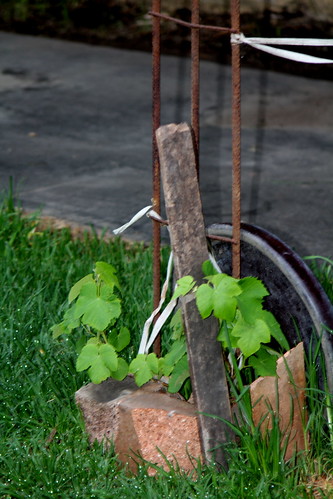
IMG 0428 Grape Vine

When we first planted it into the ground last year at Deepwater NSW.  Planted with lots of love and hope.  It seems to have responded wonderfully, its flowering now and making tiny grapes.

Images @ Eminpee Fotography

Wednesday, November 23, 2016

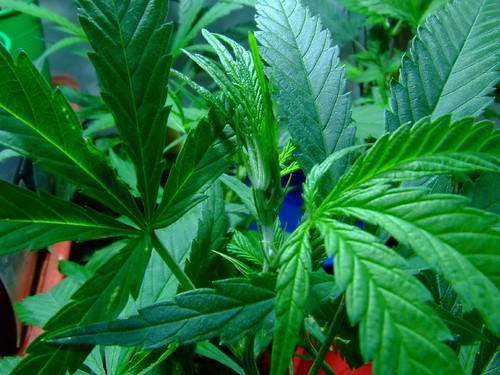
Medicine from Cannabis

Lets define the word 'Medicine'.

From Latin medicina "the healing art", medicine; a remedy. 

So what is a REMEDY then? 

From re-, intensive prefix (or perhaps literally, "again;" see re-), + mederi "to heal", from Late Latin remedialis "healing, curing," from Latin remedium.

Quote 
By Hank Schultz, 30-Sep-2016
A new line of dietary supplements from hemp bases its message on the full suite of phytocannabinoids in the products, as well as its aim not to push the edges of the regulatory envelope, its founder says.

Cannabis

So, its pretty clear to the average bear that all of the above definitions talk about healing.  There is nothing in any of the definitions that even remotely say's medicine is something that can kill you,  (ie Chemotherapy, Anti Psychotics, Shock Therapy, SSRI's, Anti-Depressants) the list grows.

Back to the Cannabis / Medicine subject.  The government has been controlling this substance for more years than many of us care to remember now.  For far too long a basically harmless plant has been held back from human kind when our loved ones are ill and are in need of the medicine to survive the conditions of modern living.   This has occurred because of greed and the inability to control the use of the plant in order to make corporations huge profits!   We all know the pharmaceutical companies are not in the business of health.  There are no huge profit margins in healthy people who no longer wish to swallow the jaded therapies orchestrated to keep a certain percentage of the population under control via the use of seriously dangerous mind altering substances that can result in death.  This is done under the guise of "medicine".

Presently, the government want to control this plant for medicinal use and start fiddling around with this part and that part and blah blah blah.  This is a death knell on the empirical value of the plant and its extraordinary  healing capacities.  They are simply barking up the wrong tree doing this and once again wasting time when people could be well.

I have lost count how many times I have said in the defense of Cannabis that only the full spectrum plant extract or the use of the entire plant matter in ingestion will do the healing job effectively!  

The people pushing the fiddling agenda, mainly the under educated passionate do gooder's  pushing for extracts who are blind to the basic facts of medicinal plant use and how and what makes this MEDICINE are responsible for this mess!    It has to cease. These people are simply ignorant because they don't want the science, they are not nescient.  The information has been clearly outlined from countless corners.


Once again we see mankind looking to make a quick dollar and greedy corporations willing to forgo the true benefits by hurtling down the path of extracting and isolating the CBD's and ignoring what the THC compounds do simultaneously to cause healing to happen in the body.  They are willing to go this far all for profit.   An evil section of humanity would partake, motivated by the suffering of others and the ridiculous time wasting testing band wagon created by governments.
 

The Facts

We have an Endocannabinoid system very similar to our Endocrine system (hormones / switches) and we have Cannabinoid receptors in our bodies.  


Do you for some reason think this is just is in our body by accident?  No, you would not be that silly would you? This plant was used as a medicine for thousands of years up until the 1940's when the DuPont corporation cooked up a good story to sell the public inaccurate information demonizing the plant. This was a strategic business decision in order to make a fortune.  Common sense should tell you something is terribly wrong.

Children who suffer from endless seizures have been cured, soldiers plagued with PTSD have found solace and relief.  Cancers have been cured, eliminated and remitted.  One would have to ask what is wrong with that?

It is a sad indictment of our society to take this laying down and think it is alright.    I have  been concerned by what I have seen regarding this entire subject since 1975 when I first understood the prohibition that occurred in the USA and how successive governments were chided to follow the lead of the American fools.  I joined NORML and learned what I could from reputable sources.


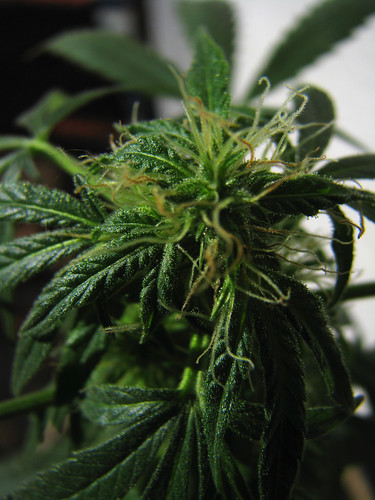
cannabis
Image
Today, I will say again and again.  Don't fiddle with the medicine. If it works, don't question why.  

You are blessed to have the courage to use Cannabis as medicine if you are new to this type of treatment.  I can imagine that fear would play a great part in not trying it.   When its life and death and this dilemma is faced on the daily, then fear plays an increasingly smaller factor when health is all someone wants to achieve. 
 

What ailments Cannabis has helped with already....

PTSD.. Shell Shock .. More precisely known as Post Traumatic Stress Disorder is a serious ailment effecting a huge percentage of the population.  243 Australian soldiers have committed suicide after coming home from the Middle Eastern War with extreme cases of PTSD.  They take the meds, and a lot take their life. This is all the government offer for these people who risked their lives, supposedly for us all as a nation. 

We have another large slice of the population trying to cope with PTSD as a direct relation of being brought up by government and church institutions in care, suffering the endless abuse incurred just being a human being and being a helpless child. So many of these people commit suicide too.  Once again the 'Big Pharma' medicine the doctors prescribe is clearly not working. 

In my 57 years I have not seen a positive outcome with friends who have been good patients and taken their meds.  Many are now dead, took their own lives because they could no longer cope with the side effects layered on top of the trauma.


I have Post Traumatic Stress Disorder.  I know this condition way too intimately.  I am aware I would not be the person I am today had I not done what I have had to do over the years and refuse their medications.   This is my life and my  body and my emotions and my pain.  Its not their body, it is mine.  People should be able to use a harmless plant that has so many benefits and not be penalized like a criminal for attempting to find peace and health.  None of that is sensible and all of it is psychotic.

On the use argument, people who don't find benefit  have the free will to cease using the plant with no adverse side effects if they so choose. This is unlike the Big Pharma Medications that can be lethal if you cease to medicate with these.  

Like all substances deemed medicines, not everything is a cure all for everyone. However, not being able to try is basically GENOCIDE on the part of the various lawmakers of the worlds different governments while ever they withhold this from the sick public and waste money making its use a crime.

People are waking up on the daily to the corruption that keeps a few people filthy rich.  Those that haven't woken up will have to catch up or be destined to shrivel via their own heart / brain decisions that  destroy the soul.  

Read more about the Full Spectrum use here https://www.energytherapy.biz/2016/09/01/rick-simpsons-cancer-busting-high-thc-cannabis-oil/

More of my Images @ Flickr


Wednesday, November 16, 2016

Blaise Pascal 17th Century

Blaise PascalBlaise Pascal was a French mathematician, physicist and religious philosopher.   He was born on June 19th in 1623, Clermont-Ferrand, France.   Pascal died of a malignant stomach tumor at his sister Gilberte's home in Paris on August 19th, 1662.

In the 1640s he invented the Pascaline, which was an early calculator.  He also worked to further  Evangelista Torricelli's theory of the cause of barometric variation.  

Blaise Pascal laid the foundations for the modern "Theory of Probabilities".  His religious notes were published posthumously and were known as the "Pensees".

As a young boy he was home schooled by his father and he was forbidden to study Geometry.  His father forbade him this because he harbored a fear that Blaise would not put effort into his other studies and his languages.  Blaise Pascal being a Gemini and having a most curious mind had decided to embark on this by his own volition and quickly adapted his own language to his learning having not had classical teaching.  His father allowed him to study Euclid after this.

Pascal also published a work "Les Provinciales" defending his Jansenist faith within the confines of the Roman Church.


JANSENISM 


Jansenism was a Catholic theological movement, primarily in France, that emphasized original sin, human depravity, the necessity of divine grace, and predestination. 
The movement originated from the posthumously published work of the Dutch theologian Cornelius Jansen, who died in 1638. 
It was first popularized by Jansen's friend Abbot Jean Duvergier de Hauranne, of Saint-Cyran-en-Brenne Abbey, and after Duvergier's death in 1643, was led by Antoine Arnauld. 
Through the 17th and into the 18th centuries, Jansenism was a distinct movement within the Catholic Church. 
The theological centre of the movement was the convent of Port-Royal Abbey, Paris, which was a haven for writers including Duvergier, Arnauld, Pierre Nicole, Jean Racine and of course Blaise Pascal.

Nicklaus Wirth invented a computer language and named it Pascal in honor of Blaise Pascal and his form of first computer (Pascaline calculator).

He influenced modern thinkers like Sir Isaac Newton and Gottfried Wilhelm Leibniz.

Newton being a tyrannical figure who had great power and influence over the careers of young scientists and scholars with his position.  He was found to have been out done by one of his peers astronomer John Flamsteed who through the courts managed to stop Newtons heartless
  The weather term Pa is named after Pascal once again for his original efforts he put into

Tuesday, November 15, 2016

Nothing to see here? The abuse and neglect of children in care is a century-old story in Australia

Katherine McFarlane, Charles Sturt University
 
Last night’s Four Corners program presented evidence of widespread abuse and neglect suffered by children in the out-of-home care system. Sadly, it was an all too familiar story. The Australian care system has been subject to criticism for over a century.
Children described bullying, harassment and sexual abuse inflicted by other children who share their homes. Children also described adult men preying on and sexually exploiting girls in “resi” or residential care.
There were allegations of 12-year-olds being left without adequate clothing, stable accommodation or sufficient food, abandoned by the agencies that were supposed to care for them. Private, for-profit agencies were accused of financial mismanagement and rorting of taxpayer funds.
Some of the most horrific allegations didn’t make it to air, but were reserved for the digital broadcast available online immediately after the program. This included recent revelations of an alleged rape in New South Wales by UnitingCare staffers who had been entrusted with the care of 13-year-old “Girl X”, who died from a drug overdose just weeks before she was due to give evidence against her alleged attackers.
The digital broadcast also included the sexual predation by adults of children in Victorian state care, revealed in a “searing condemnation” by Victorian Children’s Commissioner Bernie Geary. This is an issue that the South Australian Child Protection Systems Royal Commission has also exposed.

A familiar story

Depressingly, the Four Corners program did not reveal much that was new. My own research has identified equally devastating statistics of abuse and neglect of children in care. Almost a quarter of the children in my study had been abused while in care, in what were meant to be safe placements.
The abuse, which was confirmed by state authorities, took the form of physical beatings, violence and sexual assault. The younger the child, the more likely they were to have been hurt while in care. A third of children under 13 years of age had been abused and a quarter had attempted suicide.
It would be naive to assume that the child welfare system is always benevolent and focused on providing nurture, protection and support. It cannot be guaranteed that the type of placement or the level of care provided is always based on a child’s needs. But across Australia, outcomes for children in care are generally regarded as highly unsatisfactory.
The United Nations (UN) has called attention to the “widespread reports of inadequacies and abuse” in Australian care systems. The UN has complained of the inadequate screening, training, support and assessment of carers. It has also complained of the inappropriate placements of children, and the mental health issues that are “exacerbated by (or caused in) care”.
Children in care have worse life outcomes than their peers. Whether we’re measuring health, education, employment, stability, well-being, social inclusion, financial and emotional security or involvement in the criminal justice system, children in care perform badly, even when compared to children of roughly comparable backgrounds and problems.

A century-old problem

In the 1870s, a scathing assessment of the Australian care system by British child welfare reformers the Hill Sisters led to a royal commission into charities.
On average, there has been a major inquiry into aspects of the child welfare system every three years since then.
The abuse suffered by children in care is exposed regularly. Every time, it’s met with the same excuses and promises. The children are presented as damaged, rather than the systems that are failing them. Agencies hide behind their professed best intentions and talk about “difficult” children.
Governments spruik their support for “salt of the earth carers” and the “saints” of child welfare. These governments are afraid that if they probe too deeply into the failings of the system and agencies, they will be left holding the baby. The focus shifts from the care agencies’ failure to protect vulnerable children, to airing agencies’ calls for additional funding and even earlier intervention.
The UK House of Commons has said that:
many of the things we wish would happen in the care system would follow naturally if the system and those who work within it were minded, and enabled, to act more like parents.

The failure of government

Government interventions to enforce this have proved spectacularly unsuccessful. The mountain of memorandums of understanding, guidelines, compacts, heads of agreement, committees, regulations, legislation, independent inquiries and reports established over the past 20 years in New South Wales alone have failed to improve things for children in care. Measures designed to protect children have not overcome the system’s inadequacies nor even begun to address the often questionable motivation and practices of the various players in the child welfare sector.
Government failure to hold the bureaucracy and its non-government sector partners accountable for poor decisions, inadequate oversight and accountability and the inefficient use of resources that erode the effective operations of the out of home care system is an indictment on us all.
These failures have allowed the problem of abuse and neglect in care to seem insurmountable, regardless of the devastation caused to the children concerned. There have been repeated professions of political goodwill and the commitment of countless millions of dollars across child welfare, juvenile justice, homelessness, education and health services. Despite this, we have failed to stop kids being abused by the very people we have trusted to care for them.
That the matters reported last night on Four Corners are occurring at the very time we have a Royal Commission watching the system shows the practitioners and agencies responsible for the neglect and abuse of children in their care have little to fear.
The Conversation

Katherine McFarlane, Senior Lecturer in Justice Studies, Charles Sturt University
This article was originally published on The Conversation.

Read the original article.

Wednesday, November 02, 2016

Tu'ulenana Iuli at Standing Rock.

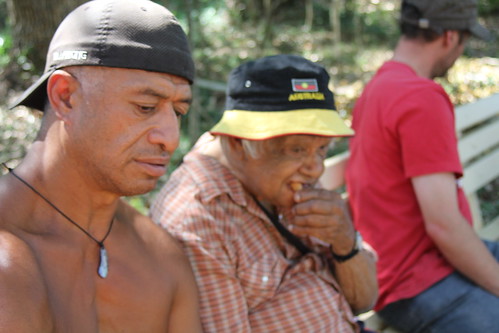
This is my friend Tu from Bellingen NSW Australia and he is at Standing Rock in Nth Dakota right now.  He is renowned for doing his famous Haka and I am so proud he is dancing here at Standing Rock.
The North Dakota Pipeline is a black poisonous snake.


IMG 4060
Tu standing up against the closure of Aboriginal Communities
IMG 5369

My favorite image of Tu with Uncle T** at a rally against Csg Mining in Bellingen NSW Australia. I am feeling a sense of strength from knowing that someone I know and love is standing up against this filthy pipeline and the filthy politics playing into this.  It effects us all.  Thank you Tu'ulenana Iuli

Wednesday, October 26, 2016

Tjukurpa and Wapar around the Rock


IMG 9836.1 Uluru Dreaming 2012
I loved the grasses surrounding the area..

My love of this place is ongoing. It grows still day by day and the lessons I learned there will stay with me for an eternity.  I finally journeyed there in 2012 with my friend Suzy and her Uncle who was the Gumbayngirri elder, Uncle Tom.  Uncle Thomas Kelly was 88 when we went and he has now passed.

The exact time to go here was set down at the creation and we just answered the call.  I recall sitting with Aunty Alison Hunt and listening to her explain Tjukurpa to me for the first time and how Tjukurpa was everything, in everything and it was everything.  I remember the instant correlations to Ancient Hermetic / Natural Law.  It is immutable and governs all and is not man made etc and I understood totally what she meant. 
 

Not a day goes past that I don't allow my mind to wander back along those red paths we walked on ancient ground where we heard the voices of the old people welcoming us and letting us  know they knew we were there and why.   

The following article is informative from a base knowledge on what Tjukurpa is and if you are intending to go to Uluru you should on all accounts familiarize yourself with this out of due respect for the Anangu people and what they have known intimately for thousands and thousands of years.

Tjukurpa is the foundation of Anangu life.

(There is not a single word in English that conveys the complex meaning of Tjukurpa. This is why at Uluru - Kata Tjuta National Park we use the Pitjantjatjara word. The Traditional Owners who speak Yankunytjatjara use the word Wapar to mean the same complex body of Law and beliefs).

What is Tjukurpa/Wapar?

The term, Tjukurpa/Wapar, includes many complex but complementary concepts.
Tjukurpa/Wapar encompasses:
  • Anangu religion, law and moral systems;
  • the past, the present and the future.
  • the creation period when ancestral beings, Tjukaritja/Waparitja, created the world as it is now;
  • the relationship between people, plants, animals and the physical features of the land; and
  • the knowledge of how these relationships came to be, what they mean and how they must be maintained in daily life and in ceremony.

Tjukurpa/Wapar Versus Dreamtime/Dreaming

'Dreamtime' or 'Dreaming' is often used to describe the way Anangu see their origins. This translation, originally made by non-Aboriginal people, suggests the beliefs are unreal and changeable. Tjukurpa/Wapar is no dream, and there is no such word as 'Dreamtime' in Anangu language.
Anangu are pleased that this interaction between themselves and the land has now been recognized as being of World Heritage value.

The Creation Period

The world was once a featureless place. None of the places we know existed until creator beings, in the forms of people, plants and animals, traveled widely across the land. Then, in a process of creation and destruction, they formed the landscape as we know it today. Anangu land is still inhabited by the spirits of dozens of these ancestral creator beings which are referred to as Tjukuritja or Waparitja.

Mala - rufus hare-wallaby
Mala, or rufous hare-wallaby

The journeys and activities of the creator beings are recorded in the landscape. Sites where significant events in their story took place are linked by what we call, iwara (paths or tracks). Some of the sites are so very significant that they are known as 'sacred sites'. Today our people still know where these sites and these iwara are and where they go although there is no physical road. Our grandmothers and grandfathers teach us this.
The iwara (tracks) link places that are sometimes hundreds of kilometres outside the Park and beyond Yankunytjatjara/ Pitjantjatjara country. So they are significant to other groups of indigenous people too.
For example, the Mala Tjukurpa involves three groups of Mala (rufous hare-wallaby) people who travel from the north to reach Uluru. Two groups then flee south and south-east to sites in South Australia. Kuniya Tjukurpa tells of the travels of the Kuniya (Woma Python) from hundreds of kilometres east of Uluru.
Many other Tjukurpa such as Kalaya (Emu), Liru (poisonous snake), Lungkata (blue tongue lizard), Luunpa (kingfisher) and Tjintir-tjintirpa (willie wagtail) travel through the Park. Other Tjukurpa affect only one specific area. Many exploits of Tjukurpa involve ancestral beings going underground.

Woma Python

Kuniya, the woma python, lived in the rocks at Uluru where she fought the Liru, the poisonous snake
Kuniya, the woma python, lived in the rocks at Uluru where she fought the Liru, the poisonous snake.
Anangu landscapes are therefore full of meaning. They represent creation stories and associated knowledge of Law, relationships, plants, and animals represented in the shapes and features of the land. This knowledge has been passed down between the generations from grandparents to grandchildren. With the knowledge comes responsibilities and obligations to care for the land and each other in the proper way.
When Anangu travel across the land they do so with the knowledge of the exploits of the ancestral beings. Their knowledge of the land, and the behaviour and distribution of plants and animals is based on their knowledge of Tjukurpa. The elder people recount, maintain and pass on this knowledge through stories, behaviour, rituals, ceremonies, songs, dances and art.
Tjukurpa is the basis of all Anangu knowledge. The deeper meanings of Tjukurpa, known to the old and most senior people, are the keys that underpin everything in Anangu life - knowledge, attitudes, relationships, economics, spirituality, physical and emotional wellbeing. Tjukurpa connects everything in life. Therefore changes to any part of the land or the relationships have ramifications for other things.
Flora Illustration

Anangu Moral Belief System

Tjukurpa provides Anangu with a whole way of life. It includes rules, obligations, responsibilities and guidelines for relationships. Tjukurpa is the key that underpins Anangu attitudes and guides people's spiritual, physical, mental, emotional, moral and economic behaviour. It guides daily life through a series of symbolic stories and metaphors. The stories are not simple stories, but represent technically complex explanations of the origins and structure of the universe, and the place and behaviour of all elements within it. Ancestors provide the example of how to behave.
Understanding of such stories increases throughout their lives. For a child, a story may be a moral tale about greed, while for an adult it may provide complex explanations of ethical behaviour.

Law

Tjukurpa establishes the rules Anangu use to govern society and manage their land. It dictates correct procedures for dealing with problems, and penalties for breaking the Law. The proper way of doing things is the way things are done in Tjukurpa.

Since the coming of non-Aboriginal people Anangu have had to modify some of the penalties under traditional Law. Anangu have also adapted non-Aboriginal law to help enforce Tjukurpa. Sacred sites are protected under Commonwealth and Northern Territory legislation and hunting and foraging rights are protected under the legislation and lease agreement with the Director of National Parks.

The Uluru-Kata Tjuta National Park Plan of Management protects Tjukurpa by using it as a guide for making management and policy decisions.


Aboriginal children 
Children preparing to learn the Kuniya inma

Passing on Tjukurpa

Tjukurpa is not written down, but is an oral culture. It is a cultural obligation to pass on this knowledge to the right people. Ceremonies play an important role in the passing on of knowledge. Specific people or groups in a kinship system have responsibility to maintain different sections of Tjukurpa. This knowledge is carefully passed on to people who have inherited the right to that knowledge through, for example, their birthplace, or earned the right, for example, by progressive attendance at ceremonies.
There are many interrelated devices for remembering Tjukurpa, such as specific verses of inma (songs), site-related stories, ritual dances or art. The iwara (ancestral paths) are recalled in long sequential lists of sites, sometimes including sites beyond country which has been visited, and including sites belonging to other people.
Tjukurpa is also recorded in various designs and paintings, such as the 'dot' paintings of the Western Desert. These designs are often sacred, and use and creation is restricted to specific groups or individuals.
Some sounds are associated with particular Tjukurpa. The sound of the bullroarer, for example, is associated with secret men's ceremonies. It is for this reason that Anangu don't want bull roarer-like objects sold to tourists in the local area.
Tjukurpa is extremely important to Anangu. They can share some information with non-Aboriginal people, but the secret, sacred information must be protected and remain only with senior Anangu.

Tjukurpa in Park Management

Tjukurpa is the foundation of the Joint Management arrangement at Uluru - Kata Tjuta National Park

Tjukurpa and Park Visitors

While Anangu welcome visitors to the Park, they ask that you respect the importance of the place. For Anangu an essential part of 'keeping the Law straight' involves ensuring that knowledge is not imparted to the wrong people and that access to significant or sacred sites is not gained by the wrong people, whether wrong means men or women, Piranpa (non-Aboriginal) visitors or certain other Anangu. It is as appropriate for Anangu to care for these places as it is for non-Aboriginal religions to care for their churches, sacred precincts and relics. Even inadvertent access to some sites may be sacrilegious.
At Uluru - Kata Tjuta National Park some areas are fenced off and sometimes photography is restricted to ensure visitors do not inadvertently contravene Tjukurpa restrictions. No Photography Signs
Within the bounds of appropriate access, Anangu want visitors to understand how they interpret this landscape through Tjukurpa/Wapar, and believe it will enhance their experience.
Anangu explanations of the Park's landscape form the core of interpretive materials prepared for visitors. These include brochures and signs and the interpretive display at the Cultural Centre.

Reproduced by permission of  © Commonwealth of Australia

Anangu Languages

Anangu is the term that Yankunytjatjara and Pitjantjatjara Aboriginal people from the Western Desert region of Australia use to refer to themselves.
In the past the word Anangu had a more specific usage, being used to refer to a person or people as opposed to other non-human forms of life. Over the years, since contact with Europeans, it has come into common use in the region as a term referring to Aboriginal people, as opposed to non-Aboriginal people, as well as Aboriginal people who come from other parts of Australia.
Many Mutitjulu Anangu speak Yankunytjatjara and Pitjantjatjara. Ngaanyatjarra and Luritja are also spoken in this region. These are all dialects of what linguists term the Western Desert Language, Aboriginal Australia's largest language group. Western Desert dialects are sometimes grouped together and conveniently, though inaccurately, labelled Pitjantjatjara. Anangu who speak Western Desert dialects can be found from Halls Creek and Balgo in the north of Western Australia through to Oodnadatta and Yalata in South Australia.

Approximate Distribution of Languages and Dialects Associated with Uluru
Map of indigenous languages within Central Australia
The many different Aboriginal languages and dialects throughout Australia are evidence of the cultural diversity of Aboriginal peoples. Around 250 languages have been recorded and these languages are spoken by more than 500 named language groups.

Pitjantjatjara word definitions

Generally Pitjantjatjara words are used throughout the Park, however significant numbers of people in the Mutitjulu community speak Yankunytjatjara. Here are some words you might encounter:
Yankunytjatjara Pitjantjatjara English
tjakipiri kalaya emu
kuniya kuniya woma python
kurkapi kurkara desert oak
wami liru poisonous snake
kalamita, langka lungkata blue tongue lizard
ruulpa luunpa kingfisher
mala mala rufous hare wallaby
malu malu red kangaroo
ngura ngura home
piyanpa piranpa white person, non-Aboriginal
waparitja tjukuritja ancestral beings of the creation period
wapar tjukurpa Law, referring to the creation period
kanku wiltja house, shelter
kurku wanari mulga tree
mungawayuru wayuta brush tail possum

Reproduced by permission of  © Commonwealth of Australia

Images @ Eminpee Fotography

Saturday, October 22, 2016

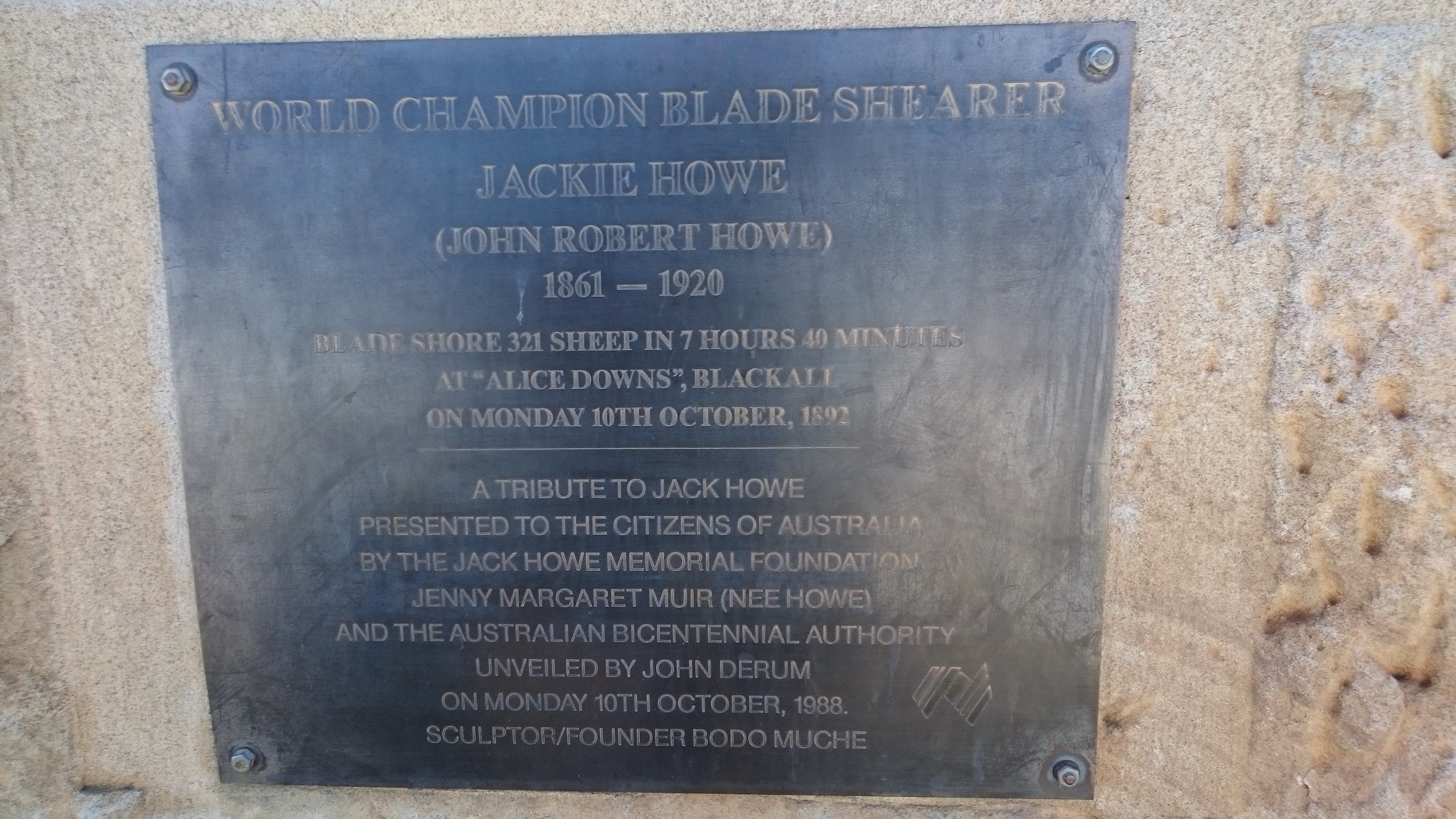
My Great Grandmothers Half Brother - Jackie Howe "Legend Shearer"

About Jackie Howe who is also related to me:  He is my Great Grandmother Annie Chadbourne's half brother born to Jack Howe Snr when her mother Louisa married Jack Snr after the death by drowning of her first husband William "Billy" Chadbourne.

Blackall - the story of Jackie Howe

ECHOES OF THE PAST
JACKIE HOWE'S EXPLOITS
DAYS OF LARGE FAMILIES LLAMAS AT CANNING DOWNS
(By "Gooragooby." Dalveen.)

In December, 1848, when John Collins, stud groom at Canning Downs for the previous 40 years, surrendered the position on the eve of his entering into business as Warwick's first hotelkeeper in the newly erected Horse and Jockey Inn, at the corner of Palmerin and Victoria streets, and now the site of the Commercial Hotel, it was Billy Chadbourne, better known to the pioneers of his day as "Billy the Groom," who succeeded Collins as head groom on that historic station. Subsequently, Chadbourne married Miss Stokes, a young woman brought over from Sydney to be a help and companion for Mrs. George Leslie, then occupying the commodious shingled homestead at Canning Downs.

In course of time Mr. and Mrs. William Chadbourne were blessed with two children, a girl and boy, whom they named Annie and Willie. Then a sad calamity befell the humble home, for the father met his death by drowning near Jew's Retreat, endeavouring to swim the Condamine River when in flood early in 1854, the reason for his attempt being the registration of his infant son's birth within the regulation period. Chadbourne's body was recovered, and the interment took place on Canning Downs, midway between the homestead and the farm which was the site of the township's first necropolis.

In after years Chadbourne's only daughter, Annie, became Mrs. William. Baguley. In those bygone days early marriages were the rule rather than the exception, and tradition has it that in 1869, when 17 years of age, Annie Chadbourne married, to be the mother of 15 children, nine sons and six
daughters, and when the call came, in 1931, she left 70 grandchildren and 38 great grandchildren.

My Great Grandparents .... William Adam Baguley married Annie Chadburne,  they had fourteen children their names were Henry, Catherine, William, Richard, Louisa, Annie, Cecilia, James, John, Elizabeth, Mark (grandfather), Arthur and Leslie.

The BAGULEY
family married into these families... MOORE, PEGG, SHERRIN, OCHS, HART, ROSS, FAY, HUNTLEY, ROWLING, BURLING, PETERSEN, THORNE, MATHISON, BRADLEY, WARRENER, PEDERSEN, BRADBURY (my grandmother), TAYLOR, LAMB, MUNDEY, DORAN, BROWNING, DEVLIN and GARDENER.
Her brother's (William Chadbourne's) family only totalled 13, three sons and 10 daughters, but between the two of them with 28 children, they certainly played their part in populating the Darling Downs.

About the year 1854 Billy Chadbourne's widow became the wife of Jack Howe, sen., acrobat and clown at Le Rosia's circus, which company he left some time previously when showing at Warwick. Howe's remaining days were spent in the town and district, where he found employment at bushwork, shearing, etc., and finally as town crier. At the time of the Queen's Jubilee functions at Warwick, in 1887, old Jack Howe, in commenting on the day, told a number of us boys that 50 years previously he attended a picnic to soldiers' children, given at Plymouth, England, in honour of Queen Victoria's coronation. He said he was quite a little chap at the time, but remembered the occasion quite well. When the Queen married Prince Albert he attended another picnic, which took place on a wet day.
A son of Jack Howe, sen. (the late Jackie Howe) was referred to in the Daily News last week, as follows

"Many wearers of the sleeveless singlet, which comes into its own during the hot summer months, wonder how that article of man's attire came by its popular name, Jackie Howe." A Warwick native, the late Jackie Howe's name is immortalised in that low necked, sleeveless flannel singlet he introduced to the shearing sheds over 40 years ago.

Jackie Howe, a step-brother to Annie (my great grandmother) and Will Chadbourne, in this connection, held the world's blade shearing record with a tally of 321 sheep in seven hours and forty  minutes, which he accomplished at Alice Downs Station in 1892. Some of the old shearers, envious individuals probably, affirmed that the sheep shorn by Howe were all two-year-old maiden ewes, selected for that particular occasion. Be this as it may, it was a wonderful achievement on Howe's part to put through 321 sheep of any description at an aver-age of slightly more than 1 min. 37 secs. per sheep. Subsequently, at Barcaldine Downs, he used the machines for the first time, his initial effort being 276 sheep in eight hours.

Many feats, of endurance and skill are accredited to Jackie Howe in the Central West. It is asserted "that on one occasion he shore 100 sheep before dinner, rode a push bike 90 miles home before tea, tossed a packet of sweets into the woodheap for the children, and went in to kiss his wife with the swag still on his back."

During the 1898 shearing season Queensland's eighth Governor, Lord Lamington, paid a visit to the Central West, accompanied by Lady Lamington. The Vice-Regal party, whilst doing the rounds of a few of the principal stations in that locality, entered a shearing shed to see in action Jackie Howe, the shearer who put up the big tally some six years previously at Alice Downs Station. Howe, learning of the contemplated visit of the distinguished visitors to the shed, possessed himself of a piece of chalk, and whilst in conversation with her Ladyship, stooped down and marked her boots. Lady, Lamington questioned Howe as to the meaning of the procedure, and was informed that it was expected of her Ladyship to furnish the wherewithal to provide drinks for the shearers in the shed. A sovereign was accordingly handed Howe for that purpose.

Owing to the low price wool was commanding in the fifties, as com-pared with mohair, the Davidsons, of Canning Downs, imported to that station eight or nine llamas, with the object of testing the possibility of the successful raising of mohair on the Downs. However, the experiment did not meet with success. The llamas were eventually transferred to Eton Vale, and subsequently became non-existent. It was Jack Howe, sen., who undertook the first shearing of the llamas, shortly after their arrival from overseas, .and a queer experience was his lot. These animals have a habit of
expectorating a smellful saliva over anyone handling them roughly, as Jack found out to his cost. Before he could go on with the shearing the llamas had to be caught, tied down, and have a nose bag placed on them.

I last saw Jackie Howe, who held the world's blade shearing record, some 47 or more years ago. He was then on a hurried visit to Warwick, and attending an Eastern Downs Society's show, held on the old grounds in Guy-street.

Colonial history of the Darling Downs and my family connections to this....
Since the Leslie brothers led the pastoral advance into what became Queensland in 1840, wool has made important contributions to the Queensland economy. Through both their necessity and militancy, shearers rose to the fore of bush workers in the late 19th century, and Queensland produced the most famous exponent of the shearing boards in the form of John (‘Jackie’) Howe. The son of a circus acrobat, Howe was born at Killarney, near Warwick in 1861, and rose to fame in 1892 when he set a world record by shearing 237 sheep by machine in a single day at Barcaldine Downs. A week later he followed that feat by shearing 321 weaners in one day with blades at Alice Downs. Howe kept clippings of his shearing career in this scrapbook, which extends beyond his retirement from the boards in 1900. He later became a publican and as President of the Blackall Workers’ Political Organisation played a major role in the election of T.J. Ryan to parliament in 1909. His health broken through years of hard work, Howe died at Blackall in 1920.
This is a showcase of early art and photographs of the Darling and Canning Downs.  There is an early photograph of the Canning Downs Homestead to be seen there.

http://www.slq.qld.gov.au/showcase/grass-dukes-and-shepherd-kings
 The Grass Dukes and the Shepherd Kings

Howe, John Robert (1861–1920)

This article was published in Australian Dictionary of Biography, Volume 9, (MUP), 1983
John Robert Howe (1861?-1920), shearer and publican, was born probably on 26 July 1861 at Killarney near Warwick, Queensland, son of John Howe, circus acrobat turned stockman, and his wife Louisa, née Stokes, who had come to Queensland as a companion to the wife of Patrick Leslie. Howe probably began shearing in the late 1870s and after a season in New Zealand settled at Blackall. At the Roman Catholic church there on 24 April 1890 he married Margaret Alexandra Victoria Short. 
Howe first achieved more than local fame in 1892, when he shore 237 sheep by machine in one day at Barcaldine Downs station early in October, and on the 10th shore 321 weaners with the blades at Alice Downs. In the previous week he had shorn 1437 sheep in 44 hours. An old shearing mate told how other shearers attempted to slow him down by tickling him and jumping on his back, but his feats were recognized by two gold medals, offered for shearing records by Coleman & Sons, eucalyptus manufacturers of Cootamundra, and by the presentation in January 1893 of an inscribed shearing machine from the Wolseley Shearing Machine Co. 
Howe was an enthusiastic member of the Queensland Shearers' Union and prominent on its committee. In 1900 he abandoned shearing and bought the Universal Hotel at Blackall. He moved to the Barcoo Hotel in 1902 but repurchased the Universal in 1907 and retained it until 1919. He remained a loyal member of the Australian Labor Party and, as president of the Blackall Workers' Political Organisation in 1909, took the lead in arranging for T. J. Ryan to stand for election to the Legislative Assembly. Late in life he bought Sumnervale and Shamrock Park, pastoral properties near Blackall. When he moved to Sumnervale in 1919 he was given the biggest send-off in the town's history. However his health was already broken and he died aged 58 at Blackall on 21 July 1920. His wife, six sons and two daughters survived him. He was buried in the local cemetery. 
An 'extraordinary physical specimen', Howe weighed 18 stone (114 kg), with a 50 ins (127 cm) chest, 27½ ins (70 cm) thigh, 17 ins (43 cm) biceps and a hand the size of a small tennis racket. He is reputed to have run 100 yards in eleven seconds in his socks and to have been well above average in field events. He is also known to have taken prizes for Irish dancing. He became a legend long before he died and the flannel shirt worn by shearers is still widely known as a 'Jackie Howe'.

Select Bibliography

  • P. J. Brixey, Jackie Howe: Australia's All Time Champion Blade Shearer (Warwick, Qld, 1982)
  • Brisbane Courier, 13 Oct 1892
  • Pastoral Review, 15 Oct 1892, 15 Nov 1894
  • Catholic Advocate, 13 Apr 1916
  • Worker (Brisbane), 5 Aug 1920
  • private information.

Citation details

H. J. Gibbney, 'Howe, John Robert (1861–1920)', Australian Dictionary of Biography, National Centre of Biography, Australian National University, http://adb.anu.edu.au/biography/howe-john-robert-6746/text11655, published first in hardcopy 1983, accessed online 16 October 2015.
This article was first published in hardcopy in Australian Dictionary of Biography, Volume 9, (MUP), 1983
 http://adb.anu.edu.au/biography/howe-john-robert-6746


ECHOES OF THE PAST

Jackie Howes Exploits to be transcribed ... TROVE


These extracts are just to give me some idea of the level 
of settlement at the time  

The following extract was in the MORETEN BAY COURIER 1848 
 discussing the township of Warwick soon to be opened.


Image result for Warwick Queensland Floods before 1861


The former St Mary’s Church, the earliest sandstone
church in Warwick, was completed in 1865. It was
designed by prominent Brisbane architect, Benjamin
Backhouse, and constructed by C.A. Doran for around
£1,500. The roof was originally slated or shingled.
The church was officially opened in August 1865 by
Bishop Quinn, the first Bishop of Queensland. At this
time the church was named St Mary of Assumption,
now popularly shortened to St Mary’s. By 1867 a
Catholic School was established in the church. After
the opening of the new St Mary’s Church in 1926, this
building was partitioned, lined and used as school
rooms for the Catholic Primary School.


http://www.sdrc.qld.gov.au/ArticleDocuments/Heritage%20Trail%20Book.pdf.aspx?Embed=Y


NGR ... Gods! Perceptions have been changed purposely ...


Egyptian

THE ORIGINAL MEANING OF THE "N" WORD HAD A CONNOTATION CONNECTED TO THE GODS

The word "nig..." used to be the most revered and sacred word in the universe. It was the "devine epithet," and the people who began using the mother of all words that originated from this word which was sullied by the British, were the ancient Egyptians or better, the Khemites, who called their land, "Khemet" or "The Black Land," and also used the name, "Ta-merri" or "The Beloved Land."

THE WORD "N-G-R" MEANS "GOD" IN ANCIENT EGYPTIAN
The father of the "n" word was the word used by the ancient Egyptians for "God." That word was "N-g-r" and as one can see, there are no vowels in this word. In the ancient African and even the present African languages (the Afro-Asiatic linguistic family) vowels such as "a,e,i,o,u" are not found in many translations, particularly of ancient Hebrew and Egyptian languages.

In the translation of ancient Egyptian and Hebrew (which is heavily influenced by Egyptian), one will not always find vowels, therefore, very few people will realize that the word for God, which is "N-g-r" pronounced "en-ger" was the Egyptian word for God. In fact, the Egyptian word for "nature," is also the word used for God. That word is "ntyr," (pronounced net-jer." Now prounce the word "nigg.." and the word "net-jer," and one sees the clear connection.

MANY AFRICAN WORDS DENOTING PEOPLE OR IMPORTANT PEOPLE STARTS WITH "N"
In many African languages particularly the Niger-Congo language family. Words that connects with people, Gods, and groups begin with "n" and that word is always the first word. For instance, the word "Nkosi" in Xhosa is "God." The word "Ndaba," in another South African language is "counsil" (or gathering of elders). Many common names also begin with "N".

WORDS OF AFRICAN ORIGINS THAT CAME FROM THE ORIGINAL WORD, "N-G-R" (PROUNOUNCED EN-JER)
N-g-r (Egyptian;pronounced en-jer) = God
N-t-y-r (Egypt; pronounced net-ger) = God, Devine
Negash (Ethiopia; ne-gash) = King
Negus (Ethiopia; ne-goos) = Emperor
Nkosi (Xhosa; en-kosi) = God
Ndaba (Zulu; en-daba) = Counsil/Officials,
Naga (East Indian, Nubian = People
Nugarmarta (West African = People (See the writings of Ibn Buttata's journey to West Africa)

HOW THE N BECAME CORRUPTED
The Romans are probably the first Europeans to misrepresent the word for God, which was "N-g-r"
About the early part of the First Century, Romans tried to invade Ethiopia. (see BLACK HISTORY CHART http://community.webtv.net/nubianem/blackworldnubianempire or go to http://community.webtv.net/paulnubiaempire for a list of Nubian Pharaohs and Queens.

The Romans who were speakers of Latin always knew of Blacks, there were Blacks in Rome, Italy had an ancient Black presence long before the Latins migrated from Central Asia and North Eastern Europe during the 'Aryan' migrations. In fact, the Latin ethnic groups is still in existance in the northern part of Italy even today. This part of Italy still grips about Hannibal's invasion which happened about two thousand two hundred years ago!!!!

The Romans had a name for Blacks, it was "Niger" and it meant Black or people of African origins. Thus, Septimus Niger would have meant, Septimus the Negro. Yet, how did the Romans connect the word "Niger" to Black.

In ancient times, Blacks were worshipped as Gods. The Gods of Greece came from Egypt. The worship of the Black Madonna is connected with the worship of Isis, the Egyptian Goddes. Moreover, Blacks in Egypt called their Pharaohs "En-ger" or "N-g-r" he was literally referred to as "THE GOD."

It is very possible that when the Romans tried to invade Nubia, they asked for the name of the God and the term "N-g-r" was probably used in place of "leader" or "king". In Angola, the same also happened during the 1600's when the word "N-gola" which means "King" (notice the "N" and the "g" in this word as well), came to be "Angola,' the name of a kingdom in south western Africa.
(Read more on Nubian, Egyptian, West African and ancient American trade and commercial connections in ancient times; see the book, "Susu Economics: The History of Pan-African Trade, Commerce, Money and Wealth," published by 1stBooks Library, www.1stbooks.com also see www.barnesandnoble.com

WHERE DID THE ROMANS FIRST HEAR THE ORIGINAL MEANING OF THE "N" WORD.
A Roman general invading Nubia from Egypt would probably have used the Egyptian term for Pharaoh, which was "N-g-r" (God). This term then was used to refer to all Blacks and as time went by, the word N-g-r became Niger. In Fact, the Romans also classified their Emperors as "Gods," to follow the Egyptian style. Moreover, as the History Channel poointed out, "Rome was a collection of villages before the Egyptians built it up."(paraphrased).
The word "em-peror" sounds very close to the word "en-jer." That is not a coincidental connection.

THE WORD "N-G-R" (EN-JER) AFTER IT WAS CORRUPTED BY THE EUROPEANS
Niger = (Latin or Black/African pronounced "ni-ger.")
Nero = Italian for Black
Negre = French for Black
Negro = Spanish for Black

The English called Blacks "Moore" or "Black-a-Moore" before they began using the word
"Negro" to refer to Blacks. FROM THAT WORD CAME THE RACIAL EPITHET, "NIGG.."

In like manner, the racist term for Japanese the mutilation of the word to shorten it into an epithet. Furthermore, the original name for Japan is the Chinese "Ni-Han." Now here is another great mystery that people who study the Niger-Congo linguistic family would quickly notice. EVEN THE WORD "Ni" in the Chinese "Ni-Han," has and ancient African connection. In fact, as Clyde Walters points out, The Chinese language is directly related to the Niger-Congo language which has its roots in the Cameroon region of Africa. In fact, there are thousands of African words from Cameroon to Kenya that have both prefixes and suffixes that are identical to both Chinese and Japanese languages (see also African Presence in Early Asia, by Ivan Van Sertima; Transaction Publishers)

In the Case of "Ni-Han" which may mean "rising sun," there is also a sacred meaning that is found in the word "n-ger," or "ne-gro." Yet, the racist terms "nip," and "nigg..." or "jap," used by racists were and are being used without any understanding of their original meanings. Only hatred and envy comes out of the mouths of those who use racial epithets in their attempt to insult and denegrade others. However, it is up to us to study our history and make these racist words impotent, while at the same time, understanding their original meaning.

Connection with the prefix "ni" with sacred and life:
Ni'le = The Nile River, Life to the Egyptians
Ni-ger = River in West Africa
Niger = Nation in West Africa
Nigeria = Nation in West Africa
Nago = Racist term used by some SE Asians to refer to Black Melanesians of Africoid origins
Nago-Mina = African nationality in Nigeria
Naghual = Aztec word for Shaman or priest. The first Olmec Shamans in Mexico came from Nigeria and elsewhere in West Africa (see Black Civilizations of America http://community.webtv.net/paulnubiaempire

THE ORIGINS OF THE TERM "HUN."
The racist term for whites also comes from a word that struck fear in the hearts of whites during the ancint times. That word is "Hun." The Huns were Mongol barbarians from Mongolia who tried to invade China and finally succeeded. THye invaded Eurasia from Russia all the way to Germany and mixed in with the Caucasians. Hence, the British began calling Germans the term "Hun."
The countries of Hungary, East Germany, northern Italy, Russia, Poland and much of Eastern Europe is mixed with the Mongol invaders. There were Mongol invaders in Turkey, Afghanistan, India, and many nations.

THE MONGOLS WERE DEFEATED BY NUBIANS AND MAMELUKES
When the Huns tried to invade Egypt (sometime in the 1100's), they were met by a strong force of Nubians and Mamelukes (white slaves from slavic, Turkics from Bosnia, Serbia, Albania, Turkey and such nations), who were soldiers for the Egyptian rulers. The Mongols were defeated and that was the end of the Mongol Empire. Moreover, they were thinly spread over Eurasia. They also met a crack cavalry of Nubian horsemen and archers, who had a tradition of archery that extends way back to ancient Egyptian times.
When one studies the history of the Huns in Europe, it is one of the most horrible genocides that existed (the genocide against Black Sudras and Black Australoids in India is another great genocide; see "Sudrology, http://dalitstan.org )
The huns ravaged Europe and are said to spread the blacck plague by shooting plague infested rats in the walled towns of the Europeans to infest them.

WE MUST STUDY OUR HISTORY IN ORDER TO DEVELOP OUR CONSCIOUSNESS AND MAKE PEOPLE'S RACIST REMARKS IMPOTENT
We must study our history. It is by knowing who we are that racist remarks and racial epithets will become impotent. Every time one uses the word "nigg..." to refer to a Black person, they are actually calling that person "God." When we Blacks say that our Afro's and locks are "natural," we don't realize the significance of the word or the true meaning. But something in our consciousness simply cannot be destroyed. To say we are going "natural," means we are going back to being "gods," because the word "natural," comes from the original Egyptian word, "n-t-y-r" which means "God." The ancient Egyptians used a similar word to call their Pharoahs. That word was "N-g-r." The word "Pharaoh," was never used to refer to any Egyptian King. Pharaoh came from the word "Per-o" which was the term for the Great Temple, where the King lived.

P. Barton is author of Susu Economics: The History of Pan-African Trade, Commerce, Money and Wealth," pub. by 1stBooks Library, www.1stbooks.com
A History of the African-Olmecs: pub by 1stBooks Library www.1stbooks.com
Susu and Susunomics: pub by www.iuniverse.com
P. Barton (P. Nubiyang)
http://community.webtv.net/paulnubiaempireNubianem3@webtv.net

Tuesday, October 11, 2016

CUSSEN .... and my family.

This post is in honour of the man I knew as "Dad".  Jack Cussen (Michael John Cussen).  He and his wife Edith reared me until I was 12 years old in Stanthorpe.  Edith was my Great Aunt and sister of my Grandmother Matilda Peters (nee Butler).
Image may contain: one or more people, people standing, flower, plant, outdoor and nature


Michael John Cussen b: 17 Sep 1907 d: 13 Mar 2002 + Edith Violet Butler b: 1909 d: 2 Jun 2003

1 Mary Mollis b: 1879 d: 13 May 1918
  + James Cussen b: 1876 d: 27 Jul 1959
    2 David Remous Cussen b: 6 Aug 1900 d: 13 Nov 1970
      + Alice Butler b: Abt 1904
        3 Leonard James Cussen b: Abt 1925 d: Bef 14 Jul 1969
    2 Ellen Cussen b: 13 Dec 1902 d: 28 Jan 2003
    2 Mary Ann Cussen b: 13 Sep 1904 d: 9 Dec 1976
    2 Michael John Cussen b: 17 Sep 1907 d: 13 Mar 2002 + Edith Violet Butler b: 1909 d: 2 Jun 2003
    2 Nora Eileen Cussen b: 30 Jan 1910 d: 1 May 1919
    2 Theresa Cussen b: 30 Jan 1910 d: 4 Nov 1959
      + Richard Cotter b: 1902 d: 30 Jan 1950
    2 Kathleen Cussen b: 17 Dec 1912
    2 Charlotte Cussen b: 23 Aug 1914

http://wc.rootsweb.ancestry.com/cgi-bin/igm.cgi?op=DESC&db=wrcushing2&id=P8211